Get Full Government Meeting Transcripts, Videos, & Alerts Forever!
Get email alerts on the Sidewalk Snow Ordinance topic
No spam. Unsubscribe anytime.
Peabody City committee directs police to study citywide sidewalk snow-and-ice ordinance and fines
Summary
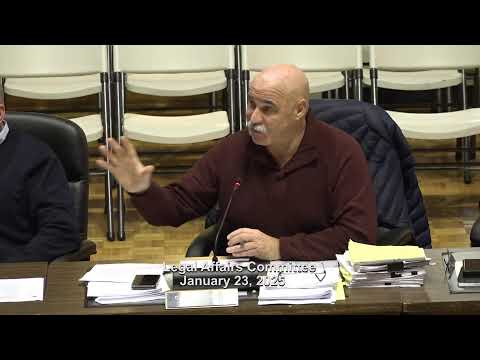
The Legal Affairs Committee voted Jan. 23 to ask the police department to report back on how other communities enforce citywide sidewalk snow-and-ice removal ordinances, after debate about expanding Peabody's location-specific rules, enforcement capacity and exemptions.
The Peabody City Legal Affairs Committee voted Jan. 23 to ask the police department to research how other communities enforce citywide sidewalk snow-and-ice removal ordinances and to return with recommendations, following debate about expanding the city's current location-specific ordinance and adding fines.
Councilor Peach, who introduced the item, said she wants to amend Peabody’s existing ordinance to make it citywide and to add enforceable fines. "I'm not looking for the city to make money here. I'm looking for some sort of actionable enforceable ordinance when I get calls from parents or when I myself walk my kids to school," Peach said. She cited safety concerns for students and said nearby communities, including Salem, have adopted similar language.
The proposal prompted questions about enforcement and resources. Councilor Gamache and Councilor Higgins said parts of western Peabody have few pedestrians and said they worry a citywide mandate could be burdensome in areas where sidewalks are unused. Higgins also raised practical enforcement questions: how inspectors would know where sidewalks exist and how many fines have been issued under Peabody's current, location-specific ordinance.
Captain Richards of the Peabody Police Department told the committee that well-written ordinances still require enforcement capacity. "If you don't have the personnel and the ability to exercise the enforcement piece of it, it doesn't work," he said, noting questions about who would handle appeal hearings, how fines would be delivered and how exemptions for elderly or disabled residents would be administered.
William Pollitz, director of the Department of Public Services, said the department currently plows roughly 36 miles of sidewalks and has four sidewalk plows (three were used in the most recent storm). Pollitz said the city has not yet discussed additional FY26 staffing or equipment for expanded sidewalk work and described typical staffing limits during prolonged storm events. "Our first priority is to get the streets open," he said, adding that sidewalk work typically follows road clearance and uses the same employees.
Several councilors suggested possible exemptions and administrative language to reduce burdens. Councilor McGinn cited Beverly's exemption model, which allows annual exemptions for residents over 65, those with health limitations, or those with financial hardship who cannot hire help. A 24-hour clearing window was proposed by another committee member as a reasonable grace period for property owners to remove snow and ice.
After discussion, the committee voted to request that Captain Richards "review how other cities and towns are implementing this and what... how they've interacted and acted on these measures," and to report back to the committee. The body also agreed to keep the matter in subcommittee while Councilor Peach and Attorney Khan work on draft ordinance language. The vote on the research motion was taken; the meeting record does not specify a roll-call tally.
The committee did not adopt a citywide ordinance at the meeting; it directed staff to study enforcement practices, exemptions and resource implications and to return with recommended language for future consideration.