Get Full Government Meeting Transcripts, Videos, & Alerts Forever!
Get email alerts on the Udo Section 903 Cleanup topic
No spam. Unsubscribe anytime.
Committee asks staff to draft UDO cleanup for section 903 to clarify development plan and ADLS roles
Summary
Committee members directed staff to prepare a draft amendment to Unified Development Ordinance section 903 to resolve overlap between 'development plan' and ADLS, and to consider bringing B1/B2 districts into development-plan procedures; staff were also asked to bundle this work with other edits and to explore process improvements.
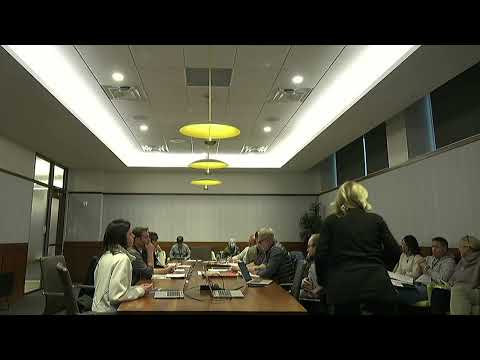
At its Jan. 22 meeting the Land Use and Special Studies Committee asked city staff to draft revisions to Unified Development Ordinance (UDO) section 903 to clarify the relationship between "development plan" and ADLS (architecture, design, landscaping, signage and lighting) and to reduce the risk of procedural challenge.
City legal and Department of Community Services staff told the committee that, historically, some provisions for development plan and ADLS have been commingled in the same section of the UDO. That overlap can affect notice and hearing rules because development plans require a public hearing and are governed by state law provisions, while ADLS petitions generally do not follow the same public-hearing procedures.
Staff outlined two principal approaches: (1) carve out B1 and B2 districts within ADLS and adopt targeted ADLS provisions for those districts, or (2) include B1 and B2 within the development-plan family so that development-plan and ADLS provisions are clearly separated. Staff and Planning Commission members discussed the options and said the cleaner solution is generally to incorporate B1 and B2 into development-plan procedures to eliminate duplicated or conflicting language and reduce legal exposure.
Committee members also discussed process and operational items: making pre-filing meetings standard or mandatory, preserving a technical-review step (now handled through an online project‑document platform), streamlining permitting where possible (for example by evaluating a common application or a paid concierge/expediting service), and exploring financing mechanisms such as business improvement or assessment districts for certain public investments tied to private development. Committee members asked staff to draft potential PUD rental‑restriction language that would reduce the likelihood of institutional buyers and to study treatment of short‑term rentals in PUDs.
No formal ordinance was adopted at the meeting. The committee directed DOCS and city legal staff to prepare a draft omnibus amendment — including the section 903 cleanup and related non‑substantive edits — and to bring the draft back for committee review so it can be bundled and submitted in bulk rather than as a series of single-issue ordinances.
Next steps: City legal and DOCS will prepare a consolidated draft of UDO amendments (including the section 903 changes and proposed PUD rental‑restriction language) for committee review; staff indicated they will aim to present a package rather than separate short bills.