Get Full Government Meeting Transcripts, Videos, & Alerts Forever!
Get email alerts on the Waste Management topic
No spam. Unsubscribe anytime.
Pittsfield officials say tote rollout cut trash, doubled recycling but delivery and pickup problems persist
Summary
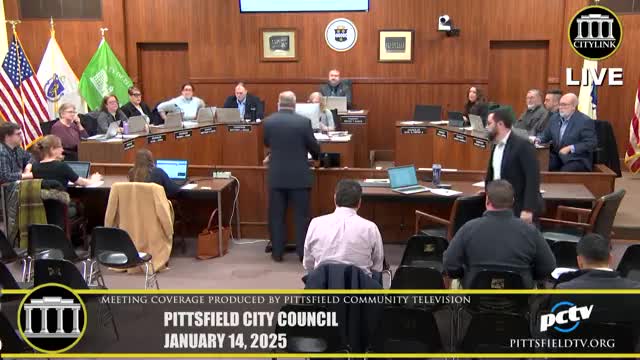
City officials and contractors told the City Council on Monday that Pittsfield’s switch to automated 48‑gallon trash and recycling totes has sharply reduced residential trash and increased recycling but faces continuing operational glitches that city staff and Casella, the contractor, said they are working to fix.
PITTSFIELD, Mass. — City officials and contractors told the City Council on Monday that Pittsfield’s switch to automated 48‑gallon trash and recycling totes has sharply reduced residential trash and increased recycling but faces continuing operational glitches that city staff and Casella, the contractor, said they are working to fix.
Mayor Marchetti and Commissioner Morales presented implementation data and logistics to Councilors and representatives of Casella, saying early monthly figures show a marked drop in trash tonnage and a rise in recycling. “We went down significantly on trash. 364 tons reduction in the trash side,” Commissioner Morales said, and “we went up 53 tons” in recycling over the period presented.
The mayor framed the initiative as both a service reform and a cost‑savings measure: the city delivered new carts to about 17,000 households and, according to the presentation, average per‑household collection costs fell in the first months. “If we had started this for a full year ... the savings would have been half a million,” Commissioner Morales said, summarizing the fiscal impact shown in slides.
Nut graf: The council heard evidence that the system is meeting its basic aims — less trash, more recycling and short‑term budget savings — but councillors and residents pressed officials on practical failures at the curb: late deliveries of extra totes, missed pickups on some streets, inconsistent backyard service and questions about enforcement and communications. City staff and Casella said they have taken steps to address those issues and promised further action.
What officials said
• Delivery and equipment: Casella and city staff said the initial rollout distributed one trash tote and one recycling tote to about 17,000 households (about 34,476 totes). Casella ran short of extra recycling totes early in the rollout and finished back‑orders this week, Commissioner Morales said. “Casella did finish, delivering the totors to, to the additional totors, the extra totors today,” Morales told the council.
• Trucks and technology: Casella is renting side‑loader trucks while it buys its own ASL vehicles. Company representatives said route‑tracking (route‑ware) and on‑board cameras will be installed when the company’s purchased trucks arrive in spring; that equipment will time‑stamp stops and record photos for missed pickup verification. Killian Flynn, Casella market area manager, said the software will allow drivers to capture “a picture of the house with no tote” and to show a breadcrumb trail of the truck’s route.
• Operational problems: Councilors and residents described recurring missed pickups on specific streets, totes knocked over by wind, wheels falling off some toters on delivery and delays in backyard pickup service. Casella said the wheel problems were linked to a third‑party assembler and had been corrected; the company and city staff said they have added extra runs to collect missed material while they improve routing and communication.
• Enforcement and outreach: The city characterized December as an education month and said it started formal enforcement in January. Health Department staff said inspectors will do morning checks (starting about 8:30 a.m.) on collection days and that offenses will be handled progressively with warning letters and fines (up to $100 for repeat violations). Director Kamby and Commissioner Morales said the city will also use the health department and the call center to triage complaints.
Questions from councilors and residents
Councilors repeatedly pressed for clearer communication and faster turnaround on extra‑tote requests. Several councilors said residents reported waiting weeks for additional carts; Casella said typical delivery time should be about one week under normal workloads but acknowledged a backlog immediately after the rollout and said the back‑order was completed the prior Friday.
Councilors also raised safety and accessibility concerns on narrow streets and asked why some routes had repeated misses. Casella and city staff said some early misses resulted from holiday schedule changes, driver handoffs among extra rental trucks and occasional trucks needing PM (preventive maintenance). Casella said it has increased internal dispatching and hired a dedicated dispatcher for Pittsfield residential service.
Backyard pickup service, which requires a separate registration and “dummy” account in Casella’s system, was another pain point: councilors and staff said the system has been inconsistent but that Casella now emails daily lists of backyard pickups and is checking them off to improve accountability.
Financial and diversion impacts
Commissioner Morales presented diversion metrics showing the city’s recycling rate rose from about 10% historically to north of 18% in December and showed a roughly 364‑ton reduction in trash volume over the measured period. Morales said those changes produced short‑term savings (the three‑month observation period produced roughly $367,000 in direct savings) and, if maintained across a full year, would yield substantially larger savings.
The presentation also noted a shift in residential disposal behavior: staff reported fewer neighbor‑to‑neighbor drop‑offs and less large construction debris at the curb, factors that may explain why trash fell more than recycling rose in absolute tons.
Next steps and city plans
Officials said they will continue public education, pursue composting opportunities as an opt‑in program, open the transfer station fully for drop‑off services, expand waste‑diversion services and press the state for additional enforcement resources. Casella said it will continue prioritizing delivery of extra totes and route‑ware installation on purchased trucks.
Council action
Councillor Persipp had petitioned for a comprehensive report on the program; the council debated whether to hear questions at the meeting or table the petition so Persipp could participate. After discussion and a motion, the council voted to table the petition. The transcript shows the item was tabled; motion and outcome are recorded in the meeting minutes.
Ending: Officials called the transition a rough but promising start and said they expect performance to improve as Casella installs route‑tracking equipment and the city ramps up enforcement and education. Commissioners urged continued reporting to the council on monthly tonnage, missed pickups and the customer service backlog so trends can be tracked and the program refined.
Votes at a glance
• Order to enter into a five‑year contract with the Department of Environmental Protection and WM Recycle America, LLC for processing recyclables: approved (unanimous vote recorded on the agenda). • Petition on comprehensive report on trash and recycling implementation: tabled by council vote (recorded as tabled in meeting minutes).