Get Full Government Meeting Transcripts, Videos, & Alerts Forever!
Get email alerts on the Capital Improvement Program topic
No spam. Unsubscribe anytime.
Baltimore County executive and Public Works outline priorities for 2026 capital program
Summary
County Executive Kathy Klausmeier and Department of Public Works and Transportation Director Lauren Buckler presented the fiscal 2026 capital improvement program priorities, highlighting school investments, sewer consent-decree work, pavement management, landfill capacity planning and pilot recycling/organics programs.
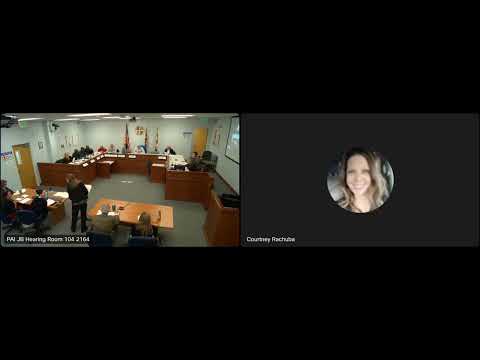
County Executive Kathy Klausmeier and Lauren Buckler, director of the Baltimore County Department of Public Works and Transportation, opened the Planning Board's January 16 work session with an overview of the county's fiscal 2026 capital improvement priorities.
Klausmeier said her administration would continue record investments in education and public facilities, naming Delaney High School, Towson High School renovations and a Scotch Branch Elementary School replacement as examples. She also highlighted public safety and recreation investments and promised town halls to gather community input.
Buckler delivered a detailed departmental briefing to the Planning Board's CIP subcommittee, describing DPWT responsibilities and recent achievements. She said the department maintains more than 3,000 miles of sewer lines and about 120 pump stations and that Baltimore County has invested roughly $1.5 billion toward sewer improvements since 2005 under the federal consent decree. DPWT has closed 34 of the original 44 sewer overflow structures and expects to close seven more during the winter, leaving three relief points at the Baltimore City line under ongoing coordination with city and state partners.
On solid waste, Buckler said DPWT serves roughly 250,000 single-family homes and about 88,000 multifamily units with weekly trash and recycling. The department reported processing roughly 64,000 tons of recyclables in 2024 and $6.5 million in revenue from recycling sales. An organics pilot that began in January 2024 covers about 100 households in Perry Hall and has collected 318 tons of material to date; DPWT has applied for an EPA grant to expand the program.
Buckler said Eastern Sanitary Landfill is reaching capacity and DPWT is pursuing a vertical expansion that would extend the site's life by about seven years; the department is in phase three of a five‑phase permitting process with the Maryland Department of the Environment and estimated current capacity through approximately 2033 without expansion.
For roads, Buckler described a new pavement management program built from lidar-based condition surveys of more than 8,000 roads. DPWT ranked segments on a 0–100 scale and reported that bringing the county roads to an average condition in the 60s would cost about $400 million; current annual repaving funding is about $11 million. In 2024 the department resurfaced 143 lane miles and replaced 47 lane miles of concrete curb and gutter.
The DPWT presentation also covered water and sewer operations: more than 3 miles of new sewer mains installed and 33 miles of sewer mains rehabbed in 2024, 6.5 miles of new/replacement water main, and ongoing pumping-station projects. Buckler said Metro billing improvements reduced average customer appeal response time from 63 days to 15 days and an outside contractor is repairing roughly 5,000 meters to improve reads and billing accuracy.
Buckler summarized traffic and multimodal priorities including an updated Highway Safety Plan and Vision Zero goals, Honeygo Boulevard design (about 60% complete) and Baltimore County’s first protected bike lane scheduled for spring implementation. The department piloted LED sign technology and is pursuing feasibility and design work for several trails following the 2023 bike and pedestrian plan.
In Q&A, members pressed DPWT on customer experience testing for changes to solid-waste communications and online billing, expansion plans for the organics pilot, approaches to prioritize paving work, landfill outreach, and options for the county's materials recovery facility. Buckler described internal customer testing for the calendar change, said the organics pilot will seek partners (including schools and commercial accounts) to scale up, and called the MRF study—funded with ARPA—an early step toward upgrading the current facility on county land.
Buckler closed by emphasizing data-driven decisionmaking across DPWT programs and by thanking staff for implementation work on the consent-decree projects, pavement assessments and solid-waste initiatives.