Get Full Government Meeting Transcripts, Videos, & Alerts Forever!
Get email alerts on the Campaign Finance Board Report topic
No spam. Unsubscribe anytime.
Campaign Finance Board outlines budget, public subsidy payouts and new lobbying reporting scope
Summary
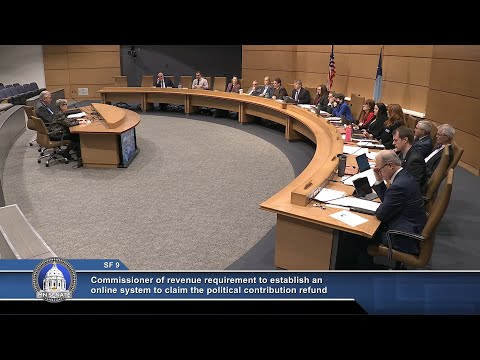
Minnesota's Campaign Finance and Public Disclosure Board briefed the Senate Elections Committee on Jan. 23, 2025, describing its mission, staffing, fiscal position, public subsidy payouts in 2024 and recommendations tied to an expanded lobbying disclosure program covering political subdivisions beginning June 1.
Jeff Sigurdsson, executive director of the Minnesota Campaign Finance and Public Disclosure Board, briefed the Senate Elections Committee on Jan. 23, 2025, on the board's mission, budget, programs and a statutory report on lobbying of political subdivisions that the board prepared for the 2025 Legislature.
The board's mission, Sigurdsson said, is "to promote public confidence in state government decision making, in particular through disclosure of potential sources of influence on official actions." He told the committee the board is an independent agency with six members, 10 full-time equivalent staff and a proposed base budget of $1,793,000 for fiscal years 2026–27; the board had not requested change items for FY26–27.
Public subsidy and outreach: Sigurdsson reported that the board administered Minnesota's public subsidy program in 2024 and paid $2,107,940 to 230 House candidates (average payment $9,164). He said 93% of eligible candidates signed the public subsidy agreement in the most recent cycle and that the board has expanded online training and short video tutorials to support volunteer treasurers.
Lobbying program expansion and statutory report: the board described how the lobbying registration and reporting program will expand on June 1, 2025, from a set of metropolitan governmental units to all political subdivisions (counties, cities, school districts and townships). Sigurdsson told the committee the change will dramatically increase the number of entities covered and noted an annual principal-reported lobbying expenditure tally in the report of about $98 million for the prior reporting period; he said 2024 likely exceeded $100 million.
The board recommended two legislative changes to reduce burdens and preserve disclosure: an approach to treat limited expert testimony provided at the request of a political subdivision as not requiring registration while requiring lobbyists or principals to disclose the name, employer and subject of any expert they call; and an exemption so that employees of political subdivisions working cooperatively with other political subdivisions on joint projects would not be required to register as lobbyists. The board also provided public comments submitted at two hearings and said many issues raised were broader than the scope of the statutory report.
Committee questions focused on confirmation timelines for board appointments, quorum concerns (the board needs four members for a quorum), and whether expanded scope would require additional board resources. Sigurdsson said one seat is vacant and another term has expired but that the statute allows a member to continue to serve until July 1 or until an appointment is made; he noted the board will work with the governor's office on appointments. He also explained the board's civil-penalty enforcement process in Chapter 10A and highlighted availability of about 430 advisory opinions on the board's website.
Ending: Committee members thanked Sigurdsson and signaled they will continue to work with the board on implementation details, confirmation hearings and any statutory changes needed to accommodate the expanded lobbying reporting regime.