Get Full Government Meeting Transcripts, Videos, & Alerts Forever!
Get email alerts on the Dhs Budget Medicaid topic
No spam. Unsubscribe anytime.
DHS presents $23.8 billion FY26 budget, says Medicaid enrollment remains above pre‑pandemic levels
Summary
Department of Human Services officials told the Health and Human Services Finance and Policy Committee on Jan. 23 that the agency has reorganized after a 2023 split, will oversee roughly $23.8 billion in FY26 and continues to serve about 1.25 million Minnesotans on Medicaid following the federal public health emergency unwinding.
The Minnesota Department of Human Services on Jan. 23 told the Health and Human Services Finance and Policy Committee the agency is operating with about $23.8 billion in all funds in fiscal year 2026 after a 2023 reorganization and continues to administer the bulk of state Medicaid programs.
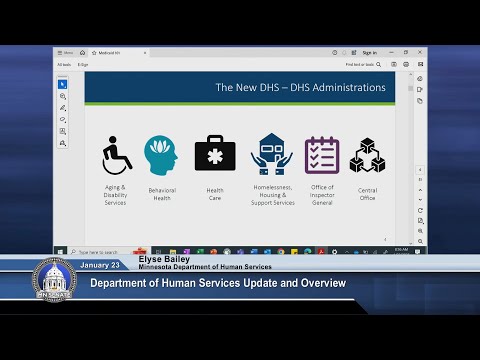
DHS budget director Elise Bailey told the committee the reorganized agency — which she called “DHS 2.0” after lawmakers moved children-and-family and direct-care programs into separate departments — will have roughly $23.8 billion in all funds in FY26 and about 2,000 employees. “Our new identity is taking shape,” Bailey said, adding the agency’s revised mission emphasizes helping “people thrive rather than just meeting their basic needs.”
The department said federal funds remain the largest revenue source. Bailey reported roughly $12.6 billion in federal funding in the FY26 forecast, $9.4 billion from the state general fund, $1.1 billion from the Health Care Access Fund and about $700 million from other funds. She said roughly 89% of the DHS budget goes to Medical Assistance (Medicaid) and that grants and operations make up small slices of the remainder.
Jogo Reese, division director in DHS’s Health Care Administration, walked the committee through program-level details and financing mechanics, including how federal matching rates vary by population and service. Reese said recent federal financial participation for Minnesota in federal fiscal year 2025 is about 51.16% and noted special matches can be higher or lower for specific services or populations.
On enrollment, Reese said Medicaid rolls have not returned to pre-pandemic lows. “So far we’ve settled at about 1,250,000 people,” Reese said, describing the post‑public‑health‑emergency “unwinding” and reenrollment process. Bailey also showed FY24 service counts, noting roughly 1.3 million people received Medicaid that fiscal year and that nearly half of Minnesota children are touched by DHS programs in some way.
Bailey and Reese described where Medicaid spending is concentrated: long‑term care and waiver services accounted for a large portion of MA spending — about $10 billion in FY26 projections — while eligibility categories such as families with children, older adults and people with disabilities show different state/federal funding mixes. Bailey highlighted that adults without children receive a higher federal match (about 90% under a particular category she noted), which affects how changes in those categories affect the state general fund.
Committee members asked for additional detail. Senator Bobby Joe (Senator Abler) and others asked DHS to return with modeling linking proposed budget changes to specific program capacity — for example nonemergency medical transportation, elderly waivers, nursing‑home capacity and group‑home services. Senator Jason Gruenhagen asked for more detail about how much of the Medicaid share comes from the general fund versus the Health Care Access Fund; Bailey said the HCAF portion is small and offered to supply the committee with the specific split.
Why it matters: DHS programs cover large shares of Minnesota residents and account for a growing share of state spending. Committee members pressed agency officials for program‑level detail and requested additional analyses tying budget proposals to service availability and access across rural and urban counties.
Looking forward: DHS staff pointed committee members to the department forecast and budget book for more detail and agreed to return with follow‑up information on requested splits and modeling.