Get Full Government Meeting Transcripts, Videos, & Alerts Forever!
Office of Higher Education warns of state grant shortfall as FAFSA changes and enrollment spike strain North Star Promise funding
Summary
Minnesota Office of Higher Education officials told the Senate Higher Education Committee on Thursday that the state’s largest need‑based financial aid program faces a growing shortfall driven by higher enrollment and federal changes to the FAFSA that produced many more students with a zero or negative student aid index.
Minnesota Office of Higher Education officials told the Senate Higher Education Committee on Thursday that the state’s largest need‑based financial aid program faces a growing shortfall driven by higher enrollment and federal changes to the FAFSA that produced many more students with a zero or negative student aid index.
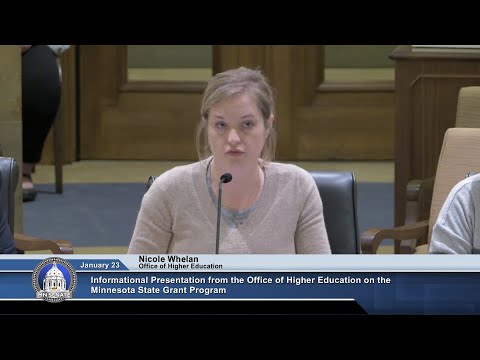
Nicole Whelan, Financial Aid Research Analyst for the Office of Higher Education, told the committee that the agency “is experiencing one [a deficit] this year” after projected enrollment and the FAFSA simplification increased the share of applicants with very high need. Whelan said the fall projections showed 43% of applicants with an SAI (the new term for EFC) of $0 or less, and “the vast majority of those students have an SAI of negative $1,500.”
Why it matters: the Minnesota State Grant is the largest state financial aid program by dollars and students served in Minnesota. The state grant is designed to “fill in” need after federal Pell awards; changes that increase the number of low‑or‑no‑contribution applicants raise state costs and can force the agency to ration awards or seek transfers from other appropriations.
OHE’s assessment and near‑term actions
Office staff told lawmakers the program ended fiscal 2024 with roughly 71,500 recipients (a 6% increase from FY2023) and that the combination of enrollment growth and FAFSA changes produced a projected deficit of about $5 million in fall projections — a number the agency expects to grow when February projections are published. The agency has already taken several steps: it rationed awards where permitted by law for the current year, set a December 1, 2024 FAFSA deadline for spring awards, and announced that summer 2025 state grant funding will not be available.
Whelan explained how the agency calculates awards and why the new FAFSA rollout complicated projections: the federal formula change…
Already have an account? Log in
Subscribe to keep reading
Unlock the rest of this article — and every article on Citizen Portal.
- Unlimited articles
- AI-powered breakdowns of topics, speakers, decisions, and budgets
- Instant alerts when your location has a new meeting
- Follow topics and more locations
- 1,000 AI Insights / month, plus AI Chat