Get Full Government Meeting Transcripts, Videos, & Alerts Forever!
Get email alerts on the Campaign Finance Pcr topic
No spam. Unsubscribe anytime.
Senate committee advances bill to modernize political contribution refund receipts
Summary
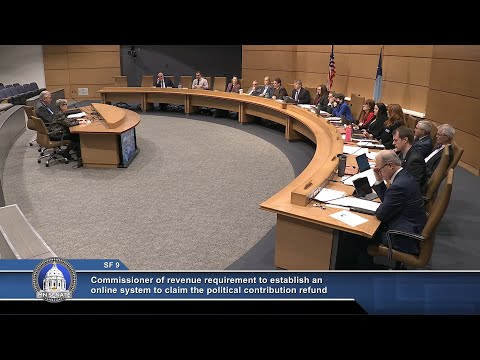
Senate File 9, a bipartisan bill to modernize Minnesota's political contribution refund (PCR) process, cleared the Senate Elections Committee on Jan. 23, 2025, and was recommended to pass and be re-referred to the Committee on Judiciary and Public Safety.
Senate File 9, a bipartisan bill to modernize Minnesota's political contribution refund (PCR) process, cleared the Senate Elections Committee on Jan. 23, 2025, and was recommended to pass and be re-referred to the Committee on Judiciary and Public Safety.
The bill, carried in committee by Senator Rest and coauthored by Senators Curran and Westlund, would require the Campaign Finance and Public Disclosure Board to generate electronic PCR receipts and provide a validation feed to the Department of Revenue for contributors seeking refunds. Senator Rest said the change "is to modernize the way in which we, produce and issue, PCR, refunds" and set an effective date for electronic processing beginning Jan. 1, 2027, to allow for development and testing.
Why it matters: supporters said an electronic system will make the refund program easier to use and increase participation in Minnesota's public financing mechanisms. Mary Hartnett of Clean Elections Minnesota told the committee, "The excessive amount of big and dark money flowing to elections is staggering and threatens our democracy," and argued the proposal would "make [the PCR] much easier to use" and boost small-donor participation.
Key provisions and logistics: the bill requires the board to assign a unique receipt validation number to each qualifying contribution and deliver a receipt-validation report to the commissioner of revenue. It sets a $10 minimum contribution threshold for issuing an official refund receipt (the bill retains statutory caps on refunds: $75 per individual and $150 per couple). Senator Rest and witnesses emphasized that contributors would still be able to receive a printed copy of an electronically generated receipt and that campaigns could continue to file paper claims if desired.
Questions from committee members focused on data security, operational details and timing. Jeff Sigurdsson, executive director of the Minnesota Campaign Finance and Public Disclosure Board, described the planned interaction between the board's CFRO reporting system and the Department of Revenue's online filing system, saying contributors would enter identifying information (including the Social Security number already required on the paper form) when filing refunds with the Department of Revenue. Several senators pressed for clarity on whether recurring small donations (for example, $5 monthly) could be aggregated; Sigurdsson and other presenters said the CFRO software will allow campaigns and contributors to generate a receipt once the cumulative contributions meet the $10 threshold.
Amendment and procedural action: the committee adopted an oral amendment, offered by Senator Westlund and read by nonpartisan counsel, to change the bill language requiring the board to deliver a receipt validation report "at least once a week" to a requirement of "once each business day"; the committee adopted the change by voice vote. Senator Barr moved the final committee recommendation that Senate File 9 be passed and re-referred to the Committee on Judiciary and Public Safety; the motion carried on a voice vote and the bill was referred as recommended.
Next steps: the measure was referred to Judiciary and Public Safety; Senator Rest and staff indicated additional fiscal and implementation details would be handled in conference of the tax committee and by the Department of Revenue during system development. Several members urged retention of paper options for older claimants and for simple public access (suggestions included short URLs or QR codes for the filing portal).
Ending: Committee members said the change aims to make an existing public financing mechanism simpler to use while preserving existing caps and disclosure safeguards; formal fiscal and implementation language will be resolved in subsequent committee work.