Get Full Government Meeting Transcripts, Videos, & Alerts Forever!
Get email alerts on the Tax Administration Telework Performance topic
No spam. Unsubscribe anytime.
Revenue commissioner defends telework model as collections and efficiency metrics rise
Summary
Commissioner Paul Marquardt told the committee the Department of Revenue has increased returns processed and collections while using a predominantly telework model; lawmakers pressed for details on remote staffing and data security.
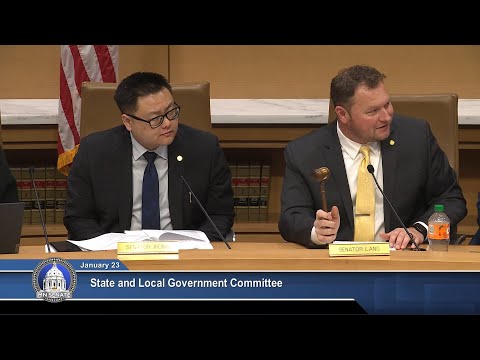
Paul Marquardt, commissioner of the Department of Revenue, told the Senate Committee on State and Local Government on Jan. 23 that the department administers roughly $33 billion in general-fund revenue and has seen efficiency gains since adopting hybrid and telework arrangements.
"Our mission is to administer, collect, enforce, and so forth, funding for investments for the state of Minnesota," Marquardt said as he outlined the department's functions and budget.
The nut graf: Marquardt described taxpayer-protection work, IT and security measures, and performance measures that the department says show increased returns processed and greater collections per budget dollar while using telework; members asked for supporting data and raised concerns about remote work, office closures and the department's handling of sensitive federal tax information.
Marquardt said the department administers about $33 billion in general-fund revenue and that the agency's annual operating budget is about $200 million (about 0.6% of revenues administered). He listed notable functions: certifying and educating roughly 800 licensed property tax assessors, administering child tax-credit payments, and protecting taxpayers through audits and collections — Marquardt said the department collected $487 million in past-due taxes in the most recent year cited.
On telework, Marquardt said about 95% of Department of Revenue employees have a telework agreement; roughly 5% must be on-site daily for business needs, and some employees come in 3–5 days per week. He said the department has reduced office footprint (seven regional offices closed) and that the department now has employees who live and work throughout Greater Minnesota, which Marquardt argued improves service and representation.
The department presented performance figures comparing 2019 to 2023: returns processed rose from 6.3 million to 7.2 million (a 14.3% increase) and the department reported reductions in cost per return processed and growth in tax debt collection. Committee members, including Senators Mark Kranz and Jim Curran, probed hiring practices, whether telework attracts more applicants, and whether telework may reduce informal in-person collaboration; Marquardt said the department has received stronger applicant pools and defended that performance metrics guide telework policy.
On data security, Marquardt said Department of Revenue employees use agency-issued equipment, multifactor authentication and virtual private networks and that the agency treats federal tax information with strict safeguards.
Ending: The committee asked Revenue to provide migration and demographic data on taxpayer and population trends requested for budget forecasting; no votes were taken.