Get Full Government Meeting Transcripts, Videos, & Alerts Forever!
Get email alerts on the Land Use topic
No spam. Unsubscribe anytime.
Kerrville consultants present updated future land‑use map, rework catalyst areas
Summary
Consultants told the Comprehensive Plan Advisory Committee (CPAC) they filled gaps in the 2050 future land‑use map, reduced and reallocated catalyst areas and added resilience language; staff and consultants said zoning changes may follow but would go through the usual application and review process.
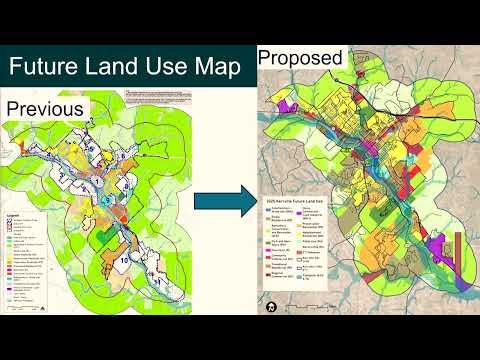
Consultants gave CPAC a midstream look at proposed revisions to Kerrville’s 2050 future land‑use chapter and map, saying they filled in previously blank “catalyst” sites, reworked several catalyst boundaries and added resilience language to the chapter.
Why it matters: The future land‑use map guides zoning recommendations and staff told CPAC the plan will be used as a tool when developers request rezoning or land‑use changes. Members said they want clearer, more actionable language so council and the public can determine whether a proposal “fits the plan.”
Consultants said they assigned place types to all areas on the future land‑use map so users do not have to cross‑reference separate documents. They also said they revised and expanded place‑type descriptions to allow more flexibility — for example, to permit mixed‑use or additional development types where the 2018 plan proved too restrictive. The team said that of the original catalyst areas, some were removed because they are already built out or no longer needed, and two downtown/Nimitz Lake areas were elevated to separate small‑area plans.
CPAC members pressed the consulting team on the basis for changing specific catalyst boundaries and place types. Consultants said changes came from a mix of internal analysis, staff input and market feedback developers shared with staff — for example, a previously designated “entertainment mixed‑use” area south of downtown was not producing projects under its existing rules, so consultants recommended expanding permitted uses there to make development “pencil” financially while retaining the area’s intent.
On procedure, staff emphasized that the plan update will be the basis for future zoning recommendations but is not itself a zoning change. Consultants said the draft land‑use chapter will be circulated to CPAC members in the coming weeks for review before the document returns to Planning & Zoning Commission and City Council later in the adoption process.
Next steps: The consultants said they expect to deliver a draft plan for review in roughly 4–6 weeks, followed by public review and formal recommendation hearings in spring and early summer.
Ending: CPAC members asked for clearer “dashboard” or checklist language attached to place types to make approvals and staff recommendations easier to justify during zoning and annexation cases.