Get Full Government Meeting Transcripts, Videos, & Alerts Forever!
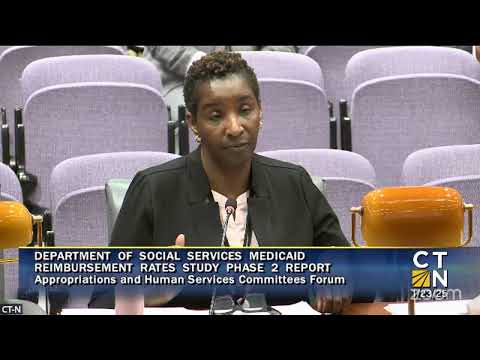
DSS presents Phase 2 Medicaid rate study; recommends regular review, Medicare benchmarking and targeted investments
Summary
The Connecticut Department of Social Services briefed the Human Services and Appropriations committees on phase 2 of a Medicaid rate study and recommended a scheduled review process, greater use of Medicare as a benchmark where comparable codes exist, consolidation of fee schedules and targeted investment in primary care, specialists and behavioral health.
The joint Human Services and Appropriations committees heard a presentation from the Connecticut Department of Social Services (DSS) on phase 2 of a Medicaid rate study, with agency leaders and consultants outlining methodology, gaps in available benchmarks, and next steps for rate review and targeted investments.
The study was presented by Andrea Barton Reeves, commissioner of the Department of Social Services, and Nicole Godburn, DSS fiscal manager for reimbursement and certificate of need. Jennifer Myers & Stauffer consultants (presented by Julia Kachiva) summarized how phase 2 compared Connecticut fee schedules to Medicare and a five‑state peer group and identified areas where benchmarking was not possible.
The study covered fee‑schedule codes representing roughly 81% of codes in scope and used Medicare where possible and a five‑state comparison (New York, New Jersey, Maine, Massachusetts and Oregon) as a secondary benchmark. Julia Kachiva said the consultants “looked at the current Connecticut Medicaid methodologies, as well as the basis and components of those rates,” and compared those rates to Medicare and peer states where meaningful comparisons existed.
Why it matters: committee chairs said rate setting affects access to care, provider workforce decisions and the state budget. Senator Lesser opened the hearing noting the state is examining Medicaid rates “for the first time in almost 20 years.” Committee members pressed DSS on where disparities are largest and on how the state should phase and prioritize changes so access is not disrupted.
Key findings and recommendations
- Benchmark approach and scope: The consultants recommended using Medicare as the primary benchmark where comparable codes exist and a five‑state average where Medicare comparators are not available, but they cautioned that benchmarking is a diagnostic tool, not an…
Already have an account? Log in
Subscribe to keep reading
Unlock the rest of this article — and every article on Citizen Portal.
- Unlimited articles
- AI-powered breakdowns of topics, speakers, decisions, and budgets
- Instant alerts when your location has a new meeting
- Follow topics and more locations
- 1,000 AI Insights / month, plus AI Chat