Get Full Government Meeting Transcripts, Videos, & Alerts Forever!
Get email alerts on the Eda Finance topic
No spam. Unsubscribe anytime.
Chesterfield outlines EDA’s role in financing county facilities, cites $430 million leveraged
Summary
Chesterfield County supervisors heard a presentation on the Economic Development Authority’s (EDA) finances and project portfolio, including how the EDA issues conduit bonds on the county’s behalf to fund public facilities and development sites.
Chesterfield County supervisors heard a presentation on the Economic Development Authority’s (EDA) finances and project portfolio, including how the EDA issues conduit bonds on the county’s behalf to fund public facilities and development sites.
The presentation matters because the EDA’s conduit financings have allowed the county to borrow at lower cost and accelerate projects the board has approved, county officials said. That approach, they said, maximizes proceeds available for capital projects without drawing directly on the general fund.
Bridal Staley, co-counsel to the EDA, told the board the EDA “is a separate political subdivision created by the county board supervisors,” and its powers are constrained by the IDA Act, the Constitution of Virginia and Virginia case law. She said the EDA’s primary purposes relevant to county work are to promote industry and trade, and “to assist in the development of facilities for the county government and the schools.”
County presenters described two regular EDA roles: issuing bonds payable from annual appropriations and conducting land-development or incentive transactions. The presenters said conduit bonds issued by the EDA are typically payable from annual appropriations by the Board of Supervisors and are structured under support or financing agreements. "The most cost efficient way for us to borrow money is through the EDA," one county presenter said, noting that using other issuers such as the Virginia Resources Authority carries higher fees and rates.
Officials gave project-level status and performance summaries. Meadowville Technology Park was presented as an example of long-term EDA involvement: an initial 2005 assessment of about $8.9 million and an interchange opened in 2012. Presenters said total investment there including interest has exceeded $19 million, and the net local cost to the county has been about $39.5 million; cumulative tax revenue to date was reported at about $43.2 million. Current annual direct tax revenue from the park was reported at about $5.5 million, with net additional revenue of about $3.9 million after debt service; 2025 assessment for the park was given as $356,900,000.
Cloverleaf and Stonebridge were described as having a distinct financing history (using a CDA structure) and, according to presenters, yielding positive net revenue. Upper Magnolia was presented as a 2,000-acre acquisition purchased for roughly $13 million in 2020 to secure sites for three schools and a library and to construct roads and utilities; presenters said state business-ready grants (two awards noted, $25 million and $13 million) have funded much of the site work and that the North–South Collector Road is funded with CVTA bonds. Officials said the EDA-held tract includes both county infrastructure and an economic-development portion.
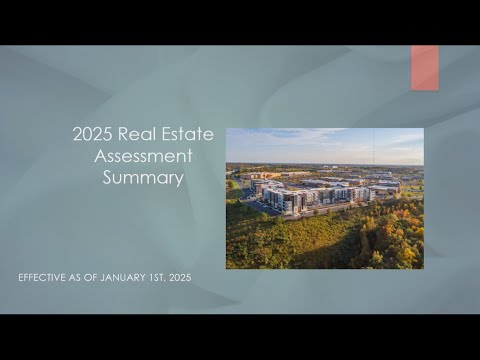
Springline at Route 60 (District 60) was described as another mixed-use site where county land acquisition and EDA financing support an expected cascade of benefits: a county-owned police station, reclaimed academic space at CTC Hull (noted as 41,000 square feet and an estimated 600 additional student seats), consolidation of administrative functions, a parking deck and an anticipated private investment the presenters estimated as “upwards of $1,000,000,000” in private development on the site.
Officials told the board that performance agreements in projects that are not EDA-owned (for example the lake project and Courthouse Landing) do not involve upfront general-fund payments; any incentives would be paid as rebates only after the developer meets agreed performance metrics. County staff said some sites (for example, Southside Speedway) are EDA-owned and are being worked with private developers.
Presenters described leverage figures: county staff repeatedly referenced roughly $430 million in total EDA-related financings enabled by county credit and EDA powers, and that approximately $311 million reflected the county’s discretionary share of CVTA-funded appropriations used on transportation-related projects. Officials said those structures allow the county to move more quickly on infrastructure and school sites than waiting for general-obligation referendum cycles.
The board was told the county will add a link on the transparency portal to publish the presentation, monthly EDA financial records and annual EDA audits in one place for public review.
Ending: No formal vote or decision on EDA authority structure was recorded in the transcript segment. Board members asked clarifying questions; presenters said projects cited arose from county initiation or school-board requests and that the EDA generally does not initiate financings unilaterally. The county will continue to publish project financials and follow up on project-specific timelines.