Get Full Government Meeting Transcripts, Videos, & Alerts Forever!
Get email alerts on the Wic Hemoglobin Screening topic
No spam. Unsubscribe anytime.
Bill would let WIC staff perform hemoglobin finger/heel/toe screens without medical assistant registration
Summary
S.B. 5244 would exempt WIC staff who perform heel, toe or fingerstick hemoglobin screenings from having to be registered as medical assistants, restoring routine anemia screening for many WIC participants.
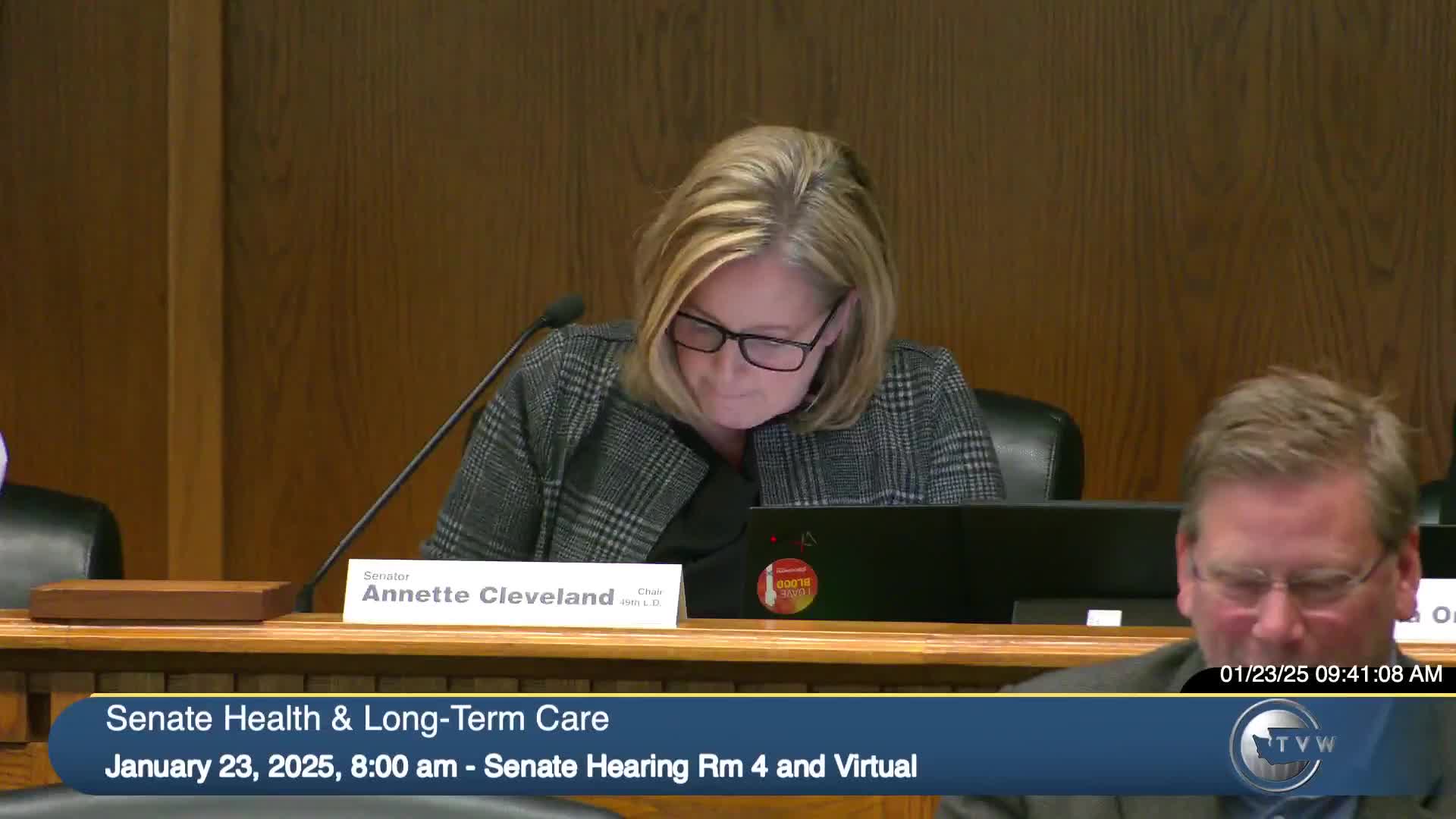
Senators heard S.B. 5244 Jan. 23, a bill to exempt Washington WIC (Women, Infants and Children) staff who perform heel, toe or fingerstick hemoglobin screening tests from the requirement to be registered or certified as medical assistants. Department of Health and local public health officials testified the technical change is necessary to restore access to basic anemia screening for many WIC participants.
What the bill would change: Current state rules require WIC staff to be registered medical assistants or operate under a health‑care practitioner’s oversight to perform the simple hemoglobin screens used to detect iron deficiency anemia. The bill would create an explicit exemption so WIC clinics can deliver the screening without the registration requirement.
Why sponsors and public‑health witnesses support it
- Access and reach: Britney Taibou, director of the Office of Nutrition Services at the Department of Health, said roughly 45,000 WIC participants currently lack equal access to hemoglobin screening because some clinics cannot meet the medical‑assistant requirement. She told the committee the exemption would align Washington with most other states and make screenings available where WIC already serves clients.
- Clinical impact: Registered dietitian Lindsay Erian (Public Health — Seattle & King County) and Nicole Fladebeau of Nutrition First (the Washington WIC association) described routine WIC hemoglobin screening as a simple, rapid test that allows staff to provide immediate nutrition counseling, iron‑rich food plans and referrals. They said early detection reduces the risk of developmental and birth complications associated with prolonged iron deficiency.
- Local public health capacity: Jamie Bodden of the State Association of Local Public Health Officials said workforce recruitment for specific licensed positions has been difficult; removing the registration requirement would allow WIC staff to add a straightforward skill and reduce barriers and appointment burdens for families.
Questions and requested changes
- Scope of similar exemptions: Apoorva Malya (Hepatitis Education Project) asked the committee to consider broader exemptions that would let staff at opioid‑treatment programs, syringe‑service programs, STI clinics and community clinics perform fingerstick infectious disease tests (HIV, hepatitis C, syphilis). Testimony noted these point‑of‑care tests are safe and widely used in other states.
Action: Testimony was taken; there was no committee vote at the hearing. The Department of Health requested the bill as a department bill and said the change would align program practice with federal WIC requirements and practice in other states.
Bottom line: Supporters said the change is a narrowly targeted, low‑risk technical fix that would expand equitable screening for iron deficiency anemia among WIC participants and reduce unnecessary appointments and paperwork for low‑income families.