Get Full Government Meeting Transcripts, Videos, & Alerts Forever!
Get email alerts on the Virtual Currency Kiosks topic
No spam. Unsubscribe anytime.
Senate bill would limit crypto kiosk transactions, require fee and fraud disclosures
Summary
Senate Bill 5280 would impose daily transaction limits, cap kiosk fees and require additional disclosures and reporting for virtual-currency kiosks; supporters say it will curb fast-moving fraud, industry speakers warn limits and fee caps could push operators out of state.
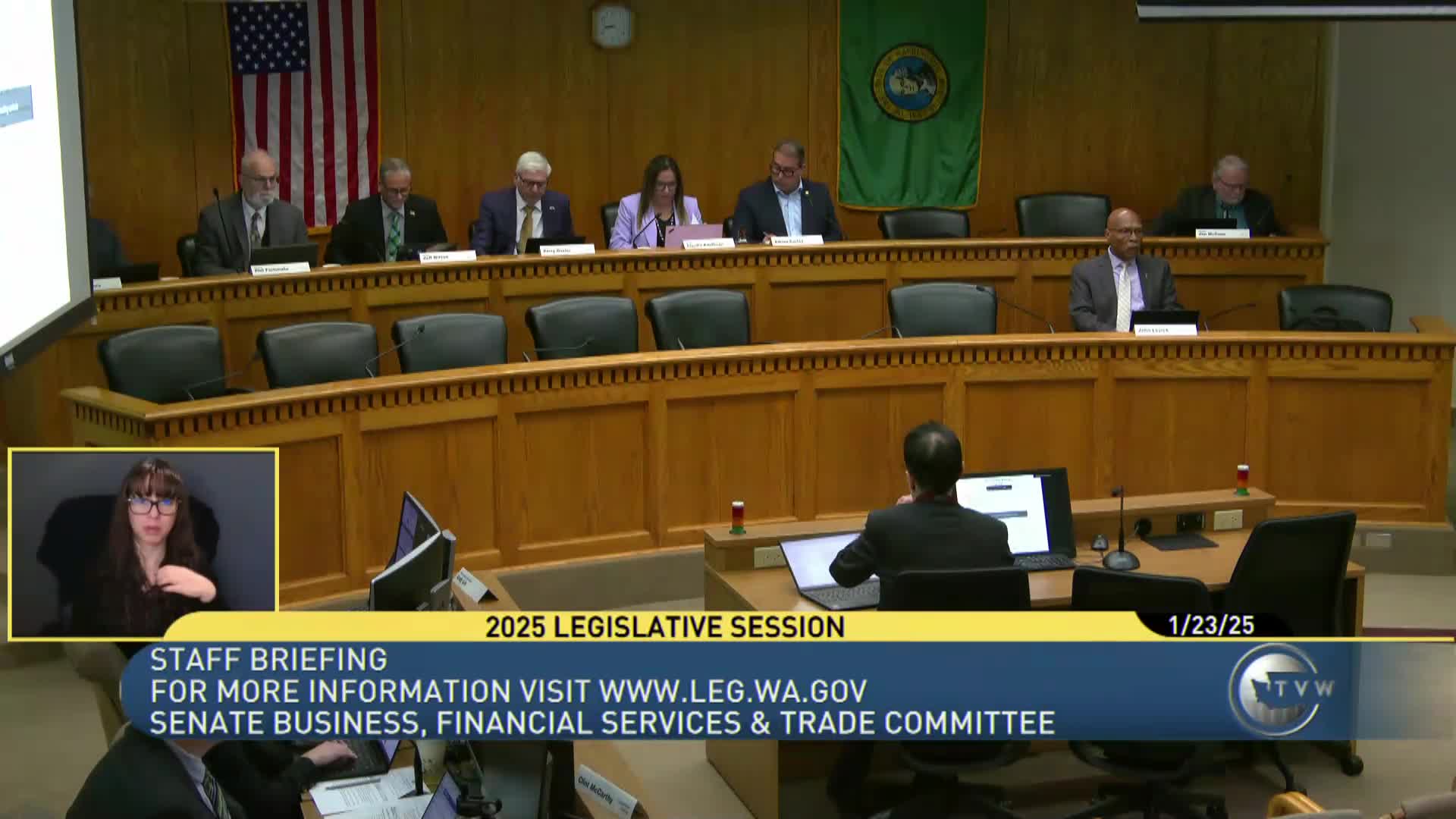
Senate Business, Financial Services, Gaming & Trade Committee chair Claudia Kauffman on Thursday heard testimony on Senate Bill 5280, a Department of Financial Institutions (DFI) request bill that would regulate virtual-currency kiosks by requiring disclosures, recordkeeping, a $1,000 daily transaction limit and a fee cap equal to the greater of $5 or 5% of a transaction.
The bill’s sponsor, Senator Claudia Kauffman, said the kiosks are “popping up in shopping malls throughout the state” without consistent limits or notice to consumers and that the measure is intended to “protect consumers” by mandating clearer receipts, warnings about fraud and reporting requirements. Kauffman said the bill “strikes a balance between protecting consumers and fostering innovation.”
DFI’s Drew Boughton described the measure as a public-safety response to local fraud: “We were approached by the Spokane Police Department in late 2023. They were telling us about the fraud losses they were seeing through these machines,” Boughton said, noting that stolen virtual currency often moves overseas rapidly and is difficult to recover. Spokane Police Detective Timothy Schwering told the committee the kiosks are a primary cash-out point for long-running “pig butchering” scams and said officers have seen victims lose life savings; “we can’t get the money back,” he said, describing perpetrators often located in jurisdictions outside U.S. reach.
Law enforcement, consumer groups and banking representatives urged rules. Glenn Simicak, president of the Washington Bankers Association, said kiosks operate “in an evolving regulatory arena that may expose the public to significant risks” and urged the committee to adopt the bill’s disclosures and limits to curb fraud. Kathleen McCall of AARP Washington called kiosk fraud “the fastest growing form of fraud” and said cases include seniors depositing thousands or tens of thousands of dollars at kiosks at scammers’ direction.
Industry operators testified against portions of the bill. CoinFlip’s Kevin Volley and Bitcoin Depot’s Ethan McClellan said they support licensure, required disclosures, blockchain analytics and customer service standards but argued a $1,000 daily limit and a 5% fee cap would be unduly restrictive. McClellan warned the proposal could “effectively prevent kiosk companies from doing business in Washington,” and said low limits might drive stacking transactions across operators and reduce valuable data available to FinCEN and law enforcement. CoinFlip noted federal reporting obligations (suspicious activity reports above $2,000 and currency transaction reports above $10,000) and argued that a $1,000 cap could undermine anti-money-laundering effectiveness.
The measure would make kiosks subject to enhanced reporting and consumer-disclosure standards and set a maximum daily transaction and fee cap; DFI and the attorney general estimate the bill has no fiscal impact. No committee votes were recorded in the hearing. The committee limited later public testimony to three minutes and asked participants to coordinate amendments with staff by the stated deadline.