Get Full Government Meeting Transcripts, Videos, & Alerts Forever!
Get email alerts on the Public Safety Pedestrian Ordinance topic
No spam. Unsubscribe anytime.
Elgin adopts ordinance banning pedestrian activity in roadways, city cites safety and legal limits on solicitation
Summary
The Elgin committee approved a new ordinance Jan. 22 that bars pedestrian activities in roadways — including medians and crosswalks when used to solicit — after staff cited rising pedestrian fatalities and local accident increases; enforcement will begin with education and warnings and escalate to citations if needed.
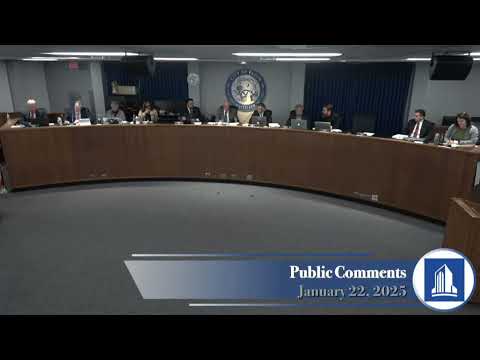
Elgin’s committee of the whole on Jan. 22 approved an ordinance that prohibits pedestrian activities in public roadways, including medians and crosswalks where people are soliciting drivers, to address a rise in pedestrian crashes and what staff described as a shifting legal landscape. The measure passed unanimously.
City managers told the committee that pedestrian fatalities remain elevated nationwide and that locally incidents of solicitations and related crashes have increased more than 60% (from 114 reported accidents in 2015 to 184 in 2024). Corporation counsel said the ordinance is written to avoid First Amendment problems identified in Reed v. Town of Gilbert while designating roadways and medians as nonpublic forums for speech activity.
"This all came about with Reed versus Gilbert," Corporation Counsel Beck said, describing the legal challenge of regulating content-based solicitation rules. "The city has taken an approach of declaring medians and roadways nonpublic forums where speech activity is not permitted, leaving sidewalks and parks open for speech."
Why this matters: city staff argued the restriction targets documented safety hazards — night-time pedestrian deaths, collisions involving SUVs and pickup trucks, and local increases in roadway incidents — while attempting to preserve constitutionally protected public forums such as sidewalks and parks.
Key provisions and enforcement Staff said the draft ordinance adds definitions (roadway, median, public forum) and makes clear that roadways are not intended to be locations for solicitation or other pedestrian activities that interrupt traffic flow. The ordinance’s definition of "roadway" explicitly includes medians, crosswalks and pedestrian areas used to cross streets; sidewalks remain available for lawful speech and solicitation.
Police Chief Lally outlined enforcement protocols that the department would follow if the ordinance becomes law: an initial response to confirm a violation, on‑scene education and a documented warning, and, on repeat noncompliance, issuance of a citation. "First ... education would be the first step," Chief Lally said. "If there's subsequent violations ... we would then issue a citation and ensure that the person ceases their activity. If they do not comply, they could be taken into custody." He said local prosecutors have provided preliminary guidance as staff refine procedures.
Council debate and context Council members who spoke said public safety motivated their support. Councilman Thorn described several near-miss incidents he had witnessed on medians and at intersections and pressed staff to move forward for safety reasons. Council members also asked staff whether the draft covers roads without medians and whether county-controlled streets (for example, Randall Road) would be addressed; staff confirmed the ordinance applies to any city roadway and that intergovernmental coordination would be needed for county or state roads.
Corp. Counsel Beck and staff cautioned that the ordinance could face legal challenge given the evolving case law, but said the city’s draft focuses on forum designation and safety and thus offers a stronger legal posture than prior solicitation enforcement.
The council approved the ordinance by roll call (9–0). Staff said the ordinance is narrowly focused and that further legal review and outreach would follow before full implementation.