Get Full Government Meeting Transcripts, Videos, & Alerts Forever!
Get email alerts on the County Auditor Duties topic
No spam. Unsubscribe anytime.
Committee hears competing views on bill to clarify county auditor duties and internal audit authority
Summary
Senate bill to consolidate and clarify county auditor duties drew support from county auditors and watchdog volunteers for clearer law and internal audit authority; county commissioners urged changes to preserve local budget authority and to avoid shifting fiscal control away from elected boards.
Senator Gaynor introduced Senate Bill 5154, which sponsors said consolidates disparate statutory references to county auditor responsibilities and clarifies the auditor's role for budgeting, recording instruments and financial services.
Why it matters: Supporters said the bill brings clarity to a scattered body of law and updates long‑standing practice. "This bill is an effort to bring clarity and transparency by collecting the scattered references to auditor duties and placing them in the proper section of law," Heidi Hunt, Adams County auditor and co‑chair of the Washington Association of County Auditors' finance committee, told the committee.
Auditors and the Washington Association of County Officials supported the bill. Skip Moore, Chelan County auditor, and Steve Dunkel, Mason County auditor, said the measure authorizes internal auditing tasks and aligns statutory language with current operations. Dunkel said internal audits "are valuable information for risk management and internal control development" and urged the committee to advance the bill.
County elected officials raised separation‑of‑powers and budget‑authority concerns. Paul Jewell, testifying for the Washington State Association of Counties, asked for edits so the bill would not be read to give auditors unilateral authority outside existing law; Jewell recommended adding the word "preliminary" to clarify the auditor's role in budget preparation and removing a proposed subsection that could be construed as expanding auditor authority over county staffing.
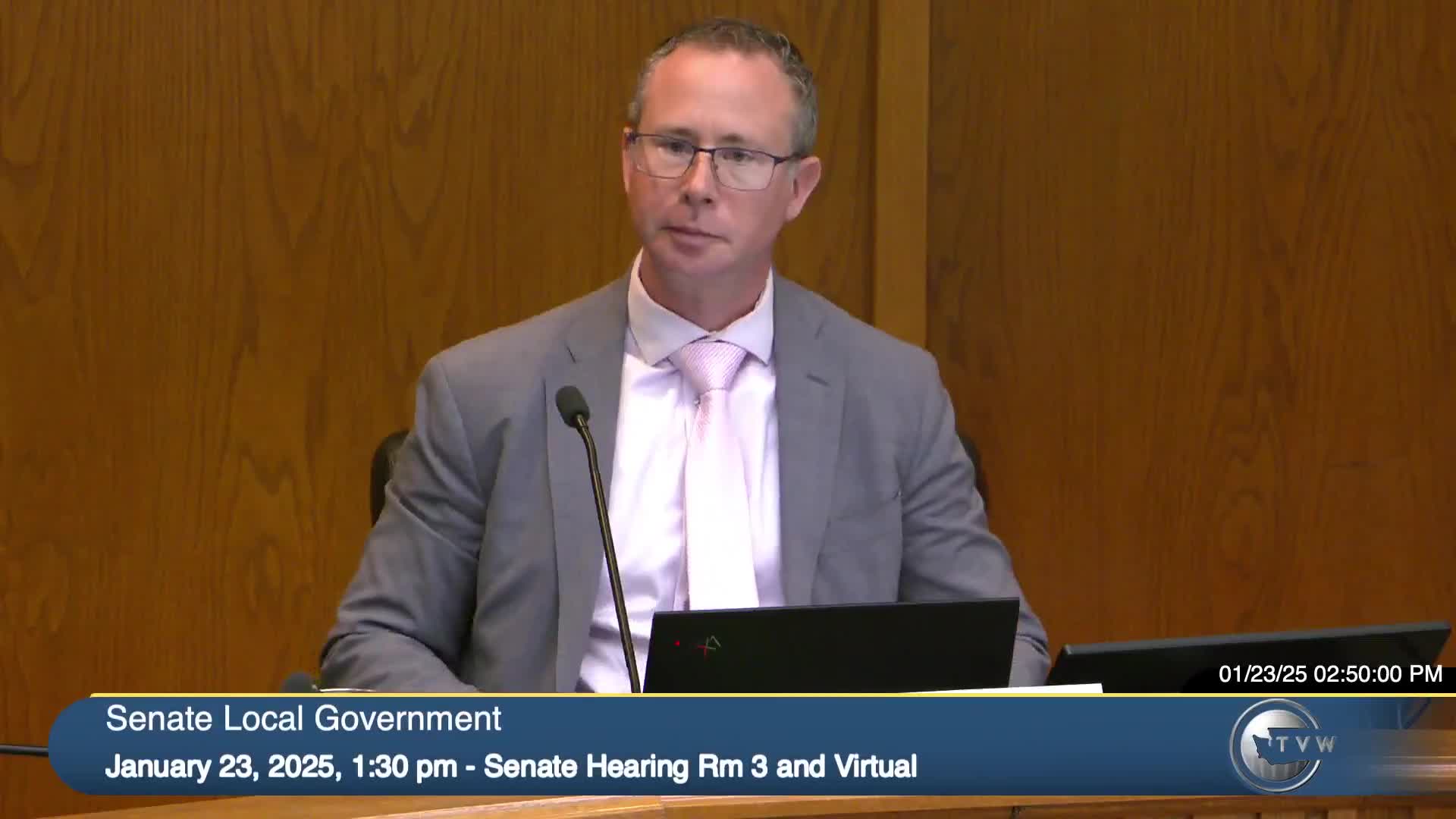
Wayne Fournier, Thurston County commissioner, said the draft language could be interpreted to "grant the auditor sole authority to draft a budget without input or oversight from the commission" and asked committee members to pause and work through amendments with auditors and counties. Commissioners and some county representatives asked that current flexibility for small counties be retained so an auditor can serve as clerk of the board if a county chooses.
Citizen testimony reflected both sides. Barry Halverson, a volunteer with experience reviewing county budgets, urged clarity and named instances where Thurston County's budget practice had prompted adverse audit findings; John Pettit, also a citizen witness, said clearer state direction would reduce inconsistent local interpretations.
Next steps: No committee vote was recorded. Staff and stakeholders said they will continue to negotiate language to preserve the preliminary budget role of auditors while addressing counties' concerns about separation of powers and clerk‑of‑the‑board duties.