Get Full Government Meeting Transcripts, Videos, & Alerts Forever!
Get email alerts on the Transportation topic
No spam. Unsubscribe anytime.
Ports highlight freight, rail and airport projects and ask for continued state support
Summary
The Washington Public Ports Association told the Senate committee ports are central to state trade and economic development and described major projects — from Port of Seattle airport investments to terminal and rail expansions — that depend on coordinated state funding and permitting.
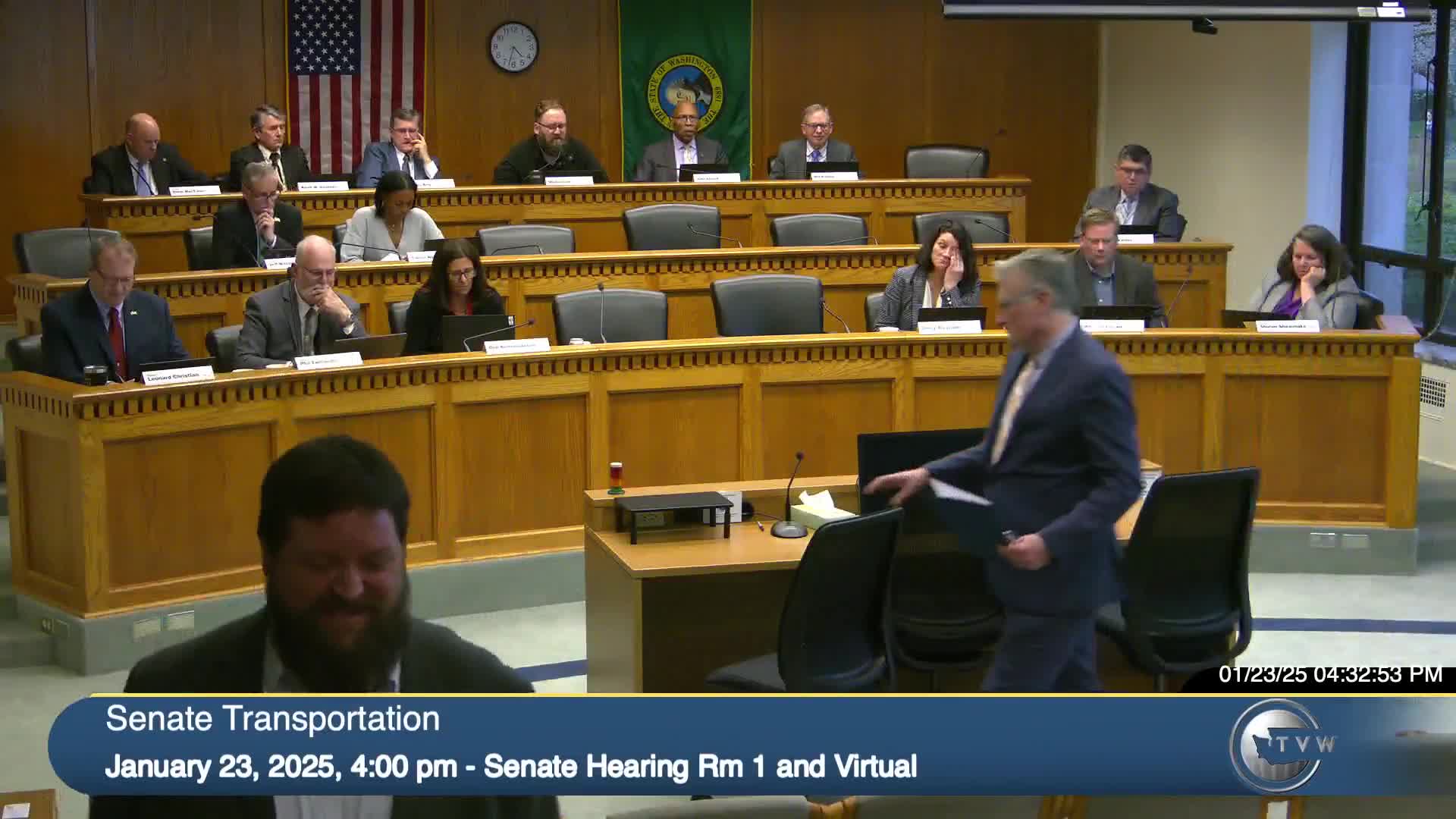
Chris Herman, deputy director of the Washington Public Ports Association, told the Senate Transportation Committee that port districts are central to the state's economy and require reliable transportation investments to remain competitive.
"Our primary mission is economic development and job creation," Herman said, describing ports as the nexus connecting local producers with global markets.
Herman noted Washington has 75 port districts — roughly half of all U.S. port districts — and that ports operate a broad array of facilities including marine terminals, inland ports and 37 airports (including all 12 commercial service airports in the state). He said ports range from small general‑aviation fields to major hubs such as Seattle‑Tacoma International Airport (SEA).
Herman highlighted several projects and programs: the Northwest Seaport Alliance's roughly $500 million investment to reactivate and modernize Terminal 5; the Port of Seattle’s ongoing $5 billion capital program (Upgrade SEA) and a parallel draft Sustainable Airport Master Plan (SAMP) that Herman said may add another $5 billion in capital investments and is completing federal environmental review this year. He said SAMP includes a proposed new Terminal 2 with 19 gates and related roadway access improvements.
On decarbonization, Herman thanked the legislature for funding port electrification projects and said Climate Commitment Act funds and other grants are supporting shore power, 0‑emission equipment and remote vessel charging projects, including a $2 million Port of Anacortes electrification project that pairs state funding with EPA Clean Ports grant efforts and local marine‑manufacturing conversion projects.
Herman described several freight and rail projects that ports are advancing: a T4 rail expansion at the Port of Grays Harbor tied to a private $170 million investment; a TEMCO rail expansion to add about 25,000 feet of track and speed trains on and off the BNSF mainline (about a $37 million project); and a Port of Longview rail expansion of roughly $80 million.
Herman also previewed the Supply Chain Competitiveness Improvement program, a bill the ports association supports; he said the program aims to address projects that enable movements of oversized or specialized cargo (for example, high‑and‑wide aerospace components) where multiple public owners or jurisdictions must coordinate improvements to create a viable corridor.
Ending: Herman asked the committee to continue funding freight, port electrification and rail projects and to engage with ports during environmental review processes such as NEPA and SEPA for major projects.