Get Full Government Meeting Transcripts, Videos, & Alerts Forever!
Get email alerts on the School Safety And Student Rights topic
No spam. Unsubscribe anytime.
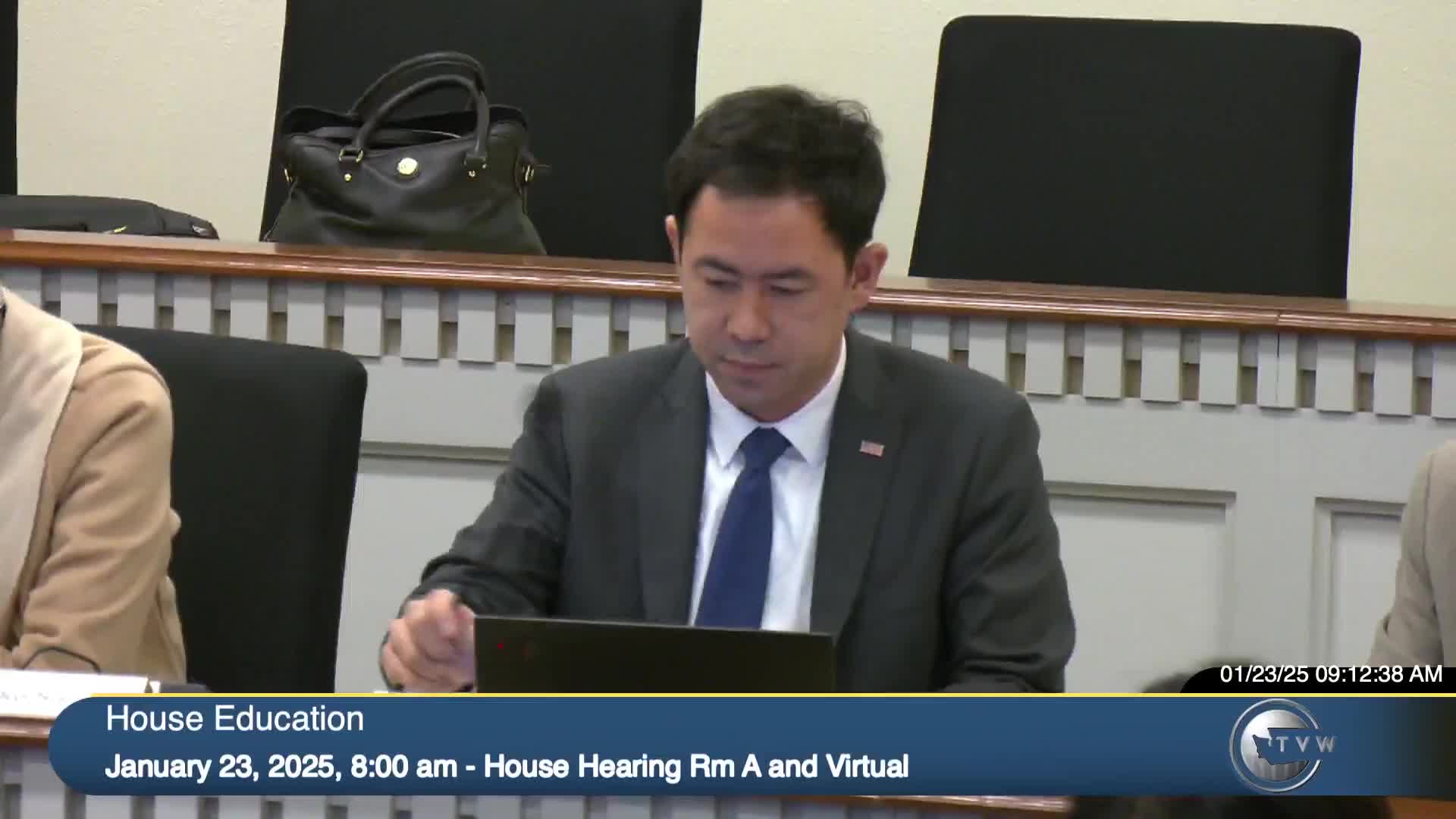
House Education Committee holds wide‑ranging hearing on safe‑and‑supportive schools bill that would revise parental and student rights and enforcement
Summary
House Bill 1296, a sweeping proposal to require districts to adopt materials on student rights, update transgender‑related policies, and authorize OSPI enforcement measures, drew extensive testimony and sharply divided public comment on Monday in Olympia.
House Bill 1296, a comprehensive bill described by staff as promoting a "safe and supportive public education system," drew one of the largest public‑testimony turnouts the House Education Committee has seen this session. The bill contains multiple components that would (1) declare a state policy prioritizing student safety, access to education and privacy; (2) modify the statutory list of parents’ rights adopted most recently by initiative; (3) limit certain disclosures to parents during criminal or child‑welfare investigations; (4) require school materials explaining student rights; (5) require school district policies addressing the needs of gender‑expansive students by Jan. 31, 2026; and (6) prohibit adverse employment actions against staff who support students’ legal rights or follow approved standards.
Ethan Moreno, committee staff, described the bill’s six component parts and the interplay of federal privacy law, state protections and existing statutory frameworks. Under the bill OSPI would be directed to adopt rules, provide technical assistance and could impose sanctions for noncompliance, including terminating all or part of state apportionment or categorical monies and placing a district on probation until compliance is achieved. Staff noted a fiscal note had been requested but not yet received.
The bill’s prime sponsor, Representative Monica Stonier, framed the proposal as intended to protect students’ access to learning and a sense of belonging. "This bill is centered on ensuring that every student in our state has a safe and supportive school environment so that they can access the learning that we as a state are required to offer," Stonier said. Supporters argued HB 1296 clarifies how the parental‑rights initiative interacts with existing federal and state law, preserves student privacy in sensitive circumstances (for example in criminal or child‑welfare investigations) and protects educators from adverse employment actions for following learning standards or supporting students.
Student and youth speakers described personal experiences and urged passage. Howell Hall, a recent graduate and advocate, said educators need trusting relationships with students and that mandatory disclosure to parents could harm students in unsafe home situations. Several LGBTQ+ and student‑advocacy organizations presented data and research showing higher rates of bullying and suicide risk among gender‑diverse youth and said inclusive school policies are associated with better attendance and achievement.
School officials and school‑board representatives raised objections focused on enforcement mechanisms and district autonomy. Jill Lisonbee, a Richland School District director and a representative of the Washington State School Directors Association (WSSDA), said accountability must be targeted at individuals who violate the law rather than at whole districts; she cautioned that sanctioning funding or placing districts on probation could inadvertently harm students. Multiple school‑board and district speakers said existing enforcement mechanisms (recall, administrative and legal processes) are more appropriate remedies for unlawful acts by directors or employees.
Testimony was sharply divided in public comment tallies the committee read into the record: 1,212 pro, 1,479 con and 6 other sign‑ins on HB 1296 at the close of the hearing. Supporters include civil‑rights, LGBTQ+, public‑health and student‑advocacy groups that emphasized mental‑health risks to vulnerable youth and the protective effect of inclusive policies. Opponents included school‑board members and parent groups who argued the bill would undermine the parents’ bill of rights adopted by initiative and could risk state funding and local control.
Committee members asked a range of technical and legal questions during the briefing: staff confirmed the bill draws on FERPA definitions and regulations for certain record categories and noted that some language (for example the "sole possession" teacher‑note exclusion) tracks federal regulations. Members also asked whether OSPI’s sanction authority could conflict with the state constitutional requirement to provide uniform funding; staff said they would research the constitutional question. Staff and the sponsor acknowledged the bill will require careful drafting and amendments; the sponsor said she is working on changes addressing accountability and enforcement language.
No committee vote was taken during the hearing. Committee leadership reminded testifiers that the session was long and that time limits meant not all signatories were able to testify in person; members asked stakeholders to submit proposed amendments for the committee to review.
— Ending —