Get Full Government Meeting Transcripts, Videos, & Alerts Forever!
Get email alerts on the Financial Education topic
No spam. Unsubscribe anytime.
House panel hears bill to make financial education a statewide high school graduation requirement
Summary
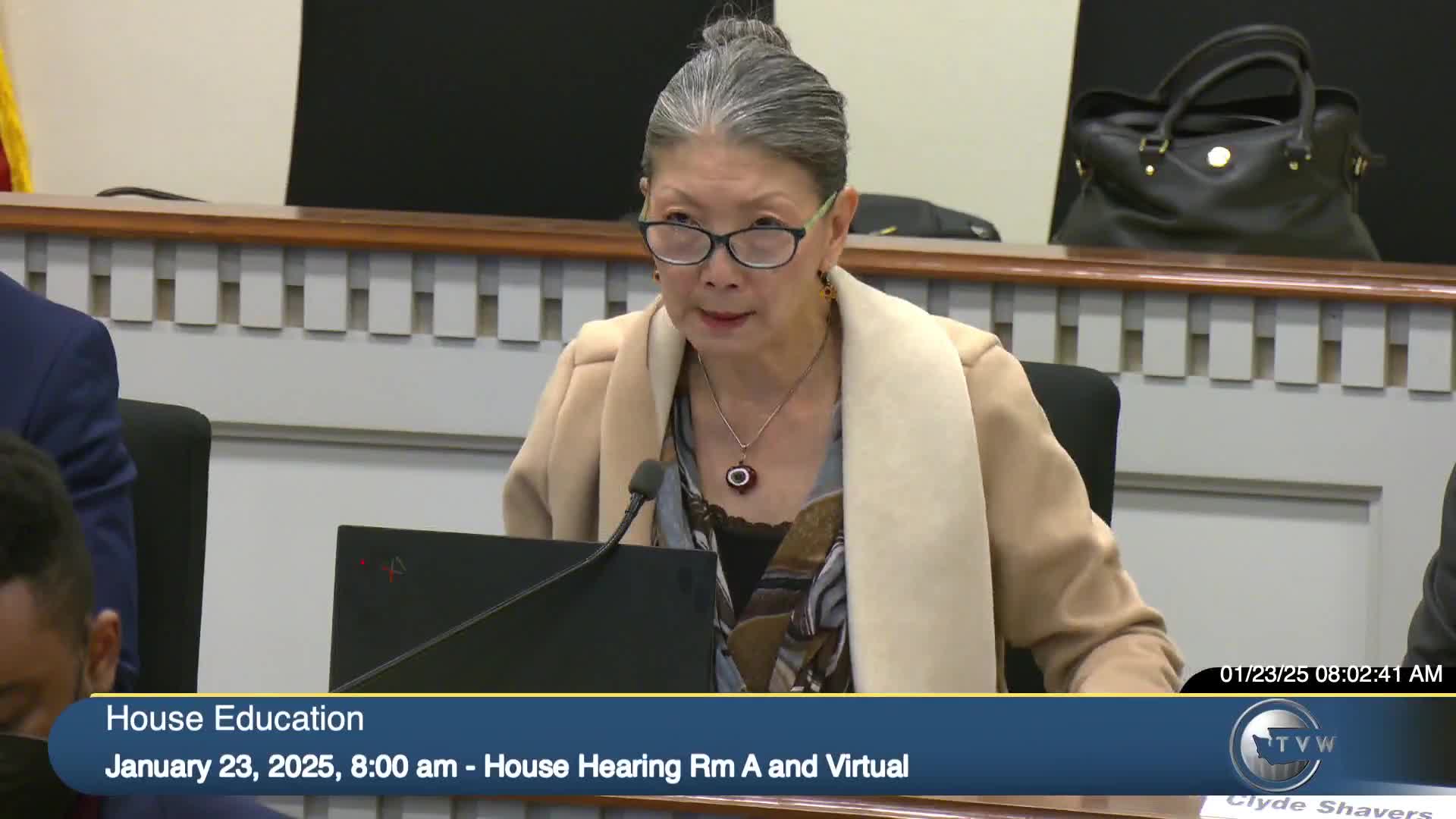
House Bill 1285, which would require students to meet state financial education learning standards to receive a high school diploma beginning with the graduating class of 2031, received a public hearing before the House Education Committee in Olympia on Monday.
House Bill 1285, which would require students to meet state financial education learning standards to receive a high school diploma beginning with the graduating class of 2031, received a public hearing before the House Education Committee in Olympia on Monday.
The bill was briefed by Ethan Moreno, nonpartisan staff to the committee. Moreno told lawmakers that the state’s financial education learning standards were adopted in statute by reference in 2015 and that the Office of the Superintendent of Public Instruction (OSPI) has developed standards that start in kindergarten and continue through grade 12. Under HB 1285, districts and charter schools must provide instruction in the state standards beginning in or before the 2027–28 school year and publicize the offering and new requirement to students and parents no later than the 2027–28 school year. The bill also requires data collection and an implementation plan: by Dec. 15 this year districts must submit course lists and implementation needs to the Financial Education Public‑Private Partnership (FEPP), and the FEPP must deliver a statewide implementation plan to OSPI, the State Board of Education and legislative committees by the end of 2026.
Supporters said the requirement would ensure equitable access to basic personal‑finance knowledge. "I have not run into one adult yet who said they were fully prepared exiting K–12 in this subject area," said Representative Skyler Rood, prime sponsor of the bill. Rood, the ranking member and prime sponsor, told the committee he removed a prior half‑credit prescription so the State Board’s Future Ready work can determine how the requirement fits into the broader graduation framework.
Tracy Godat, executive director of the Financial Education Public‑Private Partnership, told the committee FEPP already provides teacher training, reviews instructional materials and administers grants created by the Legislature in 2022 (Senate Bill 5720). "Parents overwhelmingly want the schools to teach personal finance and we know students learn best from well trained educators using engaging, high quality curricula," Godat said. Jaylee Schultz of the State Board of Education said nearly all districts provide an opportunity for high‑school students to access financial education, and about one‑third of districts reported requiring it locally as a graduation requirement.
Students, nonprofit groups and industry representatives also testified in favor. Ashton Joshi, founder of the Ashwin Teen Financial Academy, and Matt Zovich, legislative director for the State Treasurer’s Office, urged lawmakers to move ahead so students statewide would gain comparable instruction. Several local school‑leadership and teacher groups praised the bill but urged careful, phased implementation and supports for teacher training and materials.
Opponents and some commenters raised implementation concerns. David Selamire, a drivers‑education instructor, warned that simplified classroom materials can omit legal detail and questioned whether teachers would have sufficient expertise to teach topics that interact with consumer law. The Washington State PTA supported the idea of financial education but asked that implementation be timed so it does not restrict student course options under the 24‑credit framework and suggested the requirement not begin until the class of 2032 unless further coordination occurs.
Committee staff noted a fiscal note had been requested but not yet received during the briefing. The committee recorded 134 pro, 461 con, and 1 other written sign‑ins on HB 1285 at the close of the public hearing. No committee vote or final action occurred at the hearing; the bill was presented for public testimony and further deliberation.
The bill contains multiple reporting deadlines and planning requirements intended to coordinate with the State Board of Education’s Future Ready work; supporters said the deadlines will help districts prepare, while several witnesses urged clearer timelines and communication templates for districts to notify families.
If advanced, the measure would direct FEPP and OSPI to monitor district offerings, collect data on courses and student reach, and recommend adjustments to ensure students have adequate opportunities to meet the financial education graduation standard.
— Ending —