Get Full Government Meeting Transcripts, Videos, & Alerts Forever!
Get email alerts on the Pensions Overview topic
No spam. Unsubscribe anytime.
Staff brief outlines structure, funding and legal limits of Washington state pension systems
Summary
Amanda Cecil, staff to the Senate Ways & Means Committee, gave a primer on Washington’s public retirement systems, explaining plan types, benefit formulas, funding metrics, governing bodies and recent federal changes affecting a small group of retirees.
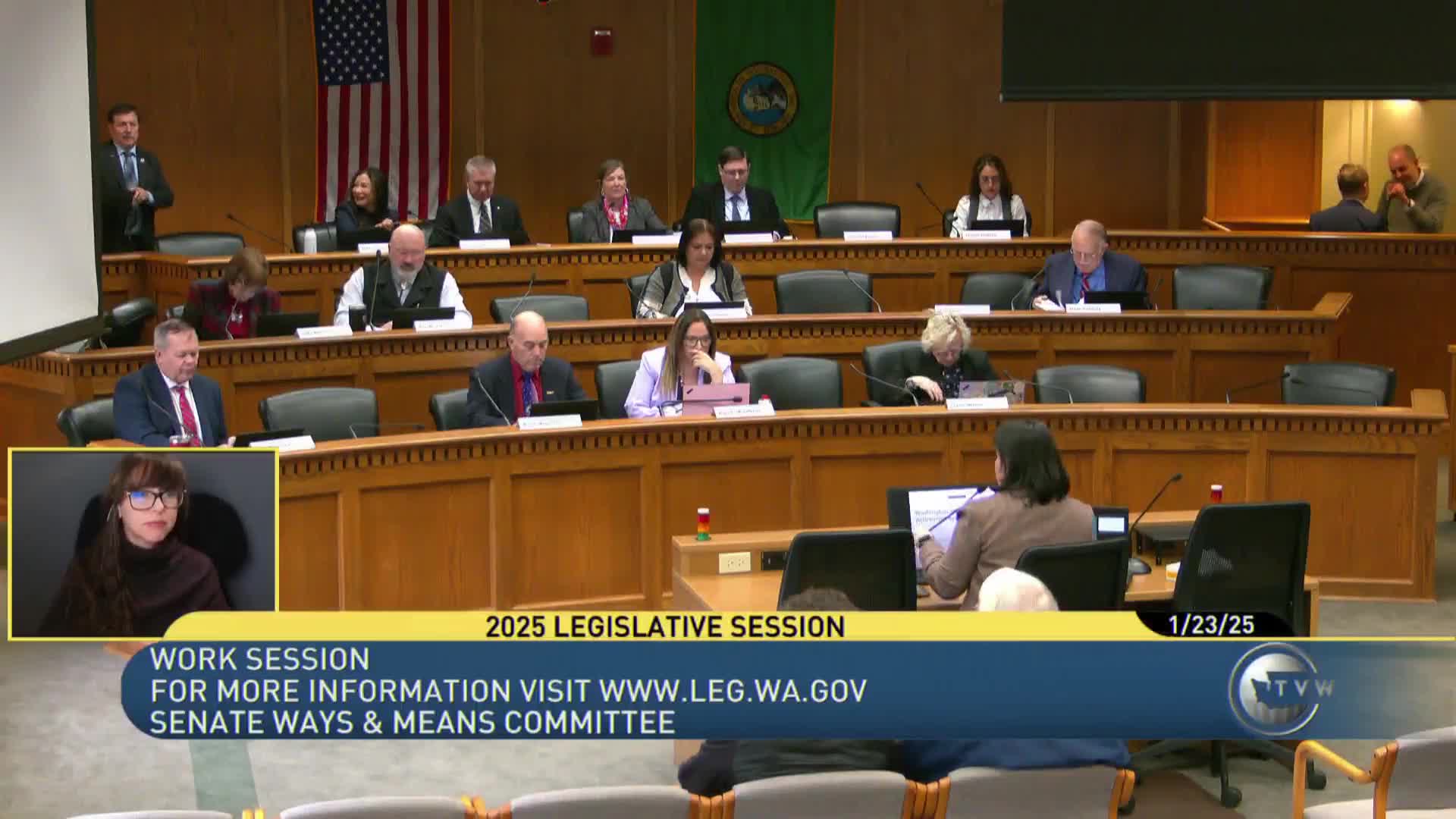
Amanda Cecil, staff to the Senate Ways & Means Committee, opened the committee’s Jan. 23 work session with an overview of Washington State’s public retirement systems, describing plan types, benefit calculations, governance, funding measures and a recent federal change affecting a small group of retirees.
Cecil said Washington’s public pensions include multiple systems commonly referred to by acronyms (PERS, TRS, LEOFF and others) and that within each system members generally fall into one of three plans: Plan 1 (closed defined benefit), Plan 2 (defined benefit with a 50/50 employer/employee cost split) and Plan 3 (a hybrid with a defined‑benefit portion plus a defined‑contribution account). “Within Washington state, there’s also hybrid plans that includes a little bit of both,” she said.
Why it matters: the committee is considering several bills that would change benefit formulas, contribution rates and how liabilities are amortized. Those choices affect employer and employee contributions, and—over time—the funded status of each plan.
Cecil explained how defined‑benefit payments are calculated: a multiplier (commonly 2% times years of service), years of service, and an average salary over a plan‑specific period produce the base payment. She noted Plan 3’s defined‑benefit portion uses a lower multiplier because part of retirement is paid from contributions invested in an individual account; about 10% of retirees across plans have “annuitized” their Plan 3 lump sums into annuities.
On cost‑of‑living adjustments (COLAs), Cecil said Plan 1 does not have an automatic COLA built into its original funding model; Plan 2 and Plan 3 include up to a 3% annual COLA tied to inflation. She summarized that roughly a quarter to a third of Plan 1 retirees receive a statutory minimum benefit that is adjusted for inflation, while most Plan 1 retirees receive ad hoc COLAs when the legislature enacts them.
On governance, Cecil described the roles of the Department of Retirement Systems (DRS), the State Investment Board (which invests roughly $180 billion in public funds), the Office of the State Actuary, the Select Committee on Pension Policy, and the Pension Funding Council, which sets contribution rates biennially. She emphasized that public pensions are creatures of state law and that established case law (including Bakken House) limits the legislature’s ability to reduce benefits that were prescribed when they were earned.
On funding metrics, Cecil defined the funded ratio as actuarial assets divided by accrued liability and said a 100% ratio is the typical target. She summarized June 2023 funded‑status snapshots that show several closed Plan 1 systems remain underfunded while one legacy plan (LEOFF 1) is overfunded. ‘‘Good news is none of Washington’s plans are projected to run out of money,’’ she said, while noting funded ratios depend on long‑term assumptions about investment returns and longevity.
Cecil also flagged two federal changes: Congress recently repealed the windfall elimination provision and the government pension offset, which will raise Social Security checks for a small group of people who worked in both covered and noncovered positions; DRS estimated about 200 people may be affected. She closed by directing members to the committee materials, which include the presentation and tables she used.
Ending: Cecil said materials and bill summaries presented to the committee are available on the Legislature’s website; the committee moved from the overview into bill briefings and a public hearing on multiple pension bills.