Get Full Government Meeting Transcripts, Videos, & Alerts Forever!
Get email alerts on the Affordable Housing Financing topic
No spam. Unsubscribe anytime.
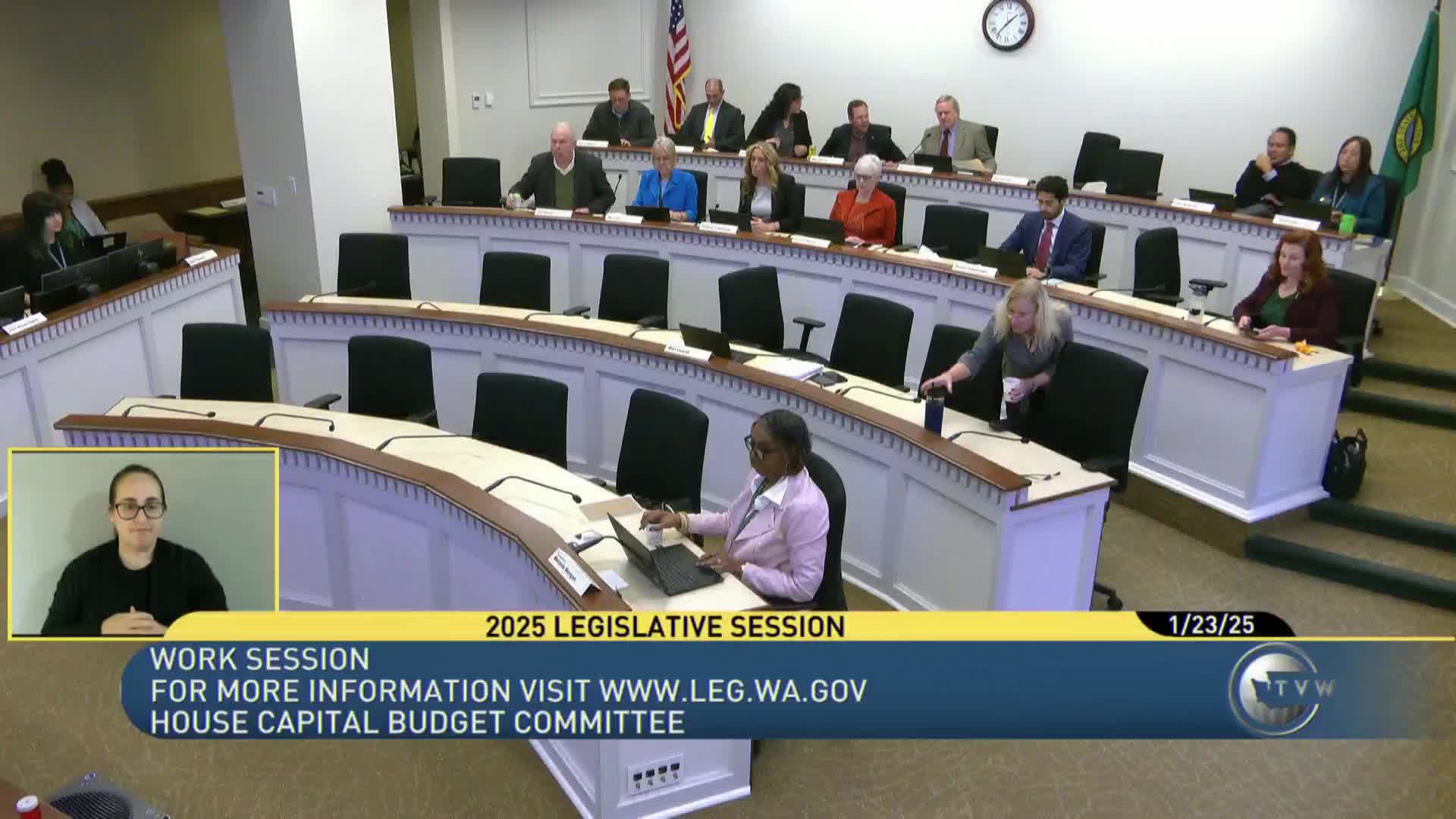
Capital Budget committee hears Commerce, Housing Finance Commission on shortfall and pipeline fixes for affordable housing
Summary
Department of Commerce and the Washington State Housing Finance Commission told the Capital Budget Committee on Jan. 23 that state housing programs rely on private leverage, face higher per‑unit costs, and need pipeline management, land acquisition funding and an updated AMI methodology to deliver more deeply affordable units.
The Capital Budget Committee met Jan. 23 for a work session on affordable housing financing, hearing presentations from Joe Wynne, director of the Washington State Department of Commerce; Ted Kelleher, acting assistant director of the Housing Division at Commerce; and Lisa Vetsa of the Washington State Housing Finance Commission.
Wynne told the committee the state Housing Trust Fund has awarded more than $2 billion in capital since 1986 toward roughly 58,000 housing units, and that 90% of that funding was awarded in the last 10 years. He said the 2024 Housing Trust Fund appropriation—about $84–85 million—funded 22 developers and roughly 873 units, representing “only 4%” of the total cost of those projects and about 2% of the annual production needed to meet the state’s goal. Wynne cited HB 1220’s finding that Washington needs about 1.1 million housing units over the next 20 years and stressed the state cannot meet that goal without private‑market production and stronger pipeline management.
Why it matters: Committee members pressed Commerce and the Housing Finance Commission on how to stretch limited public dollars, speed shovel‑ready projects, and change program rules so state funds better leverage private investment. Committee members expressed particular interest in land acquisition programs, changes to scoring and caps that affect project readiness, alternatives to HUD’s area median income (AMI) definitions for rural areas, and protecting existing subsidized housing through preservation financing.
Key points from Commerce - Scale and leverage: Wynne said the Housing Trust Fund has been heavily funded in recent legislative cycles and that state dollars are designed to leverage private capital. He noted recent dollars funded a small share of total construction costs for awarded projects and that fully funding current applicants would require roughly an additional $250 million and would have produced more than 4,000 funded units instead of the 873 awarded in 2024. - Targeting deep affordability: Wynne said about 35% of Housing Trust Fund dollars went to projects serving households at or below 30% AMI (deeply affordable housing). - Rising per‑unit costs: Wynne described median per‑unit development costs of about $525,000 and said developers had reported per‑unit costs as high as $700,000; one project outside Washington was cited at about $900,000. He traced higher costs mainly to construction and land acquisition and to interest‑rate effects that raised financing costs in many Puget Sound projects. - Pipeline and program rules: Wynne recommended treating the Housing Trust Fund as a managed pipeline so projects can be ranked and funded as dollars become available instead of reapplying each year. He also questioned an existing $5 million per‑project cap on awards, suggesting a strategic change to avoid “layer‑cake” stacking where many projects receive insufficient funds to close their capital stacks. - Infrastructure and CHIP: Wynne described the Connecting Housing to Infrastructure Program (CHIP) as important to remove sewer/water/stormwater cost barriers and said about $12.7 million was available in the 2023–25 biennium; Commerce plans to announce a 2025 round. He noted coordination is required because CHIP funding is routed through local jurisdictions, not developers. - Permitting and NEPA/SEPA coordination: Wynne and committee members discussed permitting delays and workforce shortages in permit review. Wynne suggested better federal‑state coordination on NEPA/SEPA and modernizing permitting technology and staffing.
AMI study and technical work Ted Kelleher, acting assistant director for Commerce’s Housing Division, told the committee Commerce is conducting the legislatively required AMI study due June 2025. The study will evaluate alternative methods for calculating AMI (HUD currently sets the federal HUD AMI), run the numbers for different geographies, and solicit feedback from an advisory committee and stakeholders. Kelleher said a finer‑grained, more regionalized AMI could better reflect local affordability and that some rural areas find HUD AMI thresholds unsuitable for program targeting.
Housing Finance Commission priorities Lisa Vetsa of the Washington State Housing Finance Commission described the commission’s financing tools—tax‑exempt bonds, federal Low Income Housing Tax Credits (LIHTC) and revolving loan funds—and the agency’s role in coordinating with Commerce. Vetsa said the commission is self‑sustaining and does not use general fund operating dollars.
On pipelining and land acquisition, Vetsa outlined a long‑running land acquisition/land‑banking program begun in 2008. She said the revolving land acquisition program has grown over time and that the commission and partners have invested roughly $120 million through that program to preserve sites for nearly 6,000 units. The legislature provided $40 million in the recent budget for state land acquisition funding; Vetsa described $12 million of the state allocation layered with a Microsoft match and the remainder placed in the commission’s land acquisition pool.
Preservation and cost‑effectiveness Vetsa urged the committee to weigh preservation of existing subsidized housing alongside new construction. She said more than 5,000 tax‑credit‑financed units will reach the end of initial investor regulatory terms in the next five years, presenting a risk to long‑term affordability without targeted preservation resources. Vetsa also described how LIHTC pricing and bond issuance have tightened: in earlier years the commission issued roughly $878 million in bonds and produced nearly 4,700 units in a fiscal year; more recently the commission issued about $663 million and produced roughly half that number—illustrating market and pricing impacts on production.
Discussion highlights and next steps Committee members asked Commerce and the commission about: (1) changing the $5 million per‑project cap; (2) aligning biennial budget timing and program cycles with tax‑credit and bond markets; (3) expanding land acquisition and faith‑property conversion efforts; (4) adjusting AMI for rural areas; and (5) prioritizing preservation funding. Wynne said Commerce will follow up with operating details on scoring and the funding pipeline; Kelleher reiterated the AMI report timetable; Vetsa offered to provide comparative preservation versus new construction cost data.
No formal committee votes occurred during the session. Members directed staff and agencies to follow up with the committee on scoring rubrics, pipeline options, CHIP/SHIP coordination, and the AMI report due in June 2025.