Get Full Government Meeting Transcripts, Videos, & Alerts Forever!
Get email alerts on the Transportation Parking topic
No spam. Unsubscribe anytime.
Committee hears bill letting homeowners park in front of their own driveways
Summary
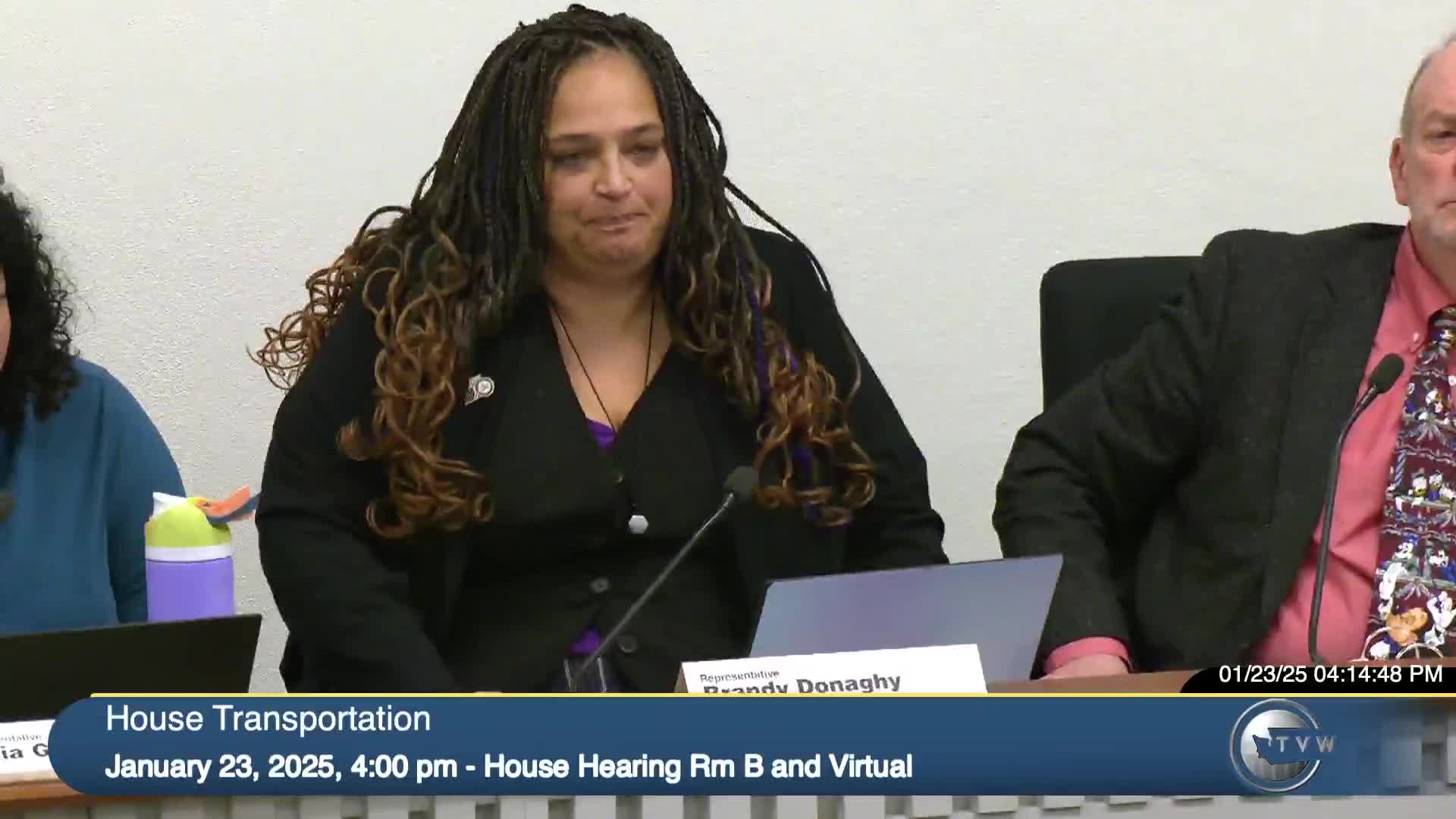
The House Transportation Committee heard testimony Jan. 23 on House Bill 1061, which would allow cities and counties to adopt ordinances permitting homeowners to park in front of their own driveways so long as the parked vehicle does not obstruct a sidewalk, another driveway, or the roadway.
The House Transportation Committee heard testimony Jan. 23 on House Bill 1061, which would allow cities and counties to adopt ordinances permitting homeowners to park in front of their own driveways so long as the parked vehicle does not obstruct a sidewalk, another driveway, or the roadway.
The bill would not compel local governments to change current rules; it would give cities and counties the option of letting residential property owners or their designees park across the point of ingress or egress to their driveway. Jennifer Harris, staff to the committee, summarized the current statute and the bill’s change: “It’s unlawful to stop, stand, or park a vehicle in front of a public or private driveway or within 5 feet of the end of the curb radius leading to a public or private driveway,” and under the bill “a city or county may, by ordinance or resolution, allow residential property owners to park or allow another to park across the point of ingress or egress of the owner's driveway as long as the vehicle does not obstruct a sidewalk, another driveway, or the roadway.”
Proponents said the proposal is aimed at practical parking shortages that have grown as housing density increases. Representative Blow, the bill sponsor, told the committee the measure “seeks to provide a common sense solution by allowing local jurisdictions the flexibility to permit homeowners to park vehicles in front of their own driveways.” He and supporters emphasized the bill preserves local control and safety safeguards rather than imposing a statewide mandate.
Alex Hurd, testifying for the Master Builders Association of King and Snohomish counties, said the change could help reduce minimum on‑lot parking requirements that increase housing costs and that local jurisdictions will have to define how the policy works on the ground. Brett Gailey, mayor of Lake Stevens, offered a neighborhood example: in one subdivision of 55 single‑family homes, adopting the option could “result in the addition of 11 on street parking stalls,” a gain he said would provide “a 22%” improvement for homes in that block.
Several committee members pressed on enforcement and practical application. Representative Reid asked how officials would ensure only homeowners or their designees use permitted spaces; proponents responded enforcement would fall to local police departments and that the bill only creates an option for local governments to adopt and enforce as they see fit. Committee staff said no state fiscal impact is expected and that a local fiscal note shows minimal impact but had not yet been fully reviewed.
No vote occurred during the hearing. The committee closed the public hearing on House Bill 1061 and moved to other agenda items.
The bill as presented leaves implementation details—such as any local registration, marking, or permit system—to cities and counties that choose to adopt an ordinance or resolution.