Get Full Government Meeting Transcripts, Videos, & Alerts Forever!
Get email alerts on the Deferred Compensation Volunteer Firefighters topic
No spam. Unsubscribe anytime.
Committee hears bill to let volunteer firefighters join state deferred compensation plan
Summary
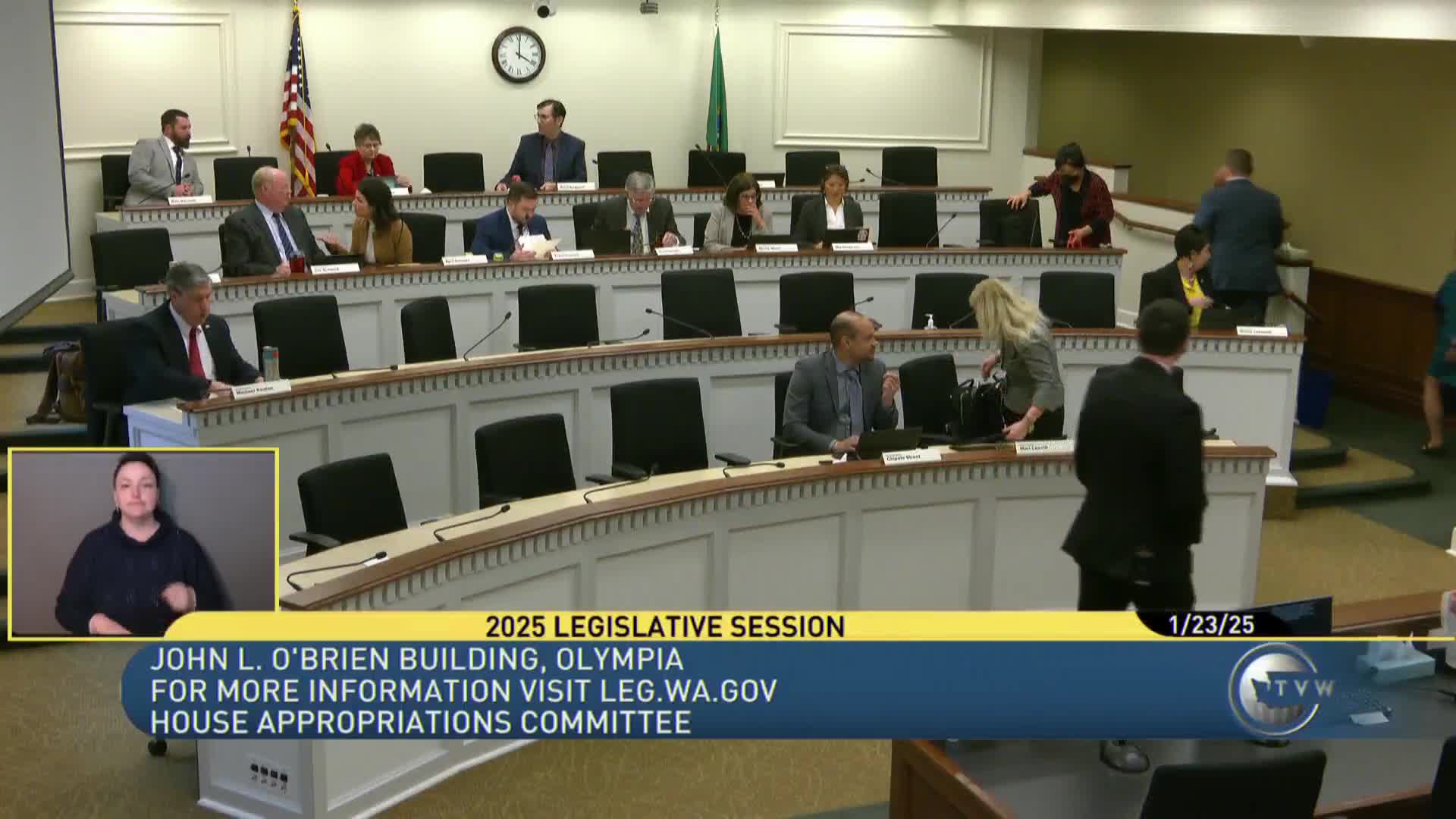
The Appropriations Committee held a public hearing on House Bill 1156, which would allow volunteer firefighters to participate in Washington state's deferred compensation program if their firefighting agency opts in.
The Appropriations Committee held a public hearing on House Bill 1156, which would allow volunteer firefighters to participate in Washington state's deferred compensation program if their firefighting agency joins the program.
House Bill 1156 was presented to the committee by David Pringle, staff to the committee, who described the state deferred compensation program as a 457 plan administered by the Department of Retirement Systems (DRS) under Internal Revenue Code section 457. Pringle said the bill would permit volunteer firefighters to participate when their firefighting agency participates and that he expected a small administrative impact at DRS.
Supporters at the hearing said the change would help recruiting and retaining volunteers. Andrew Shaffrin of the Washington State Firefighters Association said, "we have a little over 10,000 volunteers in the state of Washington," and that allowing participation in the deferred compensation plan is "part of our recruitment retention program." Arnold Baker, fire chief of Chelan County Fire District 5 and chair of the Washington Fire Chiefs Recruit and Retention Committee, described past local experiments with deferred compensation and an audit finding that some volunteers were told they could not be enrolled; he said the bill responds to that issue.
Testimony clarified the bill is intended as an optional pathway for volunteers and not a replacement for the state's volunteer relief and pension system. Baker noted the volunteer pension benefit cap cited by his department: "the maximum they can receive right now is a $350 monthly payment pension." Committee staff noted no fiscal note was yet in the electronic bill book for HB 1156 but expected only a small administrative cost to DRS.
The hearing concluded with no committee action recorded. Committee members were told the bill is scheduled with four other bills for executive session on Monday and that amendment deadlines apply for that meeting.