Get Full Government Meeting Transcripts, Videos, & Alerts Forever!
Get email alerts on the Policy Recommendations topic
No spam. Unsubscribe anytime.
Local studios push for tax credits, creative grants and a city-backed publisher to keep game jobs in Philadelphia
Summary
Founders and local developers told City Council that targeted incentives — including job creation/retention tax credits, a production tax credit, and a municipal grant or publishing vehicle — would help studios scale and keep talent in the city. PHL Collective proposed several specific tax credit designs and a city creative grant program.
Local game‑studio founders and advocates urged City Council to adopt targeted financial supports to help retain and grow Philadelphia’s game industry.
Nick Madonna, founder of PHL Collective, presented a four‑part package to the committee on Jan. 22: establish job‑creation and job‑retention tax credits; introduce a Philadelphia video game production tax credit requiring at least 30% of production expenses be spent locally and offering an additional 10% credit for productions that display a “Philly makes games” logo; abolish the Philadelphia Business Income and Receipts Tax (BIRT) to reduce a financial barrier for small creative firms; and launch a city creative grant program to help indie developers finish and market games. “Establishing job creation and job retention tax credits will incentivize studios to hire and retain local talent,” Madonna told the committee.
Public commenters and other witnesses recommended smaller seed grants and a city publishing or funding vehicle to underwrite early development. Corey Arnold, who has led community programs and incubators in the city, cited a recommendation in the task force report proposing a city office to serve as a publisher and distribute graded seed funding, and suggested $50,000–$300,000 seed grants could get many studios to market. Tom Sharp, director of Gossamer Games, proposed commissioning games about Philadelphia — a route he said could simultaneously generate marketing for the city and paid project work for local developers.
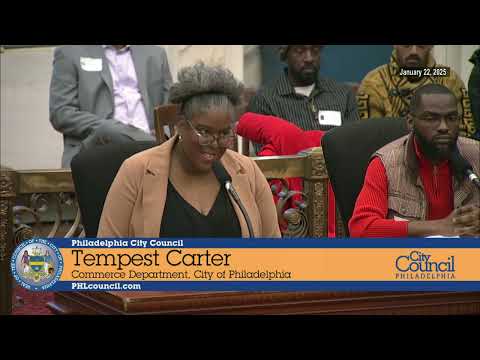
Witnesses and councilmembers acknowledged tradeoffs and the need to coordinate with the administration on fiscal feasibility. Commerce Department officials said they are studying incentives and are open to alternatives beyond a straight tax credit, including grant programs and partnership models. No legislative action was taken at the hearing; councilmembers asked staff and advocates to refine cost estimates and implementation models for subsequent hearings.