Get Full Government Meeting Transcripts, Videos, & Alerts Forever!
Get email alerts on the Gaming Economic Development topic
No spam. Unsubscribe anytime.
Council holds hearing on PHL gaming task force report as Commerce pledges follow-up study
Summary
Philadelphia City Council’s Committee on Legislative Oversight held a public hearing on Jan. 22 to review the PHL gaming task force report and options to expand the city’s games and esports economy.
Philadelphia City Council’s Committee on Legislative Oversight held a public hearing on Jan. 22 to review the findings of the PHL gaming task force and discuss opportunities to grow the city’s game‑development and esports sectors.
Councilmember Isaiah Thomas, chair of the committee, framed the session as an effort to add “gaming” to Philadelphia’s economic brand alongside existing clusters in health, education and hospitality. “We want Philadelphia to be a gaming city,” Thomas said as he opened the hearing on Resolution 240983, which authorizes the committee to receive the task force report and review its findings.
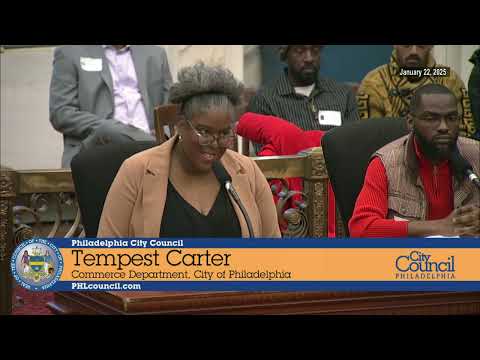
Tempest Carter, director of Strategic Tech Initiatives in the Commerce Department, told the committee the city has seen growth in local studios, esports organizations and events and that the department is commissioning a city economic study and a separate incentive study to outline policy options. “Philadelphia is currently under investing in this space,” Carter said. She cited partnerships with local institutions and programs and noted Commerce’s role connecting startups to capital readiness programs and accelerators; she also confirmed the administration will publish an incentives study in the coming weeks.
Industry witnesses described the economic scale they believe is at stake and urged municipal support. Nicodemus Manidu, CEO and co‑founder of Jump Button Studio and a member of the PHL gaming task force, said the industry already outpaces film and music combined and argued Philadelphia could capture substantial economic activity with sustained city support. “Philadelphia is positioned to be a premier destination for gaming careers and economic growth within this decade,” Manidu said.
Committee members and witnesses repeatedly raised a menu of city roles: grant programs for indie developers, tax credits or retention incentives, partnerships with libraries and universities to create workspace and training, and targeted promotion of the PHL gaming conference scheduled for September 2025. Carter and other administration representatives said they are open to exploring incentives beyond traditional tax credits, including grants and public‑private collaboration, and highlighted an existing Quality Jobs program that offers $5,000 per qualifying new job.
The hearing produced no formal votes. Councilmembers and witnesses asked the administration to continue the dialogue and return with actionable proposals; staff said further panels and follow‑up work are planned. The committee recessed at the call of the chair with direction to carry the conversation forward.