Get Full Government Meeting Transcripts, Videos, & Alerts Forever!
Get email alerts on the Housing Squatting topic
No spam. Unsubscribe anytime.
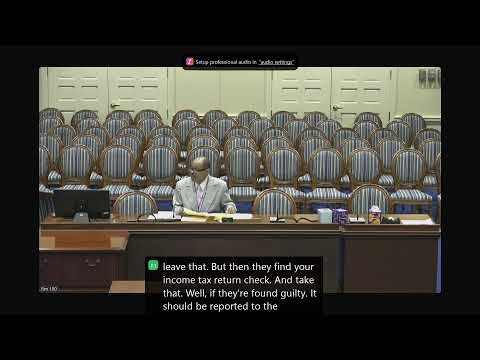
House Judiciary Committee hears competing proposals to speed removal of squatters, criminalize fraudulent leases
Summary
Delegate Ryan Naraki, sponsor of HB 202, urged the House Judiciary Committee to approve criminal penalties for fraudulent leases and faster removal of alleged squatters, saying the measure would “crack down on fraudsters.”
Delegate Ryan Naraki, appearing before the House Judiciary Committee, urged lawmakers to approve HB 202, a bill that would make it a crime to fraudulently convey or lease a residential property and — in some versions — allow expedited removal of people occupying property without authorization.
“This legislation is common sense,” said Delegate Ryan Naraki, the bill sponsor. “It cracks down on fraudsters, those who create fake leases and counterfeit documents, who will face increased penalties.”
Backers from landlord and property-owner trade groups told the committee the measure addresses a growing problem. Ashley Clark of the Maryland Multi Housing Association said HB 202 “provides an additional tool to help owners remove an unauthorized occupant, restore possession to the rightful owner, and mitigate a safety risk to their tenants and communities.” Hugo Cantu of the Apartments and Office Building Association (AOBA) said the bill targets unauthorized subleasing that current civil remedies do not reach.
Several committee members and defense-oriented witnesses urged caution. Joseph Loveless, an attorney with Maryland Legal Aid, and Albert Turner of the Public Justice Center warned that language allowing immediate removal by a sheriff or deputy — based on an owner-signed affidavit — could dispossess people who were victims of leasing scams or who legitimately believed they had a tenancy. Loveless said wrongful detainer procedures in Real Property §14-132 already provide a civil path for repossession and that summary removals without a court hearing risk due-process violations.
State’s attorneys and law-enforcement allies said prosecutors currently face obstacles when perpetrators travel across county lines or use counterfeit documents. Perry Taylor, deputy state’s attorney for Prince George’s County, supported aggregating related theft/fraud offenses so prosecutors can join multiple incidents into a single case when they are part of an organized scheme.
Public testimony included property owners’ accounts of financial loss and fear. David Brand described paying $9,000 to someone who claimed he had lawfully rented Brand’s Baltimore County rehab property after confronting intruders while a sale was pending. Resident Jessica Leggett described being scammed into a rental and later displaced; she said access to court process “helped me understand… the little time I had to move out. The little time was crucial for me.”
Opponents called for alternatives short of immediate law-enforcement eviction, such as expedited judicial proceedings, mandatory proof-of-ownership registries, or requirements for written leases and licensing for rental operators. Maryland Legal Aid proposed a suite of preventive and remedial measures — centralized rental licensing, written-lease requirements, tenant registries and a victim relocation fund — as ways to protect both property owners and people victimized by fraudulent leases.
Committee members pressed both sides about data. Naraki and supporters said anecdotal reports drove the proposals; critics pointed to a lack of comprehensive statewide counts. The Office of the Public Defender noted a fiscal-note estimate (cited in committee questions) that a new criminal pathway could add hundreds of cases — a number some legislators asked staff to verify.
The committee also heard related introductions by Delegate Frank Conaway — HB 154 and HB 164 — that would create criminal penalties for unauthorized possession and enable law-enforcement removal in certain circumstances. Public Justice Center and Maryland Legal Aid both urged unfavorable reports for those measures, citing constitutional and due-process concerns and the practical burden placed on sheriffs and deputies forced into factual determinations at the door.
Where the bills differ: HB 202 (as presented by Naraki) emphasizes penalties for those who create and traffic in fraudulent leases and includes language allowing expedited action in some cases; HB 154 would make unauthorized possession a misdemeanor with escalating penalties; HB 164 would more explicitly authorize law-enforcement removal subject to conditions in the bill text.
The committee did not take a vote on any of the measures during the hearing. Lawmakers asked staff and stakeholders to continue drafting and to explore compromises, including an expedited judicial process as an alternative to immediate sheriff-led removals.
Ending: The panel left the record open for further conversations: supporters asked for statutory changes to deter organized fraud, while defenders and legal-aid groups requested safeguards to ensure people who were victims of scams or who have lawful-but-imperfect tenancy evidence are not wrongfully displaced.