Get Full Government Meeting Transcripts, Videos, & Alerts Forever!
Get email alerts on the Clean Energy Finance topic
No spam. Unsubscribe anytime.
Bill would create revolving loan program to help Maryland nonprofits finance clean‑energy upgrades
Summary
House Bill 145 would establish a revolving loan program to finance renewable and energy‑efficiency projects for Maryland nonprofits; sponsor and nonprofit representatives supported the concept and suggested an amendment to route administration through the Maryland Clean Energy Center.
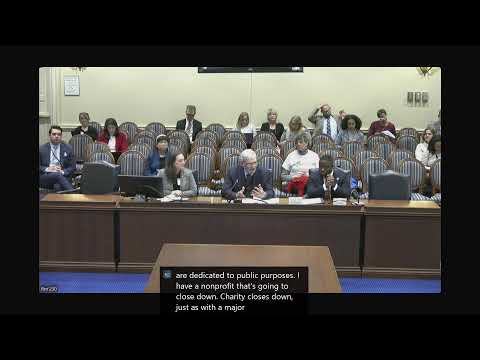
Delegate Adrianne Boafo presented House Bill 145 to establish a revolving loan program to finance renewable energy and energy‑efficiency projects for Maryland nonprofit organizations, using allocations from the state’s C‑Fund or through the Maryland Clean Energy Center under a proposed amendment. “HB 145 establishes a revolving loan program to fund environmental infrastructure projects for Maryland nonprofits,” Boafo said.
Henry Bogdan of Maryland Nonprofits testified in support and described the program as filling a financing gap because many nonprofits cannot access tax‑based incentives available to private entities. “It gives us a chance to be contributing to the state to reaching its climate goals,” Bogdan said, noting the potential market would be in the thousands of nonprofits with eligible projects.
Witnesses recommended allowing administration through the Maryland Clean Energy Center (MCEC) to leverage private capital and lower the need for a large state appropriation. Katie Meddle of Advanced Energy United also endorsed the bill, citing benefits to solar and storage providers and nonprofit operating budgets. Committee discussion noted that appropriation and fund‑source questions would be considered in the budget process and that a Senate cross‑file has already moved in the other chamber. No formal committee vote was recorded during the hearing.