Get Full Government Meeting Transcripts, Videos, & Alerts Forever!
Get email alerts on the Data Centers topic
No spam. Unsubscribe anytime.
Sponsor seeks study of data‑center energy, economic and environmental impacts in Maryland
Summary
House Bill 270 would commission a multi‑year study on the aggregate energy, environmental and economic impacts of data‑center development in Maryland; supporters, including the Office of the People’s Counsel, said a statewide accounting would help policymakers and the state coordinate with PJM planning and avoid premature transmission costs.
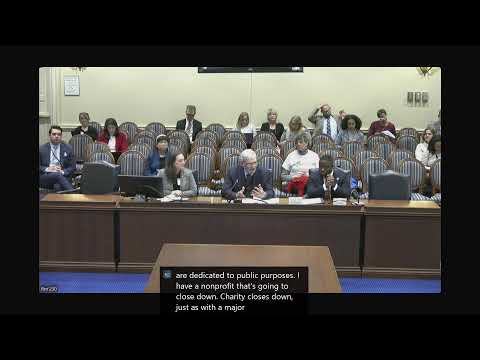
Delegate Brian Crosby, sponsor of House Bill 270, told the committee the bill will commission a study to quantify the environmental, energy and economic impacts of data‑center development in Maryland and inform future policy choices. “What we want to see is what are those financial benefits? And do they outweigh the cost of energy…that impact on the grid that is gonna have on Marylanders,” Crosby said.
David Lapp of the Office of the People’s Counsel testified in support, saying data centers can impose substantial costs on residential customers because of high energy demand and that recent PJM transmission allocations driven by projected data‑center demand had assigned significant transmission costs to Maryland ratepayers. “Maryland customers will bear those costs even if all those data centers never actually materialize,” Lapp said, urging better information before large transmission investments are finalized.
Multiple witnesses described hyperscale centers’ large power and water needs and urged the study to include counts of existing and proposed centers, projected load, and interconnection and cooling impacts. Brandon Hill and Elizabeth Law, a former transmission planner and FERC staffer, said Maryland currently generates roughly 60% of its power demand and that hyperscale data centers can consume power at city‑scale levels; Law testified that an individual hyperscale campus might require multiple high‑capacity transmission lines at full buildout and urged accurate statewide accounting.
Delegate Crosby said the bill does not halt negotiations or construction; it creates a two‑year study (with statutory effective/finish dates reflected in the bill language) to provide aggregate, neutral information to policymakers. Committee members asked whether the study would consider both costs and benefits — such as potential operational efficiencies from cloud migration — and Crosby said the study is intended to analyze net economic, environmental and grid impacts. No committee vote on HB 270 was recorded during the hearing.