Get Full Government Meeting Transcripts, Videos, & Alerts Forever!
Get email alerts on the Right To Repair Wheelchairs topic
No spam. Unsubscribe anytime.
Maryland committee hears bipartisan push for 'right to repair' power wheelchairs
Summary
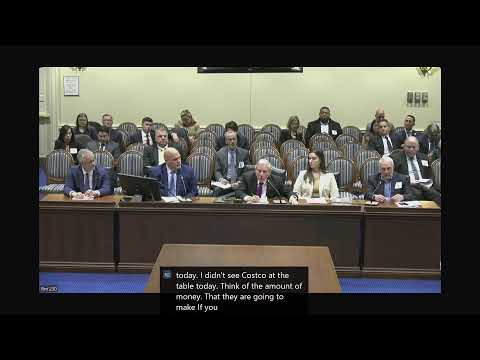
Delegate Aaron Kaufman asked the House Economic Matters Committee on Oct. 12 to back HB 31, legislation that would require manufacturers of powered wheelchairs to make replacement parts, embedded software, firmware and repair documentation available to wheelchair owners and independent repair providers.
Delegate Aaron Kaufman asked the House Economic Matters Committee on Oct. 12 to back HB 31, legislation that would require manufacturers of powered wheelchairs to make replacement parts, embedded software, firmware and repair documentation available to wheelchair owners and independent repair providers.
The bill, which Kaufman described as modeled after a Colorado law passed in 2022, would treat a manufacturer’s failure to comply as a deceptive trade practice under Maryland law. Kaufman said long delays and limited repair options leave users isolated and at risk: "When wheelchairs are broken, it's as if our legs are bridled," he told the committee, describing delays that can prevent people from working or attending medical appointments.
Supporters said the measure would expand local repair options and help wheelchair users regain independence. Franz Schneiderman of Consumer Auto Maryland said the proposal would "mean much better access to vital repairs and the ability to get the repairs done more quickly for a group of consumers who very much depend on these devices for their livelihoods." Steve Sakamoto Wengle of the Maryland attorney general’s Consumer Protection Division recommended a favorable report and framed the matter as a public-safety and consumer-protection issue: the division has long supported right-to-repair measures that expand safe repair alternatives.
Disability Rights Maryland emphasized the bill’s civil-rights implications. Darya Pugh told the committee that market concentration among a few manufacturers leaves many wheelchair users with long waits and high costs; she urged passage to give users choice, reduce wait times and support local repair businesses.
Supporters cited published surveys showing prolonged repair waits: according to testimony citing US PIRG data, 62% of wheelchair users reported repairs taking four or more weeks and 40% reported waits of seven or more weeks; supporters said 93% of respondents had needed service in the prior year and roughly 83% said right-to-repair would help.
Committee members asked about federal preemption, safety and whether the bill would require the provision of encryption keys or create liability for independent technicians. Witnesses said the bill would require manufacturers only to provide the information necessary to perform diagnostics, maintenance and repairs and that failure to comply would be treated as an unfair trade practice rather than creating a new private tort.
No formal vote was recorded during the hearing. Supporters asked the committee for a favorable report; the hearing record includes written testimony from the Maryland Developmental Disabilities Council and the Maryland Council of Independent Living.
Kaufman and witnesses said the bill includes no anticipated fiscal impact to state operations. The committee will consider drafting amendments and the bill’s language before a possible vote in coming weeks.