Get Full Government Meeting Transcripts, Videos, & Alerts Forever!
Get email alerts on the Pharmacy Accessibility topic
No spam. Unsubscribe anytime.
Committee pauses pharmacy-accessibility bill after debate over costs, implementation
Summary
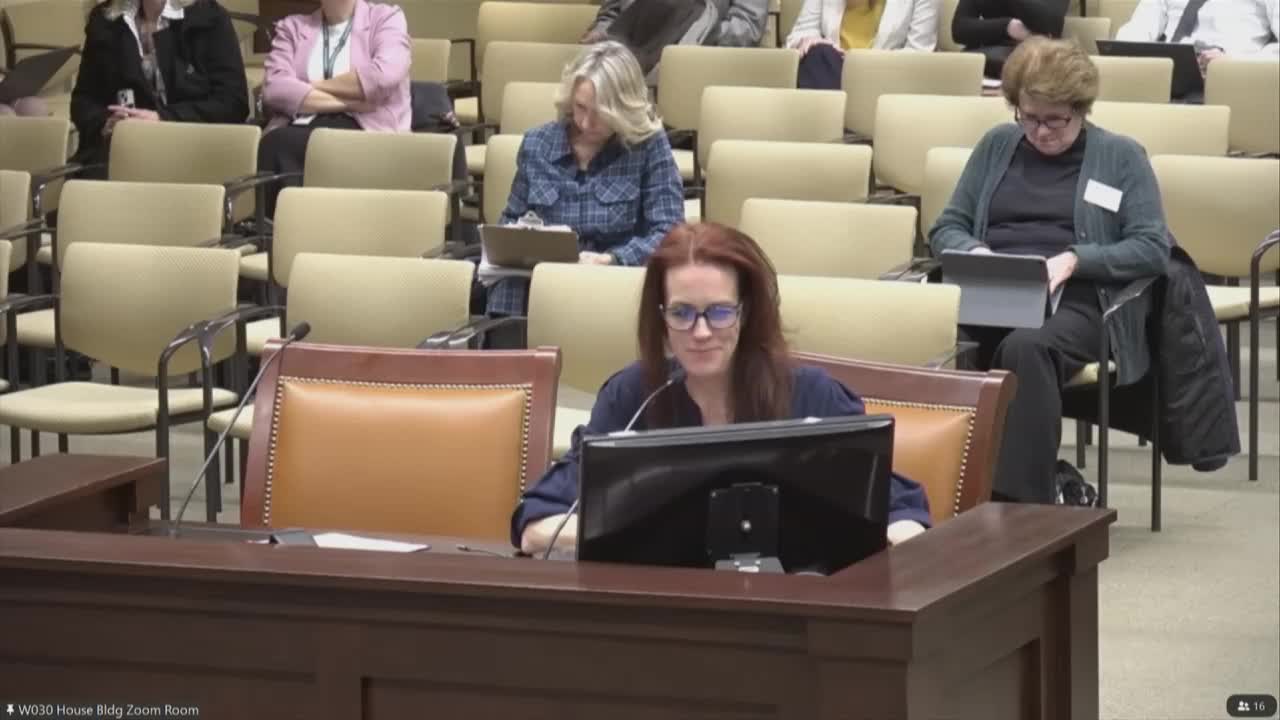
Representative Jen Daley Provo presented HB 123, the pharmacy accessibility amendments, telling the House Health and Human Services Committee the bill’s first substitute would require pharmacies to use "best efforts" to provide prescription information in at least one accessible format — large print, braille, or an auditory option.
Representative Jen Daley Provo presented HB 123, the pharmacy accessibility amendments, telling the House Health and Human Services Committee the bill’s first substitute would require pharmacies to use "best efforts" to provide prescription information in at least one accessible format — large print, braille, or an auditory option — and that the substitute delayed implementation to ease cost and supply concerns.
The bill aims to address cases in which visually impaired patients have received prescription labels they cannot read. "So many other blind and low vision individuals across the state, 45,000 individuals in Utah, identify as having a significant vision loss," Everett Bacon, president of the National Federation of the Blind of Utah, told the committee. He described instances in which people were denied accessible prescription options and urged lawmakers to change pharmacy practices.
Supporters and witnesses emphasized different solutions. Bacon described an auditory chip and a QR-like device used by some pharmacies that allows a smartphone app or a handheld reader to speak label contents aloud. Mary Anne Martin, CEO of the Utah Academy of Family Physicians, said an RFID-style chip can cost only “a buck or two” and allows patients to remain independent. Rachel Craig of the Association for Utah Community Health said most community health center pharmacies already provide some accessibility and that centers could comply with a delayed implementation schedule.
Pharmacy and retail representatives raised implementation concerns. Adam Jones of the Utah Pharmacy Association warned of low margins in pharmacy and noted national pharmacy closures, saying smaller, independent pharmacies may struggle to incur extra costs. Dave Davis of the Utah Retail Merchants Association suggested the State Board of Pharmacy should weigh in on technical details, and he asked how the bill would define someone who "identifies as visually impaired" and whether language barriers would trigger obligations under the bill. The association representative also noted that current Utah statute already requires pharmacies to offer an opportunity to consult with a pharmacist.
Committee members pressed about legal and enforcement consequences and what counts as compliance. Representative Ray Ward asked whether printing in large type would meet the patient’s preference; the sponsor replied the substitute requires pharmacies to use their "best efforts" to provide at least one of the listed formats and recognized ambiguity over how preferences would be interpreted in practice. The sponsor also said the substitute includes a delayed effective date to accommodate ordering and budgeting for equipment.
After discussion, the committee adopted the first substitute for HB 123 by voice vote. A subsequent motion to hold the bill passed, removing it from immediate consideration so the sponsor and stakeholders can continue negotiations. No civil penalties or enforcement mechanism were specified in the substitute as presented to the committee.
The committee’s action pauses HB 123 while sponsors and pharmacy stakeholders discuss definitions, implementation timelines and the role, if any, of the State Board of Pharmacy in advising technical standards.