Get Full Government Meeting Transcripts, Videos, & Alerts Forever!
Get email alerts on the Documentary Stamp Exemption topic
No spam. Unsubscribe anytime.
Bill to clarify documentary stamp exemption for family planning transfers wins unanimous proponent support in hearing
Summary
LB 194 would clarify that no‑value, family planning transfers (including some transfers into single‑member LLCs used for estate planning) qualify for the documentary stamp exemption; proponents said language restores long‑standing practice and avoids inconsistent county application.
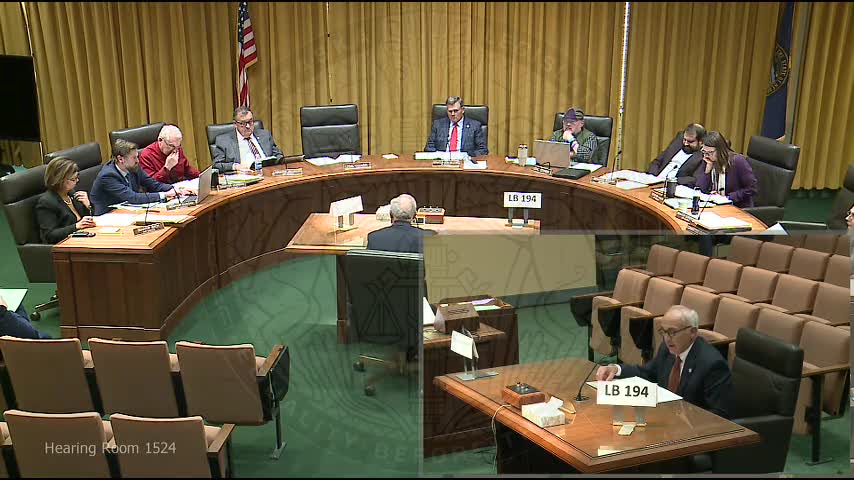
Sen. Tony Sorrentino introduced LB 194 to clarify a long‑standing exemption in Nebraska’s documentary stamp tax for transfers among family members used in estate planning.
Sorrentino told the Revenue Committee the bill responds to recent Department of Revenue opinions that transfers of real property into single‑member limited liability companies may not meet the statute’s family‑transfer exemption. He said the bill would restore the prior, consistent application of the exemption for transfers made for estate‑planning purposes where no consideration is exchanged.
Tim Hruza, appearing for the Nebraska State Bar Association, told the committee the bill simply ensures “folks who are transferring these no‑value transfers for purposes of planning don't end up getting stuck with a bill.” He noted the measure passed out of committee unanimously in the prior session as LB 1177 but did not reach the consent calendar then.
Elaine Menzel of the Nebraska Association of County Officials said the bill would bring clarity to registers of deeds and county clerks, reducing inconsistent application across counties on similar filings. Committee members had no questions and no opponent or neutral witnesses were recorded at the hearing.
Sen. Sorrentino closed by saying the bill targets “form over substance” and urged the committee to advance the measure; sponsors noted there was no fiscal note and a history of unanimous committee support in the prior year.