Get Full Government Meeting Transcripts, Videos, & Alerts Forever!
Get email alerts on the Sustainable Aviation Fuel topic
No spam. Unsubscribe anytime.
Committee hears expanded refundable tax credit to attract sustainable aviation fuel production
Summary
Sen. George Dungan asked the Revenue Committee to amend Nebraska’s SAF tax credit by making it refundable, removing the $500,000 cap and eliminating a five‑year claiming limit to attract producers to the state.
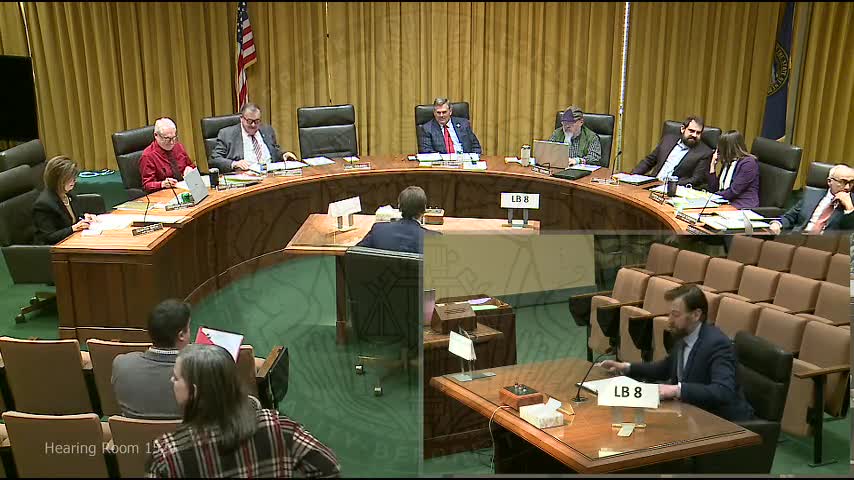
Sen. George Dungan told the Revenue Committee LB 8 would strengthen Nebraska’s sustainable aviation fuel tax credit to make the incentive refundable, remove the prior $500,000 annual cap and eliminate a five‑year claiming limit for producers.
Dungan said the changes are intended to make Nebraska competitive and attract production facilities. “We passed this bill last year and … our bill made a mark on both the national and international community,” he said, adding that a refundable credit is more reliable than federal incentives that may change.
Proponents from the agricultural and biofuels sectors said the refundable credit and removed limits are necessary to underwrite capital costs and bring large projects to Nebraska. Dawn Caldwell of Renewable Fuels Nebraska said the revisions would “strengthen the state's support for SAF producers by making the credit refundable, eliminating limitations on the duration and annual availability of the credit, and enhancing the program's accessibility and impact.”
Industry and economic-development witnesses detailed potential project scale and local economic benefits. Kent Rogert of Gevo described a representative project that could produce roughly 60 million gallons of SAF annually, employ about 100 full‑time workers (and 1,500 construction jobs), use tens of millions of bushels of corn and require substantial renewable-power investment and carbon‑management infrastructure. Gevo and other proponents said Nebraska’s agricultural feedstocks, existing ethanol capacity and potential for carbon sequestration make the state attractive.
Witnesses also raised constraints and uncertainties. Senators and witnesses discussed electric‑power availability for large plants: one testifier said projected interconnection lead times can be “minimally 5 years, mostly 9 years,” and panelists noted the importance of pairing SAF facilities with clean power (renewable or nuclear) and battery storage.
Fiscal questions surfaced. Dungan noted the bill shows minimal general‑fund impact in the near term because the credit’s implementation date was moved to 2028; fiscal office estimates the fiscal effect could rise in later years if and when production starts. Committee members asked about per‑gallon credit amounts (the bill retains prior per‑gallon language: roughly $0.75 per gallon plus a variable component tied to lifecycle emissions) and whether existing ethanol plants could convert to SAF production; witnesses said retrofits are possible in some locations but often cost‑competitive with new construction.
Support came from a wide coalition including ethanol interests, agricultural groups, the Nebraska Cooperative Council, the Nebraska Chamber and local economic development partners. Opponents were not recorded in the hearing; proponents urged the committee to advance the bill to make Nebraska competitive for future investment.