Get Full Government Meeting Transcripts, Videos, & Alerts Forever!
Get email alerts on the Domestic Violence Housing Fund topic
No spam. Unsubscribe anytime.
Committee hears bill to create housing fund for domestic violence and trafficking survivors funded by 7¢ documentary stamp increase
Summary
A public hearing on LB 78 proposed a new Domestic Violence and Trafficking Victim Housing Assistance Fund paid for by a 7¢ increase to the Nebraska documentary stamp tax; proponents emphasized housing as immediate safety need, while industry groups urged caution about relying on the doc stamp for many new programs.
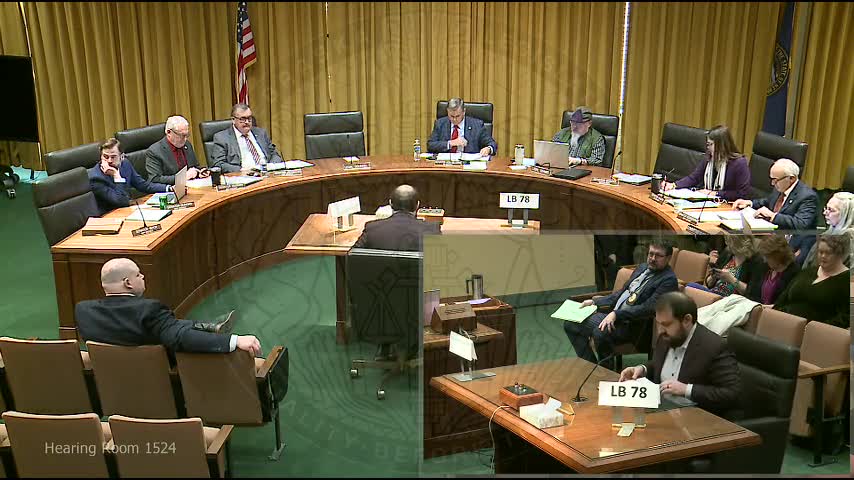
Sen. Eliot Bostar introduced LB 78 to the Legislature’s Revenue Committee, proposing a Domestic Violence and Trafficking Victim Housing Assistance Fund paid for by a 7¢ increase to the state documentary stamp tax.
Bostar told the committee the fund would be accessible only through “qualified organizations” — defined in the bill as nonprofit organizations or federally recognized tribes with affiliation agreements with the Department of Health and Human Services — and could be used only for housing-related assistance such as rental and utility payments, security and utility deposits, and other costs tied to securing safe housing. “This change assures that a portion of those funds are supporting housing costs, specifically for the most vulnerable people in our state,” Bostar said.
The bill’s proponents said housing is the immediate and most common financial need survivors report. Jason Stille, assistant chief of the Lincoln Police Department, said Lincoln’s Victim Assistance Unit sees housing as the largest factor in a survivor’s ability to leave an abusive situation and avoid homelessness. “Unmet housing needs put survivors and their families at increased risk for homelessness and further victimization,” Stille told the committee, citing 1,540 domestic-assault investigations and 32 trafficking investigations in Lincoln in 2024.
Multiple advocacy and shelter organizations described long waits for permanent housing and shrinking emergency capacity. Jo Baer, executive director of Encourage Advocacy Center, said federal grants have decreased while requests for shelter and housing assistance rise; Encourage served 403 survivors and sheltered 77 people in 2024. Kathleen Bauer of Sand Hills Crisis Intervention Program (SCIP) said rural programs face long voucher wait lists and deep cuts to federal planning funds; SCIP served 158 survivors in 2024 and reported a drop in nights of shelter offered. Veronica Pino of Catholic Social Services said the Saint Gianna program provided about 19,523 bed nights in 2024 and that the average stay for families in its shelter is roughly one year.
Survivors and people with lived experience testified about the speed and cost barriers that follow leaving an unsafe home. One witness described arriving with only what fit in a car and cobbling together small emergency payments from multiple charities while awaiting paychecks and benefits.
Opponents questioned the choice of funding source and urged caution about relying on the documentary stamp tax. Corby Gilbertson, a registered lobbyist speaking for the Nebraska Realtors Association and a home builders coalition, said several bills this year propose increases to the doc stamp and warned the tax could become the default funding source for many programs. He urged consideration of general fund alternatives and urged clarity about how existing affordable-housing trust funds are used and when they are swept to the general fund.
Elaine Menzel of the Nebraska Association of County Officials testified neutrally on collection mechanics and suggested a possible increase to 10¢ to simplify county calculations; she noted that in 2023 a $1.75 share of the doc stamp remitted from counties to the state produced about $27.4 million statewide.
Committee members asked about mechanics and scale. Sen. Tony Sorrentino asked how the 7¢ figure was set and whether it would meaningfully meet demand; Bostar said the 7¢ is intended to stabilize funding at roughly $1 million a year as revenues accrete. Members also asked whether recipients and programs would meet the bill’s “qualified organization” definition; witnesses confirmed that the network of about 20 programs statewide would qualify and that federal funds remain a major but shrinking revenue source.
There was no committee vote recorded during the hearing. The hearing record included 28 proponent position comments and one opponent comment filed with the committee.