Get Full Government Meeting Transcripts, Videos, & Alerts Forever!
Get email alerts on the Agriculture Energy topic
No spam. Unsubscribe anytime.
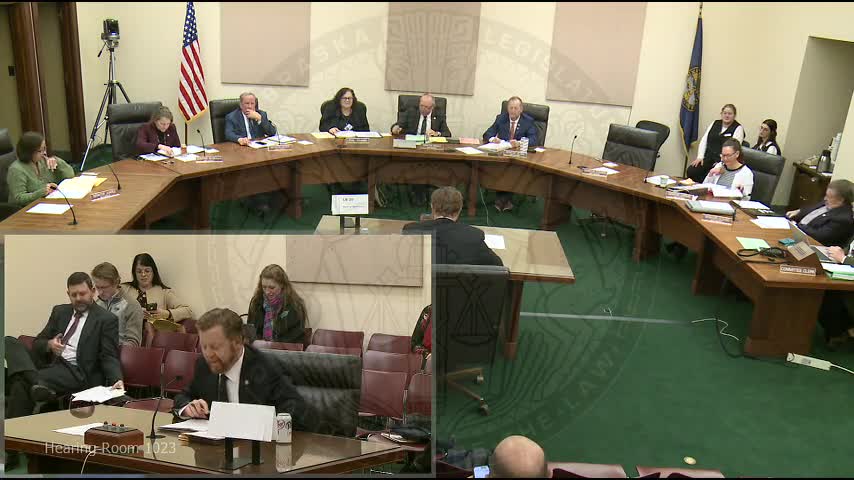
Committee hears bill to allow agricultural self-generation up to 100 kW, exclude net metering
Summary
The Natural Resources Committee heard testimony on LB 20, which would allow agricultural producers to install behind-the-meter generation up to 100 kilowatts with utilities permitted to recover costs; the bill would not change state net-metering law and applies by property, not by meter.
Senator John Kavanaugh (R-Omaha) introduced LB 20 to the Natural Resources Committee, proposing a statewide policy that allows agricultural producers to connect behind-the-meter generation for their operations without using net metering.
The bill would let an agricultural producer install and operate up to 100 kilowatts of generation for on-site use and requires the local public power district to be able to design a rate or fee that recovers the cost of serving that customer, the sponsor said. "In short, I think this bill balances the need of Nebraska's agricultural producers and the need of public power," Senator Kavanaugh said.
Proponents said the measure responds to inconsistent interconnection practices across public power districts. Al Junke, executive director of the Nebraska Pork Producers Association, testified on behalf of a nine-member ag leaders working group and described cases in which producers with grant-funded solar projects were denied by a local utility. "We want our farmers to be able to put in their own renewable energy, self generate if they'd like to," Junke said.
James Dukescher, director of government relations for the Nebraska Rural Electric Association (NREA), told the committee LB 20 differs from net metering because it prevents backfeed to the grid and allows utilities to design a rate or demand charge to ensure cost recovery. "Two key components of an agricultural self generation facility are ... they're not able to back feed electricity onto the grid, and the power district is able to design a rate or a fee that appropriately charges this customer for the services that they do receive," Dukescher said.
Supporters stressed the bill applies only to agricultural producers as defined by statute and that it does not alter existing net-metering provisions. Senator Kavanaugh said the bill specifically states the program "is not to be used for net metering." He also said the 100 kW limit applies to a single property under the control of the owner-generator, not per meter.
Committee members asked about practical details. Senator Mike Moser asked whether the bill forces utilities to buy excess power; Kavanaugh replied it does not — the bill is intended for behind-the-meter use only. Senators also asked whether multiple meters or multiple barns on the same property could be aggregated; Dukescher said the sponsors intended a per-property approach but recommended further conversation to clarify scenarios with multiple meters.
Public commenters who spoke in favor included Deborah Nicholson of Citizens' Climate Lobby and Shirley Niemeyer of Ashland, who framed the bill as expanding local generation options and reducing reliance on constrained transmission. Proponents noted USDA and other federal grant programs have supported some farm renewable installations.
No formal action was taken at the hearing. Senators and witnesses flagged follow-up topics for possible amendment, including whether tribal communities should be explicitly included and whether the 100 kW limit is the appropriate cap.
The committee took no vote on LB 20 at the hearing; the bill will proceed through the legislative process if the sponsor files it for committee amendment or floor consideration.