Get Full Government Meeting Transcripts, Videos, & Alerts Forever!
Get email alerts on the Commercial Drivers License topic
No spam. Unsubscribe anytime.
Committee clears bill to align Utah CDL rules with federal drug-and-alcohol clearinghouse
Summary
Senators approved Senate Bill 59 to update Utah commercial driver’s license statutes so the Driver License Division may use the federal drug and alcohol clearinghouse and conform to FMCSA requirements; committee moved the bill to the Senate floor with a favorable recommendation.
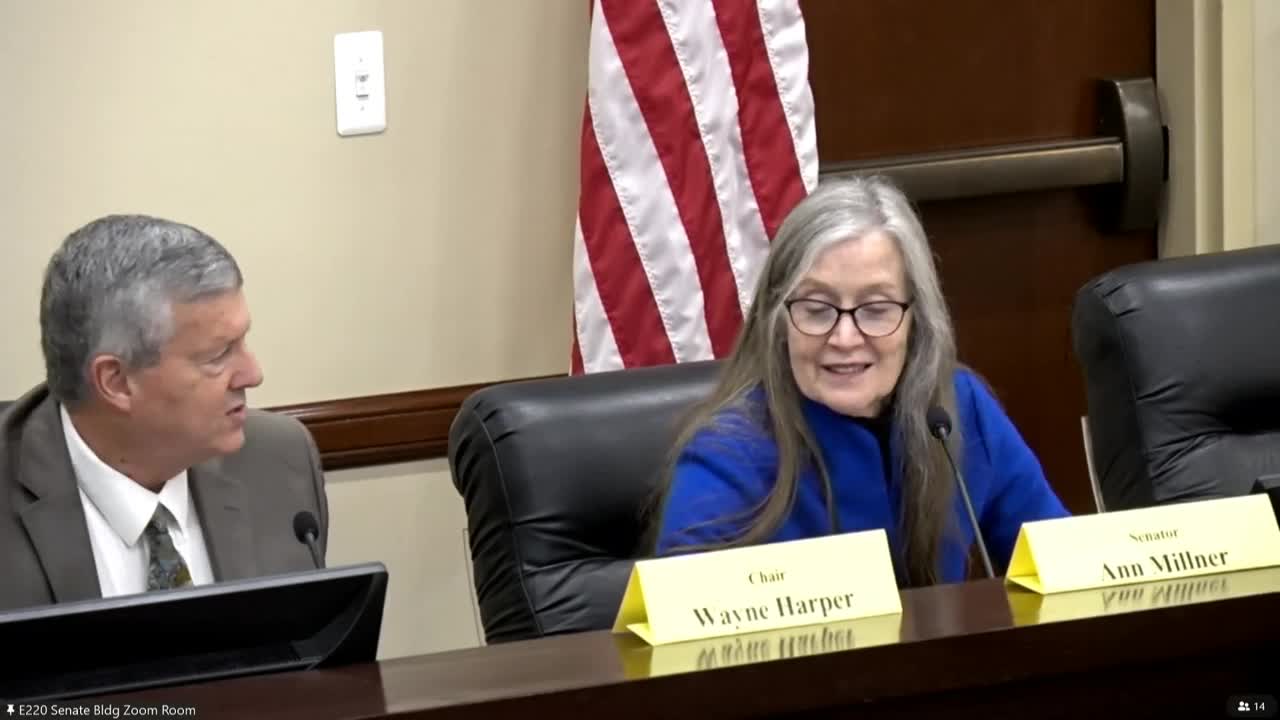
Senator Wayne Harper introduced Senate Bill 59 to the committee as a conforming update to Utah law for commercial driver’s license (CDL) disqualification and the use of the federal drug-and-alcohol clearinghouse.
The committee voted unanimously to recommend the bill to the full Senate.
Harper said the bill, requested by Senator Ipsen and presented to this committee, "amends the provisions relating to the disqualification for commercial driver's license" and makes drafting changes (for example, replacing "person" with "individual" in some places) to align with federal standards. He described the bill as putting Utah "in conformance so that we can get our CDLs done correctly."
Chris Karas, identified in committee as a representative for the agency operations addressing CDL implementation, told senators that the federal rule requiring use of the drug-and-alcohol clearinghouse became effective November 18 of the previous year and that Utah has completed programming and infrastructure but needs statutory authority to operate in compliance. He said, "The rule actually for compliance with using the drug and alcohol clearing house when effective November 18th last year. So technically, right now, we're not in compliance." Karas explained that when the Driver License Division receives an indicator from the clearinghouse, the Division generates a letter to the driver with required steps and noted a 60-day administrative timeline tied to clearinghouse procedures.
Committee members asked whether the measure changes blood-alcohol thresholds for CDL holders; Karas and sponsors said it does not alter the established CDL blood-alcohol concentration threshold (which the committee discussed as 0.04 BAC for CDL holders) and that those operational details remain under federal guidance and agency rules.
No members of the public spoke at the committee. Senator Winterton moved the favorable recommendation, and senators passed the motion by unanimous voice vote.
The bill text requires the Driver License Division to use the federally required drug-and-alcohol clearinghouse and aligns state disqualification provisions with FMCSA rules as described in committee testimony.