Get Full Government Meeting Transcripts, Videos, & Alerts Forever!
Get email alerts on the Higher Education Housing topic
No spam. Unsubscribe anytime.
Committee advances bill requiring on‑campus sex‑designated housing be assigned by biological sex; allows gender‑neutral option
Summary
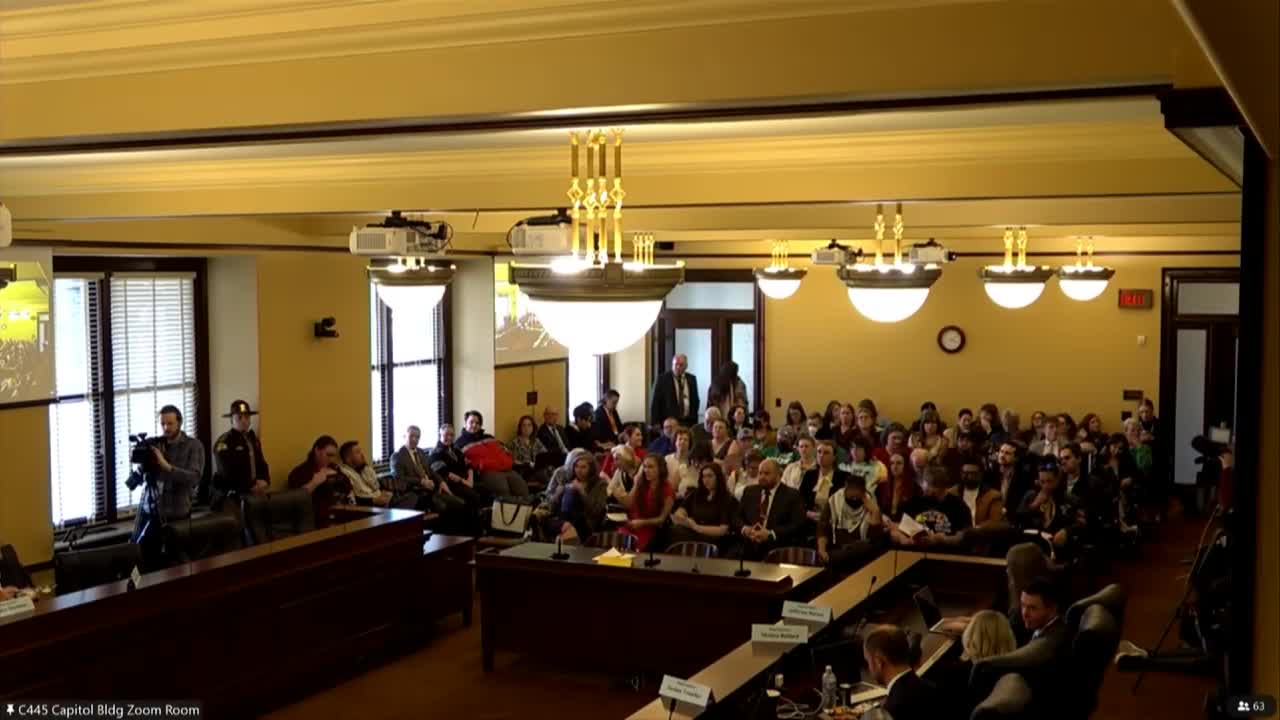
The House Business and Labor Committee on Thursday adopted a substitute to HB 269, a bill that would require students assigned to sex‑designated on‑campus housing at public universities to be placed according to biological sex, and recommended the substitute to the full House by a 13–2 vote.
The Utah House Business and Labor Committee on Thursday adopted a substitute to House Bill 269, Privacy Protections in Sex‑Designated Areas, and voted to recommend the bill to the full House by voice roll call 13–2.
Rep. Gracious, the bill sponsor, told the committee the measure “is common sense legislation that provides for greater privacy for students living in on‑campus housing.” The substitute, the sponsor said, requires public higher‑education institutions to assign students in sex‑designated on‑campus housing according to biological sex, while still allowing higher‑education institutions to offer gender‑neutral housing on request and to publish policies for assignment and rulemaking.
What the substitute does: according to the sponsor’s presentation, the substitute applies to public universities’ on‑campus housing only, does not affect private institutions or off‑campus housing, and removes a prior provision allowing access to sex‑designated spaces based on medical documentation. The sponsor said institutions may designate gender‑neutral housing units but those must be requested by students; the bill’s aim, the sponsor said, was to ensure that students who select sex‑designated housing have an expected level of privacy.
Public response at the hearing was strongly divided. Supporters described personal accounts in which students were placed with roommates of a different biological sex and later sought new housing. Avery Saltzman, who identified themself as a student and said they were moved after discovering a resident assistant assigned to a women’s suite who was biologically male, said the experience caused anxiety and that students should be able to rely on sex‑designated housing for privacy. “I would never have chosen to live on campus in an apartment with a man pretending to be a woman,” Saltzman said.
Opponents and civil‑rights groups urged lawmakers to reject the bill or further revise it. Marina Lowe, policy director at Equality Utah, told the committee that the bill would reduce access and protections for transgender students and that college campuses are typically places where adults learn to engage with a diverse public. Trans students and allies described the bill as harmful; several speakers said they had personal experiences of discrimination and urged the committee to defer to campus housing officials, which they said are better placed to handle accommodations and reassignment on a case‑by‑case basis.
Committee action and votes: The committee passed the first substitute and then voted 13–2 to recommend the substitute favorably to the House. The committee recorded “no” votes from Representatives Matthews and (recorded in the transcript) “Gwen.” The committee chair said the measure now proceeds to the House calendar.
Points of policy clarification raised during the hearing: - Scope: sponsor said the bill applies only to on‑campus housing at public higher‑education institutions and does not govern private or off‑campus housing. - Gender‑neutral option: institutions may offer gender‑neutral housing if students request it; sponsors said the substitute avoids labeling neutral units in a way that would out students. - Medical documentation: the substitute removes a provision that previously allowed use of medical documentation to access sex‑designated spaces.
What comes next: With committee approval, the bill moves to the full House. Supporters said the measure protects students’ expectations of privacy in sex‑designated housing; opponents asked the Legislature to leave housing assignment policies to universities and to consider the effect on transgender students’ access to housing and safety.
Speakers quoted in this article are identified from the committee record: Representative Gracious (bill sponsor); Avery Saltzman (student); Marina Lowe (policy director, Equality Utah); Celeste Winters (trans woman and Utah State University alum); Kayla Aitken (trans woman).