Get Full Government Meeting Transcripts, Videos, & Alerts Forever!
Get email alerts on the Firearm Safety Schools topic
No spam. Unsubscribe anytime.
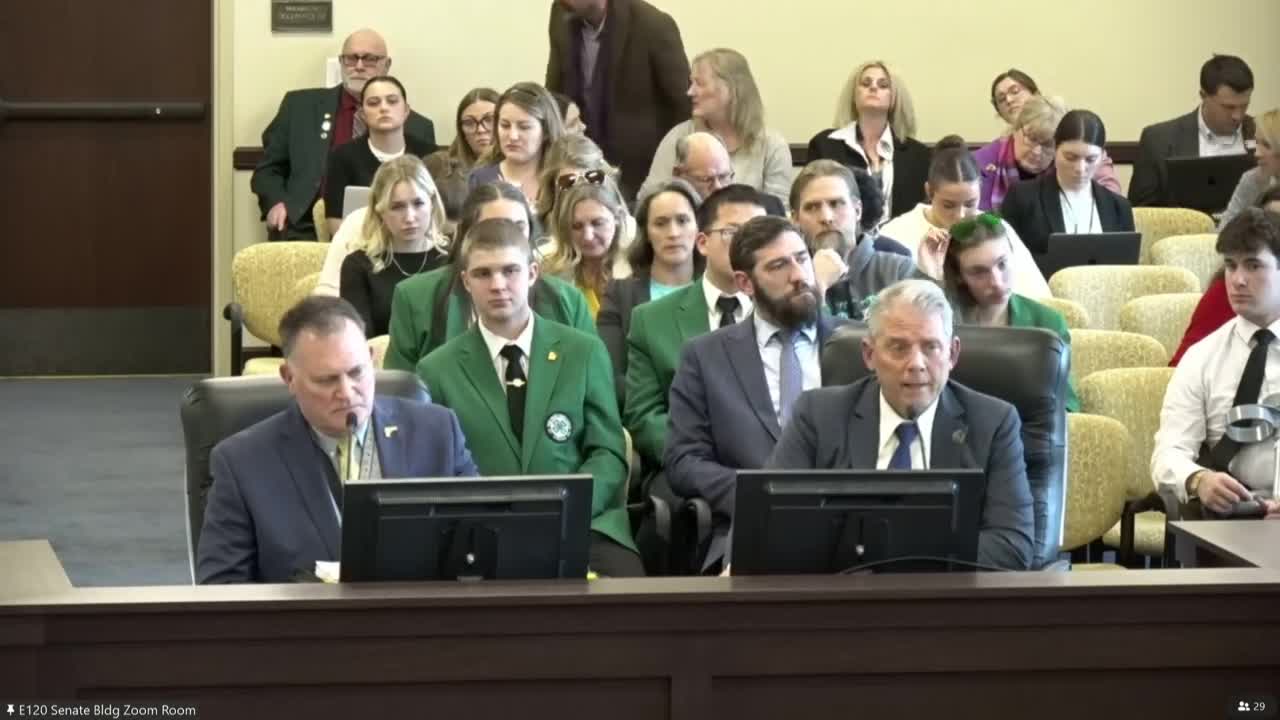
Committee holds firearm‑safety bill after wide committee and public debate
Summary
HB 104, which would require developmentally appropriate firearm‑safety instruction in K–12 (annual for K–6, once in junior high and once in high school) and allows opt‑out, was discussed at length. The committee voted to hold the bill for further work, 11–2.
Representative Shipp presented House Bill 104 and the first substitute, which would require schools to provide developmentally appropriate firearm‑safety instruction: annually for kindergarten through sixth grade, and once during junior high and once during high school. The proposed instruction could be a short module or video; if the instruction includes the physical display or handling of a firearm, the presenter said the handler should hold a concealed carry permit. The bill includes an opt‑out for parents.
Why it matters: Supporters said the measure aims to reduce accidental shootings and improve situational awareness among children who may encounter firearms at home, at friends’ houses, or elsewhere. Opponents and some committee members raised questions about developmentally appropriate content for young children, instructor qualifications, SRO access at elementary schools, whether instruction should be opt‑in or opt‑out, and how the requirement would be implemented and resourced.
The sponsor and supporters said short video modules already exist and can be effective: Raelle Cunningham (Women For Gun Rights) cited a study finding a one‑minute video increased the likelihood children would tell an adult if they found a gun. Testimony included family advocacy groups and survivors: Jeff Jarrett, founder of Harley’s Angels, described the accidental fatal shooting of his son and urged action. Other public supporters included Conservative Ladies of America and local school board representatives who urged early and repeated instruction.
Committee members asked whether the state school board would produce minimum standards or curriculum, who would teach the material (school resource officers, hunter safety instructors, or other qualified personnel), how opt‑out would be handled, and whether the requirement would strain teachers and schools already implementing many programs. Representative McPherson proposed making the state board standards "minimum standards" so local districts could adopt more robust approaches.
After extended discussion and public testimony, Representative Walter moved to hold HB 104 for further work. The committee held the bill; the transcript records a roll‑call on the motion to hold with an 11–2 result: Representatives McPherson and Peck voted no, the remaining voting members voted yes. The sponsor said he would work with members on language changes.
Votes at a glance: Motion to hold HB 104 passed 11–2 (recorded roll call in transcript).