Get Full Government Meeting Transcripts, Videos, & Alerts Forever!
Get email alerts on the Public Sector Labor Unions topic
No spam. Unsubscribe anytime.
House committee advances bill barring public-sector collective bargaining, tightening union rules
Summary
The Utah House Business and Labor Committee on Thursday adopted a first substitute to House Bill 267, Public Sector Labor Union Amendments, and voted to send the bill to the full House with a favorable recommendation by an 11–4 roll call vote.
The Utah House Business and Labor Committee on Thursday adopted a first substitute to House Bill 267, Public Sector Labor Union Amendments, and voted to send the bill to the full House with a favorable recommendation by an 11–4 roll call vote.
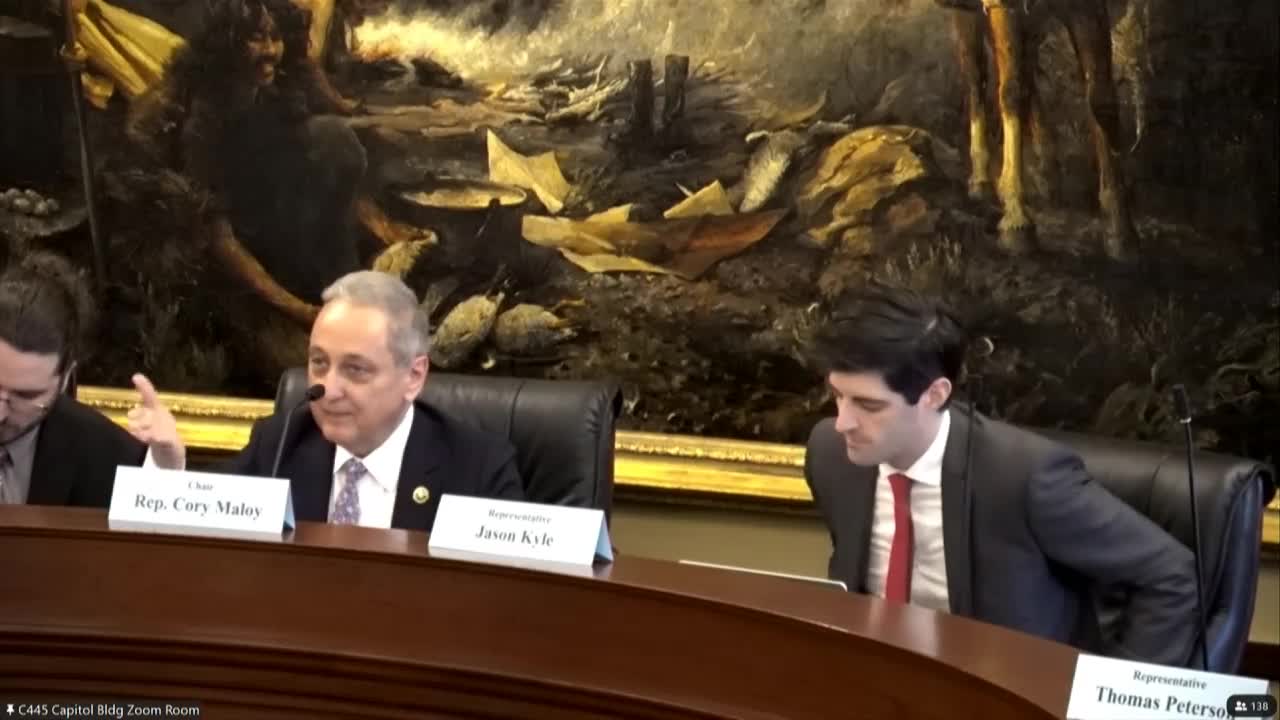
Rep. Corey Malloy, chair of the committee, called the question after a lengthy sponsor presentation and a 30‑minute public comment period that drew dozens of teachers, school staff, firefighters, public‑employee association leaders and advocacy groups.
Rep. Kirk Tesher, the bill sponsor, told the committee the measure aims to change how public employers and employee associations interact. “This bill really does four things,” Tesher said in his presentation: it would prohibit public‑sector collective bargaining; ban certain uses of public resources for union activity (including paid “release time” for union work); stop nonpublic labor‑organization staff from participating in the Utah Retirement System for new hires; require financial reporting for unions that use payroll deduction for dues; and create an optional professional liability insurance product for teachers.
Why it matters: Tesher and supporters said the measure protects taxpayers and opens public employers to input from any individual employee or group rather than granting an exclusive bargaining agent a monopoly at the table. The sponsor said the bill does not prevent individuals from joining unions or unions from meeting with public employers, and that existing employees who participate in URS would be grandfathered.
Opponents said the bill would reduce worker protections and could harm safety and services. Jack Tidrow, president of the Professional Firefighters of Utah, testified that bargaining helps address staffing and equipment needs. “We have to have the ability to sit down with our employers … to talk about our safety,” Tidrow said, adding that bargaining or the prospect of bargaining can strengthen local meet‑and‑confer arrangements. Several teachers and education‑support professionals described instances where association contracts or negotiated programs — from peer assistance to pay corrections — were used to address local staffing, training or safety needs.
Other testimony was sharply divided. The Utah Education Association warned the committee that removing bargaining recognition would harm educators’ collective voice and that the bill’s effects would fall on teachers statewide. The National Right to Work Committee and taxpayer groups urged support, arguing that bargaining restricts elected officials’ flexibility and places long‑term costs on taxpayers.
Key provisions and clarifications from the hearing: - Prohibition on public‑sector collective bargaining outside specified existing arrangements; sponsor said collective bargaining presently is uncommon in Utah outside Salt Lake City police and fire and some school districts. - Ban on public paid “release time” for employees to perform union duties and a requirement that public property be made available on equal terms to unions and other public groups. - Utah Retirement System (URS): the substitute would bar new, nonpublic labor‑organization staff from enrolling in URS; current participants would be grandfathered, the sponsor said. - Transparency: unions that request payroll deduction for dues would be required to report membership counts and expenditures (representation, lobbying, political donations) annually to members and the Labor Commission. - Optional professional liability insurance: the bill directs the Division of Risk Management to identify an optional policy for teachers; the sponsor said preliminary cost estimates are roughly $110–$150 per year and that a separate RFA could lower that figure.
Votes and formal actions: The committee adopted the first substitute for HB 267 and then voted 11–4 to recommend the bill favorably to the House. The committee recorded “no” votes from Representatives Matthews, Nguyen, Peterson and Thurston; all other members present voted “yes.”
What comes next: With the committee’s favorable recommendation, HB 267 moves to the full House for consideration. Committee members said they remain open to continued conversations with stakeholders about amendments.
Speakers quoted in this article are identified from the committee record: Representative Kirk Tesher (bill sponsor); Jack Tidrow (president, Professional Firefighters of Utah); Cole Kelly (Utah State Board of Education member and public‑school teacher); Mike Harmon (president, Salt Lake Education Association); Kevin Green (state director, Americans for Prosperity Utah).