Get Full Government Meeting Transcripts, Videos, & Alerts Forever!
Get email alerts on the Dental Access topic
No spam. Unsubscribe anytime.
Bill would use Medicaid excess funds to repay dental school loans for dentists who treat Medicaid patients
Summary
Sen. Beau Ballard introduced LB 27 to authorize loan repayment contracts—up to $60,000 per dentist—tied to serving a threshold share of Medicaid patients; the proposal would use the Medicaid managed care excess profit fund, and sponsors said it aims to recruit dentists willing to participate in Medicaid.
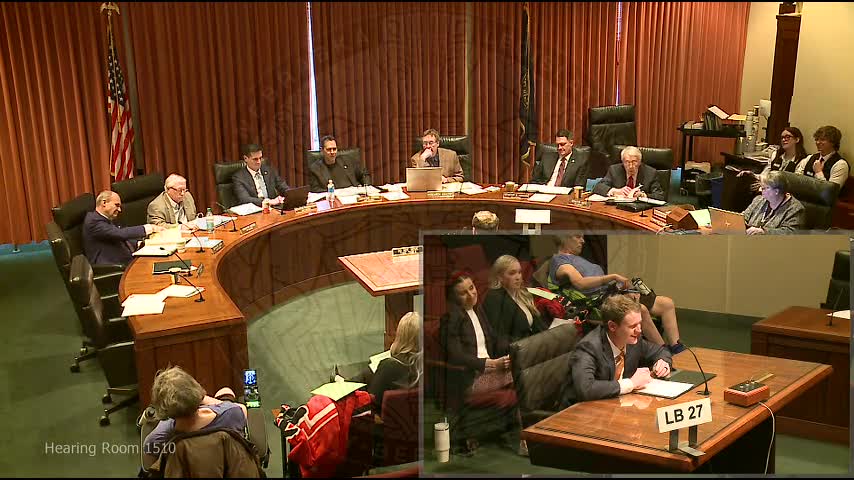
Sen. Beau Ballard told the Health and Human Services Committee that LB 27 would create a pilot incentive program to increase access to dental care for Medicaid enrollees by using the existing Medicaid managed care excess profit fund to pay down student loans for early‑career dentists.
Under the bill as explained to the committee, the Rural Health Advisory Commission (operating under the Professional Incentive Act structure) could enter contracts with early practicing dentists and pay up to $60,000 per dentist over up to five years if the dentist agrees to accept a defined percentage of Medicaid patients. Ballard said the commission would set the specific participation threshold and that the program would be capped at approximately $1.5 million to $5 million per year (testimony cited $5 million per year as a funding cap). Ballard described the balance of the Medicaid excess/profit fund as roughly $45 million.
Proponents included pediatric dentists and dental students who described large student‑loan burdens and said early‑career incentives would encourage dentists to accept Medicaid patients. Pediatric dentist Francis Rensch testified that many of the practices he works with accept large shares of Medicaid children—on average about 50%—and that a loan repayment pilot that ties repayment to Medicaid participation could make Medicaid participation more sustainable for new dentists.
Sen. Reidy and other senators asked follow‑up questions about eligibility, income caps for recipients and whether the program would primarily shift dentists from urban to rural practice. Ballard said the program is designed to reward dentists who serve Medicaid patients statewide, whether in urban or rural settings; he said it is not limited to rural placement but is intended also to increase Medicaid participation in cities.
No committee vote was held; Ballard said he would work with stakeholders and be open to technical changes. Supporters urged the committee to consider the measure as one of several tools to increase access to dental care for Nebraskans on Medicaid.