Get Full Government Meeting Transcripts, Videos, & Alerts Forever!
Get email alerts on the Childcare Subsidy topic
No spam. Unsubscribe anytime.
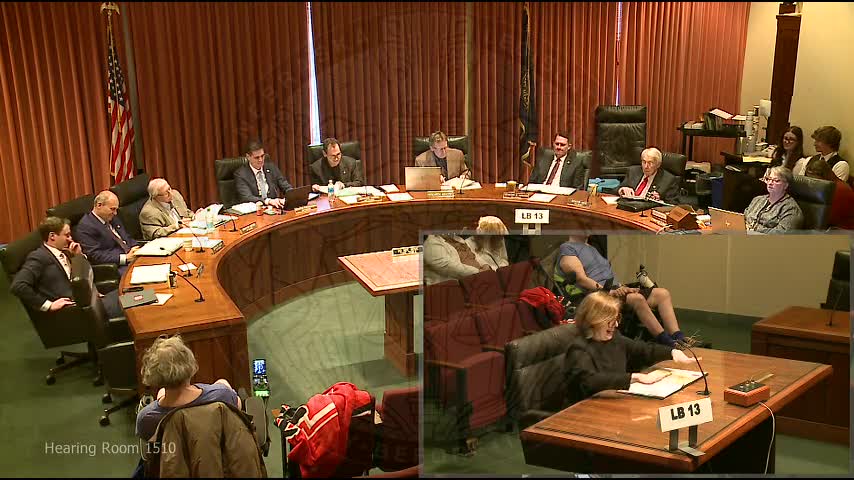
Committee hears bill to shift Nebraska childcare subsidy from attendance to enrollment; debate centers on costs and timing
Summary
Sen. Machaela Cavanaugh introduced LB 13 to require childcare subsidy payments be made on enrollment rather than day‑to‑day attendance to give providers predictable revenue; proponents said it aligns with federal CCDF requirements and helps fragile providers, while DHHS warned of large fiscal impacts and implementation work needed before 2026.
Sen. Machaela Cavanaugh told the Health and Human Services Committee that LB 13 would change Nebraska’s childcare subsidy payment method from attendance‑based billing to enrollment‑based payments, matching private billing practice and federal guidance in the Child Care and Development Fund (CCDF) final rule.
Cavanaugh told the committee that Nebraska’s childcare sector faces widespread shortages—citing a 2023 survey reporting that 84 of the state’s 93 counties lack sufficient licensed providers—and that enrollment payments give providers predictable monthly revenue needed to cover fixed costs such as staff, facilities and supplies. She said Nebraska currently reimburses subsidy providers at 75% of market rate and that attendance‑only billing reduces revenue when children are absent for illness or other reasons.
Proponents who testified included Jen Goettemoeller Wendl of First 5 Nebraska and family childcare provider Shannon Hanson. Goettemoeller Wendl told the committee that federal CCDF guidance requires states to cap co‑payments at 7% of family income and to implement enrollment‑based payments; she said Nebraska has a federal waiver that extends the compliance deadline and that the waiver period runs through July 31, 2026. Hanson and other providers described how attendance‑only reimbursement has produced unpredictable revenue and that absences can cost providers hundreds or thousands of dollars per child per year.
Children’s Respite Care Center (CRCC) president and CEO Mike Byrd told senators his medically complex clients have high absenteeism that drives a substantial revenue reduction: he said CRCC’s subsidy client absentee rate averaged 17% in 2024 and represented roughly $84,000 in lost revenue for his organization. Byrd said attendance‑only payments act as a disincentive to enroll children with special needs and reduce available slots for families that rely on subsidies.
John Mills, chief financial officer for DHHS, testified in opposition. Mills said LB 13 would require the department to change state plan documents and eligibility authorizations, reprogram billing and eligibility systems, and update agreements with more than 1,800 providers. He said paying for enrolled days rather than attended days could mean paying for a child who attends one day a week but is paid for the whole period; the department estimated that change could cost “nearly $18 million per year” and that, because federal CCDF funds alone do not cover the increase, additional state general funds would be required. Mills said DHHS had obtained a federal waiver that allows extra time for compliance and that the department planned to be in federal compliance by July 31, 2026.
Sen. Cavanaugh said she would offer an amendment to set an operational date of Aug. 1, 2026, to align state statute with the federal compliance timeline and to avoid imposing immediate operational deadlines DHHS said it could not meet.
No committee vote was taken. Committee members pressed both the sponsor and DHHS on cost estimates, waiver timing and whether enrollment payments would encourage providers to accept more subsidy children. Proponents urged the committee to advance the bill to general file to ensure state law and funding mechanisms are ready before the waiver deadline.