Lifetime Citizen Portal Access — AI Briefings, Alerts & Unlimited Follows
NEOMED librarians tell Kent City SD parents how to spot medical misinformation
Loading...
Summary
Presenters from Northeast Ohio Medical University walked Kent City SD staff and parents through the difference between misinformation and disinformation, the CRAAP method for evaluating sources, and recommended trusted health sites; presenters urged consultation with physicians for medical questions.
Colleen Dushawn, reference librarian at Northeast Ohio Medical University, told a Kent City SD online “lunch and learn” that distinguishing misinformation from disinformation—and knowing where to look for reliable medical information—has become more urgent as social media and search algorithms amplify unverified claims.
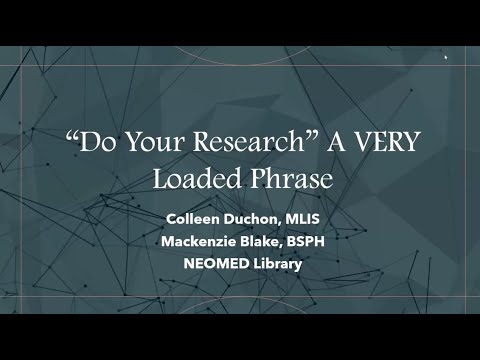
Dushawn said the session’s goal was to teach practical evaluation skills, introduce the CRAAP framework (currency, relevancy, authority, accuracy, purpose) and point attendees toward reliable sources such as the World Health Organization, the Centers for Disease Control and Prevention and the Cleveland Clinic. "Do your research," Dushawn said, "a very loaded phrase," and added that following a few simple checks makes that research more reliable.
Why this matters: parents and school staff often turn to the internet after clinical visits for clarifications about diagnoses or treatments. Inaccurate health information can spread quickly online, Dushawn said, and relying on unchecked sources can lead to confusion about vaccines, medications and other care decisions. The presentation combined definitions, practical checks and source recommendations intended for caregivers and school staff.
Dushawn opened by defining terms: misinformation is incorrect information spread without intent to harm, such as early or unverified breaking-news reports; disinformation is incorrect information created and spread with intent to deceive, she said, citing historical propaganda as an example of deliberately manufactured falsehoods. She told attendees a 2018 Massachusetts Institute of Technology study found inaccurate information moved faster than accurate information on Twitter, and said the rise of influencers and algorithm-driven feeds has increased the volume and reach of unvetted medical claims.
The session outlined the CRAAP method: check currency (when material was published or last updated), relevancy (whether a source directly addresses your question), authority (the author’s expertise), accuracy (cross-check with other reliable sources) and purpose (commercial or persuasive motives). Dushawn emphasized currency for medical topics—research and guidelines change quickly—and warned that dead links or outdated citations are red flags.
On authority, she urged attendees to prefer content from experts (physicians, researchers or credentialed clinicians) rather than social-media influencers who may lack relevant qualifications. On accuracy, she recommended checking multiple established sources and consulting a patient’s clinician when in doubt: "If it's a medical question that affects care, go to your pediatrician or your physician," Dushawn said. She also told the audience to consider a site’s purpose; clinical materials produced or sponsored by drug manufacturers may be informative but can reflect a commercial intent.
Dushawn advised caution with social media as a primary health-information source. She acknowledged there are qualified professionals online but said users should verify claims through recognized public-health organizations. She recommended the World Health Organization, the Centers for Disease Control and Prevention and the Cleveland Clinic as starting points for reliable, patient-facing explanations of conditions, tests and procedures.
Mackenzie Blake, who said she works with the NEOMED grant team focused on health-information literacy, introduced the session and noted NEOMED’s role in the outreach. Louise, the family and community engagement coordinator for Kent City SD, opened and closed the event and reminded participants the session would be posted to the district’s YouTube channel for later viewing.
The presentation lasted roughly 30 minutes and ended with a short question-and-answer period; presenters invited further questions by email and said the district would share materials and links. There were no formal decisions or policy actions recorded during the session.
The district and NEOMED presenters encouraged attendees to treat online health claims skeptically, use the CRAAP checks, consult multiple reputable sources and raise clinical questions with their health providers.