Get Full Government Meeting Transcripts, Videos, & Alerts Forever!
Get email alerts on the Public Safety Fire Stations topic
No spam. Unsubscribe anytime.
Study recommends additional firefighters and a north-side station to reduce train-related delays
Summary
An Illinois Fire Chiefs Association study presented to the Princeton City Council found Princeton meets NFPA 1710 four‑minute arrival standards inside city limits but not outside them, cited rail crossings as a recurring delay and recommended adding two firefighters per shift and locating personnel north of the railroad tracks.
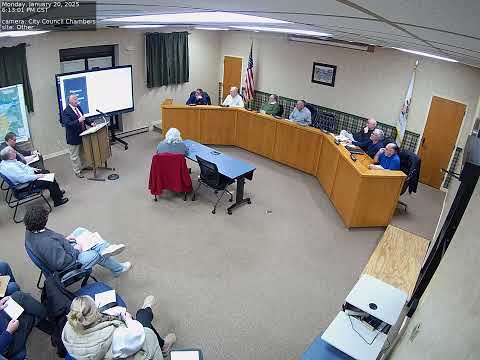
The Illinois Fire Chiefs Association presented a station and staffing study to the Princeton City Council on Jan. 20, 2025, concluding the Princeton Fire Department meets the NFPA 1710 four‑minute response goal inside city limits but not in the surrounding fire protection district and recommending adding two firefighters per shift and a staffed presence north of the railroad tracks.
The study, delivered by Raymond Kaye, director of assessment and consulting services for the Illinois Fire Chiefs Association, and presenter Keith Markowski, assessed five years of run data and three national standards, including NFPA 1710 and ISO measures. Kaye said the team analyzed 10,505 incident reports, including 229 fires and 9,234 EMS calls, and found about 90% of city incidents were within a four‑minute “catchment” but only about 10% of incidents in the surrounding fire protection district met that threshold.
“NFPA 1710 says you need to have four firefighters on scene within four minutes in 90% of incidents,” Kaye said. He reported Princeton’s daily staffing generally meets a four‑person minimum but noted gaps occur when ambulance crews are committed to other calls.
Why four minutes matters: the presenters emphasized rapid arrival for fire containment and rescues and for medical response, noting irreversible brain damage can occur after roughly four minutes without intervention. The study also highlighted turnout time inside Princeton, noting the 1912 station’s layout makes the time to leave the building longer than recommended.
Railroad crossings were a central concern. The report measured about 22 trains per day on average and identified more than 1,012 incidents over five years that occurred north of the tracks, of which 736 were city incidents (13 fires, 605 EMS calls, 118 others). Kaye said a long freight train or a derailment could divide town and materially delay responses for the north side, and recommended planning for a staffed facility north of the tracks so crews could respond from both sides.
Recommendations presented to the council included: using NFPA 1710 as a model (but not formally adopting it), exploring SAFER grant funding for staffing, adding two firefighters per shift (six additional firefighters across three crews), tracking train‑related delays in dispatch records, and studying station configuration or a second station to reduce turnout time. Kaye categorized many items by priority; increasing minimum staffing and addressing OSHA’s “two‑in/two‑out” safety requirement were among the highest priorities.
Council members asked clarifying questions about whether two personnel north of the tracks would meet the two‑in/two‑out requirement; presenters replied that multiple stations and mutual aid are commonly used but that a minimum of four available personnel is required to enter an active structure fire. The council requested the study be distributed to members; Kaye said a full report and dashboards had been emailed to council and staff.
No formal council action was taken at the meeting, though staff and council thanked the presenters and said they would review the report when preparing future budgets and capital plans.
Ending: The presentation closed with council acknowledgement of funding constraints and a statement that the report provides “a lot to chew on.” The chief and council indicated they will review the recommendations and consider grant applications and station planning in upcoming budget cycles.