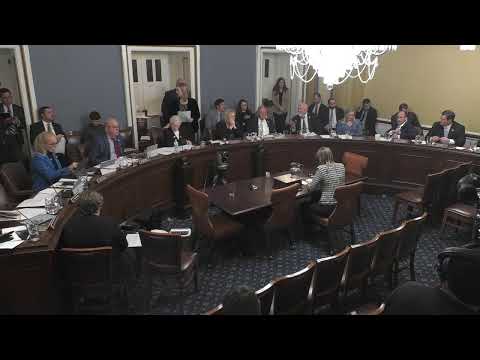
Rules Committee clears Fix Our Forests Act for House floor amid debate over environmental rollbacks and funding
Get AI-powered insights, summaries, and transcripts
SubscribeSummary
The House Rules Committee approved a structured rule to bring HR 471, the Fix Our Forests Act, to the House floor after hours of testimony and debate on wildfire prevention, environmental review and funding. Committee members split along familiar lines over whether the bill streamlines needed work or unduly weakens environmental safeguards.
The House Rules Committee voted to report a structured rule to bring HR 471, the Fix Our Forests Act, to the House floor, advancing the bill for consideration under a time-limited debate and preprinted amendments. The committee approved the motion to report by voice and recorded a final tally of 9 yeas and 3 nays.
The bill’s supporters said HR 471 would speed up forest treatments and protect communities at risk of catastrophic wildfire. "FFOFA doesn't waive a single environmental law, let me repeat that, it does not waive a single environmental law — we're just making existing tools more flexible and efficient," Chairman Westerman said, arguing the bill would let land managers act more quickly and at greater scale to protect lives and property.
Proponents pointed to the Southern California fires as the reason for urgency. Chairman Westerman told the committee the current blazes have killed 28 people, destroyed more than 15,000 structures and caused roughly $250,000,000,000 in estimated damages. He and other supporters described provisions that would prioritize treatments in the most at-risk "fire sheds," expand certain categorical exclusions to speed projects, create an interagency community wildfire risk reduction program, and standardize repayment timelines for local firefighting agencies.
Opponents said the bill contains unfunded policy changes that could roll back public review and weaken protections for endangered species. "This bill uses fire safety as a pretext to repackage the same old Republican playbook of rolling back environmental laws," Ranking Member Huffman said, adding that the bill offers few new resources for communities and could limit meaningful public participation by shortening the time for challenges to agency decisions.
Committee members also debated specific provisions cited by witnesses and members: whether expanded categorical exclusions would cover commercial-scale logging, whether the bill's proposed NEPA timing limits would undermine cooperation between federal agencies and local stakeholders, and whether exemptions from later Endangered Species Act listings could increase extinction risk. Several Democrats sought to insert pay increases and benefit improvements for federal wildland firefighters; an amendment to the rule offering such an insertion failed on a recorded vote (3 ayes, 9 nays).
The committee approved the structured rule that governs floor procedures for HR 471 and also agreed to make consideration of S 5, the Lake and Riley Act, in order under a closed rule. That combined procedural package moves both measures toward floor debate but limits further amendment from the floor.
The bill will now proceed under the rule approved by the committee; members and committees on both sides of the aisle said they expect further floor debate on whether the measure provides the balance of speed, public input and funding needed to reduce wildfire risk.