Get Full Government Meeting Transcripts, Videos, & Alerts Forever!
Get email alerts on the Military Security topic
No spam. Unsubscribe anytime.
Senator Case wins layback on bill expanding immunity for 'state security officers' to allow sponsor follow‑up
Summary
Senator Case asked the Wyoming Senate to lay back Senate File 26, a bill updating immunity for those defending military equipment, after questions about a new category called "state security officers." The Senate agreed to delay further action by one day to let sponsors provide clarifying information on training and chain of command.
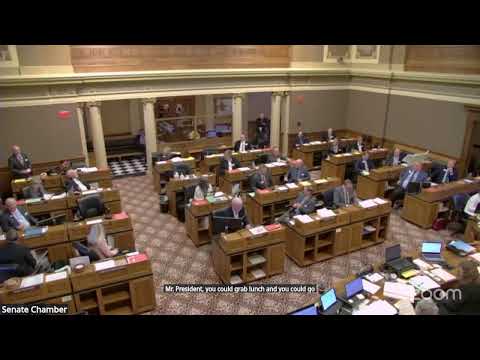
Senate File 26, a Transportation Committee bill concerning protection of military equipment, was laid back one day Thursday after senators sought clarifying detail about a newly added category called “state security officers.”
Why it matters: The bill would expand or clarify immunity related to use of force around military assets. Senators questioned whether the new category creates liability or policy gaps if the officers are not sworn military or peace officers, and asked how their chain of command and training compare to federal counterparts.
What happened on the floor: Senator Case opened the discussion by pointing out that the bill uses novel language to define a “state security officer,” which the senator said appears to be a state employee assigned to protect military assets but not a sworn member of the armed services. Case asked whether the body intended to extend the same liability protections enjoyed by federalized or active duty personnel to these state employees and asked for time to review the details.
Senator Pappas responded that Wyoming already employs state security officers embedded with the 153rd Airlift Group and that those employees have performed similar duties for decades but lacked explicit immunity that federal employees have. Pappas noted a federal Air Force instruction (Air Force Instruction 31‑117) requiring deadly force for certain priority assets and said the bill’s intent was to extend indemnity to state employees performing the same tasks. Pappas did not provide training documentation on the floor but said sponsors could supply it.
Other senators raised chain‑of‑command questions and cautioned lawmakers to confirm whether state security officers operate under the adjutant general or another state agency, and whether they are trained or subject to military justice standards. Several senators suggested the definition could be tightened if needed.
Outcome: Senator Case asked to lay the bill back one day; absent objection, the Senate laid back Senate File 26 for one day so the sponsor and committee could provide additional information on training, command structure and whether the state security officers are equivalent to federal counterparts.
Attribution: The primary floor speakers on this item were Senator Case (who requested the layback) and Senator Pappas (who explained the department practice and intent).