Citizen Portal
Sign In

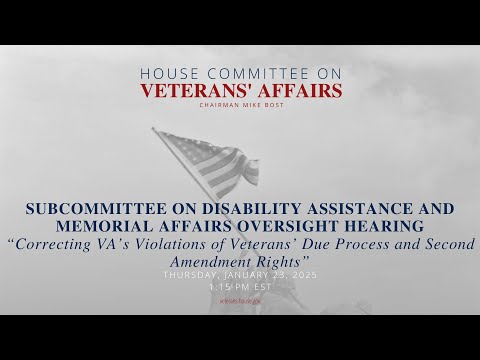
House subcommittee probes VA practice of reporting veterans with fiduciaries to NICS amid due‑process and suicide‑prevention debate

2144443 · January 23, 2025

Loading...

AI-Generated Content: All content on this page was generated by AI to highlight key points from the meeting. For complete details and context, we recommend watching the full video. so we can fix them.

Summary

The House Veterans' Affairs Subcommittee on Disability Assistance and Memorial Affairs heard testimony about Department of Veterans Affairs practices that place beneficiaries assigned fiduciaries onto the National Instant Criminal Background Check System, and the legal and public‑health consequences of that practice.

The House Veterans' Affairs Subcommittee on Disability Assistance and Memorial Affairs heard testimony about Department of Veterans Affairs practices that place beneficiaries assigned fiduciaries onto the National Instant Criminal Background Check System, or NICS, and the legal and public‑health consequences of that practice.

The hearing, led by Chairman Littrell of the subcommittee and Ranking Member Rep. Morgan McGarvey, brought witnesses from the Congressional Research Service and veterans service organizations who disagreed on whether the VA's fiduciary determinations deny veterans due process or protect public safety. "This hearing is not about guns or demand. It's about affording veterans with the same due process rights every other American is afforded," the chairman said in opening remarks.

The Congressional Research Service's Jordan Cohen summarized how the VA's regulatory definition of "mental incompetency" can trigger NICS reporting. Cohen told the panel that the VA may determine a beneficiary "lacks the mental capacity to contract or to manage their own affairs" and that federal law (18 U.S.C. 922(g)) and implementing regulations can make such agency adjudications reportable to NICS. He also summarized CRS data showing roughly 270,851 active NICS entries tied to adjudications of "mental defectiveness," and that about 97.8% of those entries were submitted by the VA as of the end of 2023.

Veterans advocates and witnesses emphasized different harms and remedies. James McCormick, past national commander of the Military Order of the Purple Heart, called the practice a "due process" problem and asked the committee to act to restore veterans' rights and trust in the VA. "Why should veterans be punished for seeking help?" he asked.

Master Sgt. Michael Washington, U.S. Marine Corps (ret.), gave personal testimony about surviving a suicidal crisis and urged measures to reduce firearm access in moments of crisis. Washington said the availability of a firearm can remove the narrow window in which someone may recover from a suicidal impulse: "I soaked in his voice and his message and after a few minutes, walked off the bridge never to return to suicidal ideation."

Representatives and witnesses also presented evidence and proposals about the administrative process. Representative Morgan McGarvey, the ranking member, described the VA fiduciary determination as a multi‑step process that begins with medical evidence collected for a disability claim and may include a benefits questionnaire, claims processors' review and a proposed determination letter. McGarvey said that a veteran may appeal and that the VA complies with statutes such as the Administrative Procedure Act but added that removing a name from NICS requires a separate petition for relief and is rarely successful.

Nancy Springer of the Veterans of Foreign Wars summarized field experience and offered operational recommendations: require a second medical exam after a proposed incompetency finding, have VA field examiners work in two‑person teams for in‑person interviews, reassess virtual interviews conducted during the COVID period, rewrite proposed‑incompetency letters to plainly explain consequences and appeals, and require judicial review before a NICS referral. Springer cited a CRS‑reported breakdown for fiscal 2022: 135 hearings on incompetency determinations, 24 of which resulted in a competency finding; 33 petitions for relief processed with few removals from NICS, though Springer said 11 petitioners were later found competent and removed.

Witnesses who favored maintaining robust reporting to NICS framed the issue as a suicide‑prevention and public‑safety tool. Master Sgt. Washington and others noted that more than 6,400 veterans died by suicide in 2022 and that more than 73% of those deaths involved firearms, figures the witnesses used to argue that restricting access can save lives.

Other committee members pressed for constitutional protections. Representative Eli Crane introduced legislation (H.R. 496) and asked that it be entered into the hearing record; the chairman allowed the bill to be entered "without objection." Several members argued that an administrative determination by VA staff should not automatically have the same consequences as a judicial finding.

Panelists also outlined current statutory limits and temporary changes: CRS witnesses and others noted that a provision in the Consolidated Appropriations Act, 2024, temporarily prohibited the VA from spending funds in fiscal 2024 to report beneficiaries to NICS based on mental‑incompetency determinations without a judicial order finding the beneficiary dangerous; that restriction was extended through continuing resolutions and was stated in testimony to expire on March 14, 2025, unless extended by further legislation. Witnesses emphasized that the provision does not automatically remove existing NICS entries.

The subcommittee did not take formal legislative action during the hearing. Members on both sides said they sought further fact‑finding; the ranking member and the chairman said they intended to continue reviewing the fiduciary process, potential statutory changes and operational improvements to protect both veterans' rights and safety.

The committee accepted multiple written statements into the record from witnesses, and several members asked for additional documents and data. Representative Crane's H.R. 496 was placed into the official record during the hearing. The panel closed with the chairman saying the committee would "break this down to parade rest," seeking to identify problem points and potential fixes.

Next steps noted at the hearing included additional oversight, possible legislative proposals addressing due process and NICS reporting, and attention to operational fixes suggested by veterans service organizations.