Get Full Government Meeting Transcripts, Videos, & Alerts Forever!
Get email alerts on the Education topic
No spam. Unsubscribe anytime.
Lynchburg students gain hands-on science experience on James River with school program partners
Summary
Lynchburg City Public Schools students took part in river-based science activities with the James River Association and Lynchburg Water Resources, using kayaking and macroinvertebrate sampling to reinforce classroom lessons; staff said the work is funded by a grant (amount not specified).
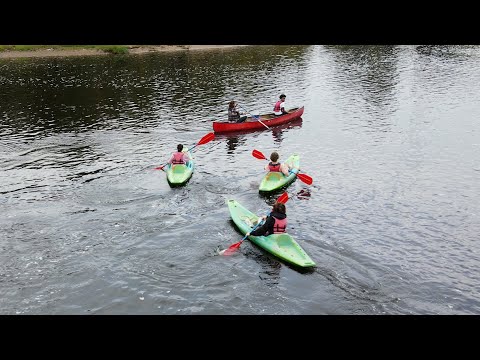
School staff described a hands-on science outing that took Lynchburg City Public Schools students to the James River, where program partners James River Association and Lynchburg Water Resources led activities intended to connect classroom lessons to local watershed stewardship.
"We really focus on every student by name and by need to graduation and beyond. So we want to provide these hands on learning opportunities that are exciting, that are engaging, that may be the thing that sparks their interest in coming to school," a school staff member said.
Program partners and school staff said students kayaked on the river and collected aquatic life to study. A student described kayaking and handling small organisms, which staff characterized as macroinvertebrates — small aquatic animals commonly used to assess water quality. Program representatives said the activities are designed to make textbook material tangible and to stimulate interest in science.
"The experience here with the James River Association and Lynchburg Water Resources really provides all students with an amazing experience to where they're getting a hands on understanding of what they're learning in their textbook, as well as in their classroom," a program representative said.
School staff and program partners said the work is supported by a grant; the meeting transcript referenced "this grant" but did not specify the amount or the funding source. Staff said they hope the experiences will produce positive results in classroom engagement and lead to future stewardship of the James River watershed.
Students and staff noted some participants live near the river but had not previously visited it; organizers said the outings teach river history and local environmental context in addition to science skills. A student said the trip made science feel more immediate and led them to consider pursuing science in the future.
Organizers framed the program as both curricular reinforcement and community engagement rather than as a replacement for classroom instruction. No formal actions or votes were recorded in the provided transcript excerpt.