Get Full Government Meeting Transcripts, Videos, & Alerts Forever!
Get email alerts on the Land Use topic
No spam. Unsubscribe anytime.
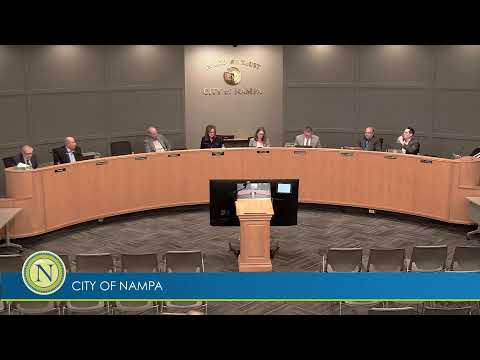
City attorneys and staff give Nampa council extended legal training on land use, due process and records
Summary
Contract counsel and the incoming city attorney led an extended workshop on annexation, rezoning criteria, findings and the public hearing record; speakers emphasized the Local Land Use Planning Act, documentary record standards and best practices for audible, on-the-record council comments.
Contract counsel and the city’s incoming attorney led a detailed training and discussion with the City Council on land use decision-making, focusing on the differences between annexation and rezoning, the statutory standards the council must apply, and best practices to preserve decisions against judicial review.
Why it matters: Council members frequently confront rezones, annexations and conditional-use permits. The training explained how the Local Land Use Planning Act and the city’s ordinances require the council to tie factual findings to code criteria and to build an auditable record for any decision subject to appeal.
Content of the training Todd, who led the presentation, walked the council through the duties of decision-makers and described the applicable legal framework. He said the Local Land Use Planning Act requires that “approval or denial of an application has to be based on specific criteria that are set out in your ordinance and your comprehensive plan.” He urged council members to articulate how the facts in the record map to those criteria when they take a position that departs from staff recommendations.
Speakers emphasized that annexation and zoning decisions differ: a voluntary annexation can be denied if the council finds the timing is not “reasonably necessary to assure orderly development,” while in-city rezones are governed by the ordinance and the comprehensive plan and are therefore constrained by the standards set in those documents.
Preston Rudder, the new city attorney, focused on due-process and record safeguards and told the council to ensure all remarks and questions are on the public record. “If you have a question, don’t slide a note down the line… Say it into the microphone,” Preston said, adding that public hearings are “quasi judicial” and that judicial review is confined to the agency record. He urged the council to avoid decision-making based on off‑record communications or impressions.
Practical recommendations Speakers and staff recommended a set of practical steps to strengthen the record and reduce appeal risk: adopt clear written findings that map facts to ordinance criteria, ensure all speakers and council comments are audible on the record, and use staff-prepared findings as a draft that the council can accept or revise. Rodney Ashby, planning and zoning director, said staff will slow or flag items they expect to be controversial so council members can “slow down and really go through them.”
Council response and next steps Council members raised questions about differentiating townhomes from multifamily, density ranges in the future land use map, and how to manage projects in areas scheduled for future comprehensive plan updates. Multiple council members suggested a joint workshop with Planning & Zoning to review recent approvals and to identify potential code or plan amendments.
Ending Council and staff agreed to schedule additional training and suggested repeating the session for new council members to reinforce best practices for land use hearings, record-building and finding adoption.