Get Full Government Meeting Transcripts, Videos, & Alerts Forever!
Get email alerts on the School Meals Nutrition topic
No spam. Unsubscribe anytime.
Kennewick Nutrition Services reports increased participation, launches NutriSlice and expands second‑chance breakfast
Summary
The district’s nutrition services director reported the 2024–25 year served more than 3.4 million meals, expanded second‑chance breakfast to two additional secondary schools and launched a menu/nutrition information app called NutriSlice.
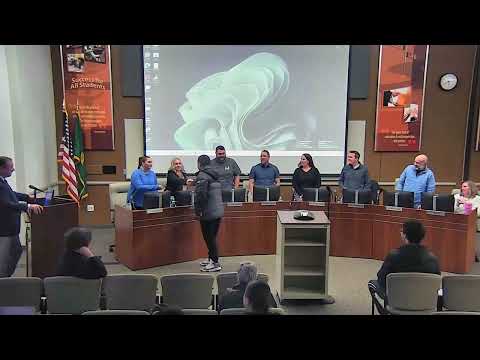
Christine Benson, the district’s Nutrition Services director, presented the annual nutrition services report for the 2024–25 school year, describing participation growth, food‑safety practices and new menu-access technology.
Benson told the board the district partners with Sodexo to prepare and serve meals at all 17 elementary schools, five middle schools, three high schools and three alternative sites. She said the program served “over 3,400,000 meals” last year and highlighted several operational changes intended to increase participation and reduce waste, including a NutriSlice menu and nutrition‑information rollout and targeted menu changes driven by student feedback.
Benson also described a successful rollout of second‑chance breakfast at Desert Hills and Kamiakin high schools. Using October data presented to the board, Kamiakin’s breakfast participation rose from about 5% to 14% after introducing second‑chance breakfast; Desert Hills rose from about 18% to 56% following the change. Benson said the program’s managers use regular student focus groups and captured surveys to identify improvements (for example, changing how a held sandwich was covered to avoid sogginess).
The presentation covered food safety and staff training: most kitchens are ServSafe certified, managers conduct twice‑weekly safety walks, and 90% of schools received perfect scores on health‑department reviews during the year. Benson described a third‑party safety audit program (double‑gold scores at three reviewed schools) and noted ongoing work to improve survey sampling so the department can better capture student preferences across high‑participation schools.
Benson invited board members to judge the district’s Future Chef elementary cooking contest on March 7. The presentation closed with an explanation of how the department tracks production and waste: staff record production quantities and use share baskets and kitchen weighing procedures to reduce food thrown away.
Questions from the board focused on sampling size for student surveys, how second‑chance breakfast was implemented at alternative schools without on‑site kitchens, and how waste tracking (Leanpath program at some schools) informs production adjustments. Benson said transportation and kitchen capacity affect which sites can receive hot-prepared items and that the district is adjusting distribution practices as needed.
Ending: The board took no formal action on the report; staff will continue the NutriSlice rollout, expand second‑chance breakfast where feasible and refine survey methods to improve sample representativeness.