Get Full Government Meeting Transcripts, Videos, & Alerts Forever!
Get email alerts on the Budget topic
No spam. Unsubscribe anytime.
Boyertown Area School District lays out $150.7 million 2025–26 budget proposal, seeks 3% tax increase
Summary
District leaders presented a $150.7 million 2025–26 general fund budget that would keep current programs, add staff for student supports, raise the real-estate tax by 3% and use $4.08 million of fund balance; the meeting was informational and no votes were taken.
Boyertown Area School District leaders presented an informational workshop on the proposed 2025–26 general fund budget that would total $150,695,308 and include a 3% real-estate tax increase and a planned use of $4,080,874 in fund balance.
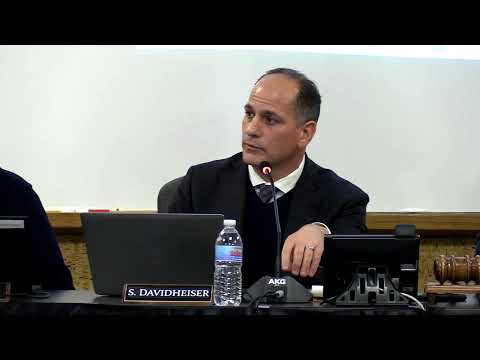
Dr. Scott Davidizer, superintendent, opened the special meeting focused on the budget and emphasized the session was intended as an information and question-and-answer opportunity rather than a decision meeting. "For this evening, this is a special meeting... it's focused on one topic area and that's the budget 2025–26," he said.
The administration's proposal assumes $146,614,434 in budgeted revenue, of which roughly 71% is local revenue, and would increase the millage to an estimated 32.69 mills if the board approves a 3% real-estate tax increase (a 0.952-mill change). To cover the gap between revenue and expenditures the plan would draw $4,080,874 from the district's fund balance; the district reported an unassigned fund balance of $11,050,601, an assigned fund balance of $14,000,000 and a committed PSERS reserve of $4,100,000.
The proposed budget keeps all current positions and programs and adds targeted personnel aimed at student supports and state mandates: 8 special education FTEs, 2 full-time-equivalent positions toward full-day kindergarten planning, one FTE to begin preparation for the state-mandated financial literacy course, and 2.5 additional school counselors to advance a multi-tiered system of supports (MTSS). The administration also proposes a $1-per-hour increase for support staff and continued funding for the district's virtual academy.
CFO Miss Denicola said salaries and benefits account for the largest portion of the budget — $59,261,827 in salaries and $41,650,862 in benefits (about 67% of the total proposed budget). Other notable line items include contracted services at roughly $16.4 million (about 11% of the budget), charter school payments budgeted at $6,205,680, and transportation at $6,248,000. Total budgeted expenditures were presented as $150,695,308.
Administrators flagged several enrollment and program pressures driving the request. The district reported 6,293 students as of Jan. 1 (2,704 elementary; 3,460 secondary; 54 pre-K; 75 in the district virtual academy) and noted increases in economically disadvantaged students (32% in 2024–25, up from 27.8% in 2019–20) and in special education enrollment (1,625 students, 26% of enrollment in 2024–25). Special education staff described case-load limits established under Chapter 14 regulations and stressed limited openings in autistic support, emotional support and life-skills classrooms; administrators said 67 students were expected to transition from early intervention into school-age programs and that caseloads overall are high.
Charter school costs were highlighted as a major outflow. The district estimates it will pay $15,971.61 per regular-education student to external charter schools; for students identified as special education enrolled in cyber charter schools the recent rate cited was $31,716.30 (brick-and-mortar special-ed rates were cited at $39,992.30 though the district reported no current brick-and-mortar special-ed enrollees). Administrators said the district is examining residency verification for students who enroll in external charters and plans periodic reviews to ensure billing accuracy.
Administrators also described the district-run virtual academy as a lower-cost alternative to outside cyber charters. The district reported roughly 139 virtual students (about 82 full-time high school, 45 part-time high school, small numbers in middle and elementary) and estimated its in-district virtual program costs about $2,806 per student, versus the roughly $15,972 paid per regular, non-special-education student to outside cyber charters. The administration said the district’s program uses district teachers and the Accelerate curriculum.
Other program proposals in the plan include: - MTSS: staffing to move from RTII to a broader MTSS framework, with an additional 2.5 counselors recommended to bring elementary counselor-to-student ratios closer to recommended levels; administrators cited the American School Counseling Association recommended ratio of 1:250 and PCCD tiers for grant eligibility. - Full-day kindergarten: the district estimated current need would require roughly 9.5 additional teachers to convert all 19 kindergarten sections to full-day; the budget includes funding for 2 FTEs to begin preparation. - Financial literacy: to meet the state mandate beginning in 2026–27, the district proposes funding 1 FTE in 2025–26 to phase in the half-credit course for juniors. - Support staff retention: a proposed $1-per-hour increase for roughly 139 support staff positions (budgetary cost estimates ranged from about $230,000 to $328,000 in presentation slides) intended to address competitiveness and recruitment. - Safety and technology: continued investment in cameras, door sensors and access-control systems and a recommendation to develop a replacement/refresh cycle for camera systems; district staff cited PCCD tiers and existing grant opportunities that have shifted over time.
The presentation included debt and tax context: the district reported 2024–25 debt service of $6,585,926 (principal $3,779,000; interest $2,806,926) and roughly $81 million in outstanding principal. Administrators said the district will pursue bond refunding only when market parameters make it advantageous.
To mitigate impacts on older or vulnerable residents, the administration proposed a district-level real-estate tax rebate patterned on state rules: homeowners who qualify under state income and age/disability criteria could receive up to $250 from the district (the program would not pay rebates that, combined with the state rebate, exceed the taxpayer’s school tax liability or pay rebates under $10). The administration estimated the rebate would cost about $267,125 if implemented and noted the district would follow state income limits and eligibility rules.
Administrators said the proposal would be funded by the combination of the 3% tax increase and the planned use of fund balance and that they expect to bring several items back for formal board action in coming weeks, including an agenda item on Jan. 28 to set tax collector compensation and — within roughly 30 days — an RFP for a demographic study to inform long-term facilities and staffing planning. No formal votes or approvals occurred at the meeting.
Board members pressed on multiple topics including the fund-balance draw, the magnitude and timing of proposed hires, PSERS liability, the district’s relative spending per pupil compared with nearby districts, the mechanics and outreach for the proposed rebate, residency verification for charter students and replacement cycles for safety cameras. Administrators said they will supply additional data and bring follow-up items to future finance and facilities meetings.
The meeting was informational and adjourned with no formal action taken.
Ending: The board did not vote on the budget at the workshop; administrators said they will return with follow-up information, an RFP for demographic work, and formal agenda items for future meetings when votes are required.