Get Full Government Meeting Transcripts, Videos, & Alerts Forever!
Get email alerts on the Mental Health Staffing Required Instruction topic
No spam. Unsubscribe anytime.
Levy board flags mental-health staffing, counselor certification and required-instruction mandates as legislative issues
Summary
Board members told consultants that counselor-to-student ratios, limits on who counts as instructional staff, and mandated required instruction (including school CPR and health topics) are creating operational strain. Consultants advised reviewing provisos and exploring deregulation language on staff roles and funding flexibility.
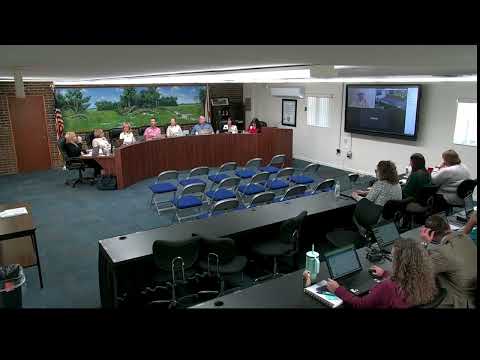
Board members at a Jan. 7 workshop described student mental health and mandated required instruction as top operational problems they want addressed at the state level.
Board Member Mrs. Clemenzi told the group the counseling workload is acute: “Our guidance counselor to student in in our biggest high school is 600 to 1,” she said, adding that the shortage affects teacher recruitment and classroom safety. Several board members said the district is successfully using its mental-health allocation to hire school-based clinicians but that hiring licensed providers in a rural market is difficult.
Consultant Kim McDougall advised the board to examine the legislative proviso language that governs the mental-health allocation and to consider whether the district needs flexibility in how those funds may be used. “Your CFO should look at the proviso. What are the limitations of how you can spend your mental health allocation? Do you need additional flexibility with how you spend that?” McDougall said.
Board members and staff also raised certification requirements for school counselors and social workers. McDougall and others suggested that the district examine whether state rules that categorize counselors and social workers as instructional staff create hiring and compensation barriers and whether legislative deregulation could remove those constraints or allow different credentialing pathways.
Separately, staff described how required instruction mandates — for example, statewide health curricula and mandatory CPR instruction in specific grades — are being added on top of core subjects and, when not embedded in existing classes, can pull students out of core instruction. “When the required instruction is embedded into some of those core classes, it’s a lot easier to deliver. However, there’s a lot that is not, and cannot be embedded, like, some of the health education in grades 6 through, 12, mandatory CPR in 9 through, through, 9 and 11 are some examples,” district staff said.
Why it matters: Board members framed both itemized funding flexibility and deregulatory language as ways to help rural districts recruit and retain counselors, social workers and other student-support staff without forcing those roles into narrow instructional classifications that raise certification and compensation hurdles.
Ending: The board asked two members to draft a one-page legislative summary on required instruction and to include counselor-certification and mental-health-funding flexibility language in its one-page materials for delegation meetings.